Clearing BIOS RAID metadata for CentOS6 install

Today I was trying to install CentOS6 on a server put together from bits and pieces I had lying about. The CentOS installer would not include either of the disks I’d used because it claimed they had BIOS RAID metadata that didn’t appear to be part of an existing RAID partition.

Initially I tried using “dd” to write a load of zeros to the start of the disk to see if that would clear whatever information had been left on the disks from their previous life but no dice, so I had to do things the hard way…

Eventually I found that the following command (run for each disk device in turn) cleared the data and allowed me to use the disks for installing the OS:

dmraid -r -E /dev/sda

The easiest way I found to run it from the CentOS installer was to use Alt-F2 to flip to a shell once the GUI installer had started, run it there and then Alt-F7 to flip back to the installer screen.

Posted in Computing, Linux | Leave a comment

Comparison of JPEG and RAW White Light Solar Image Exposure Times

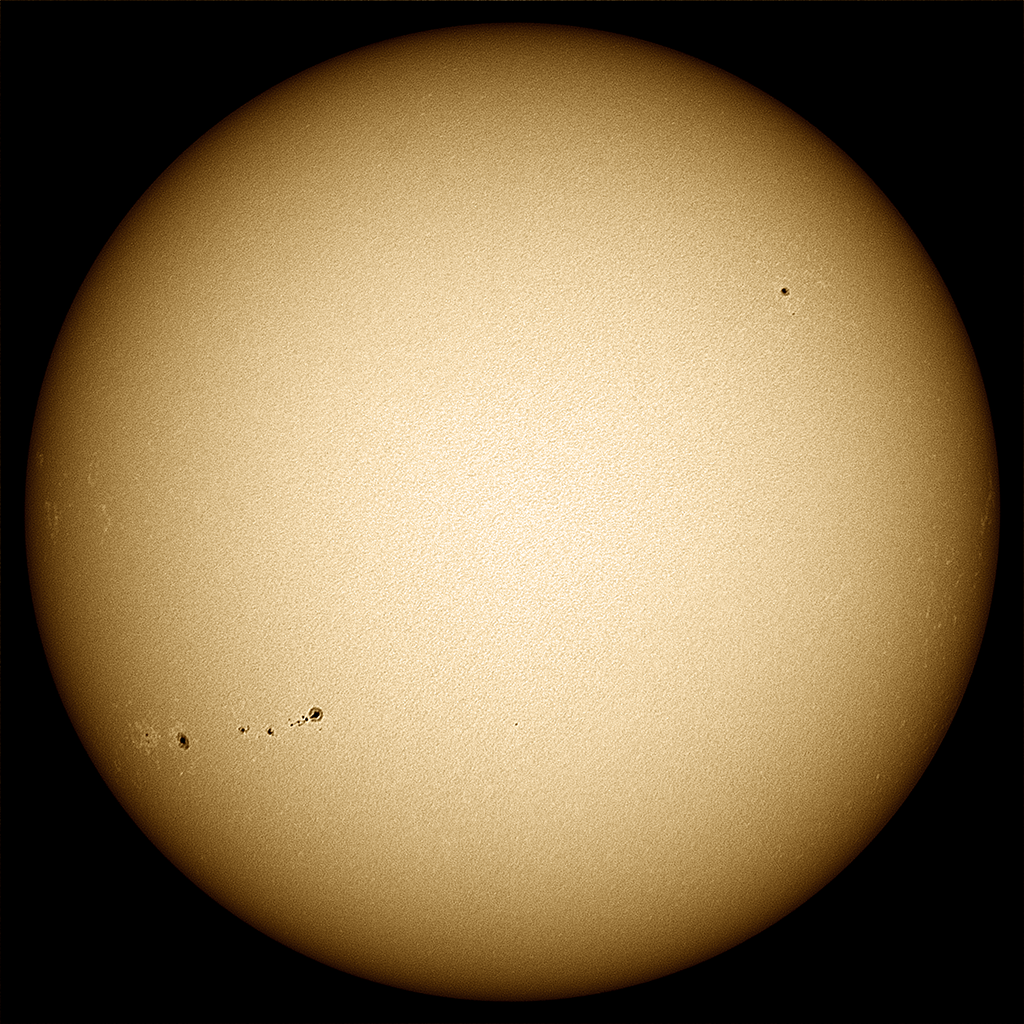
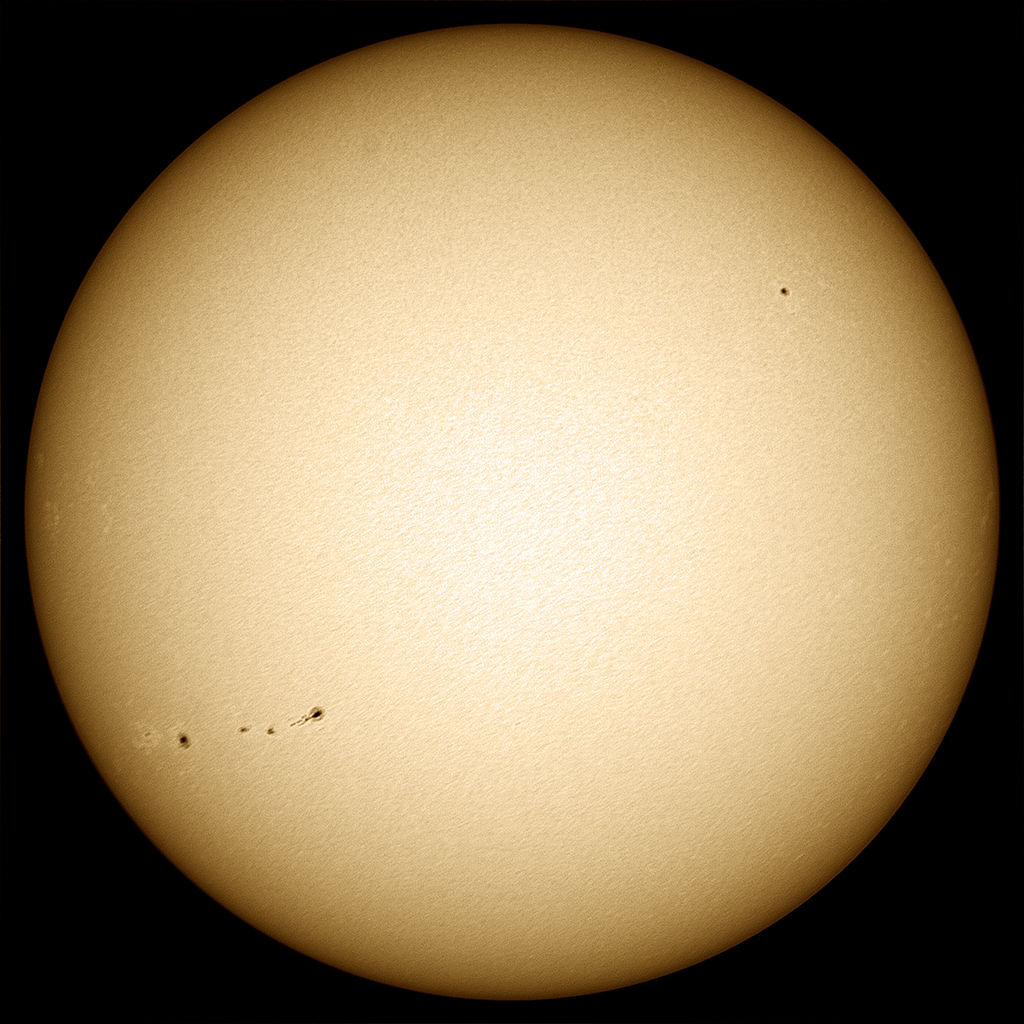
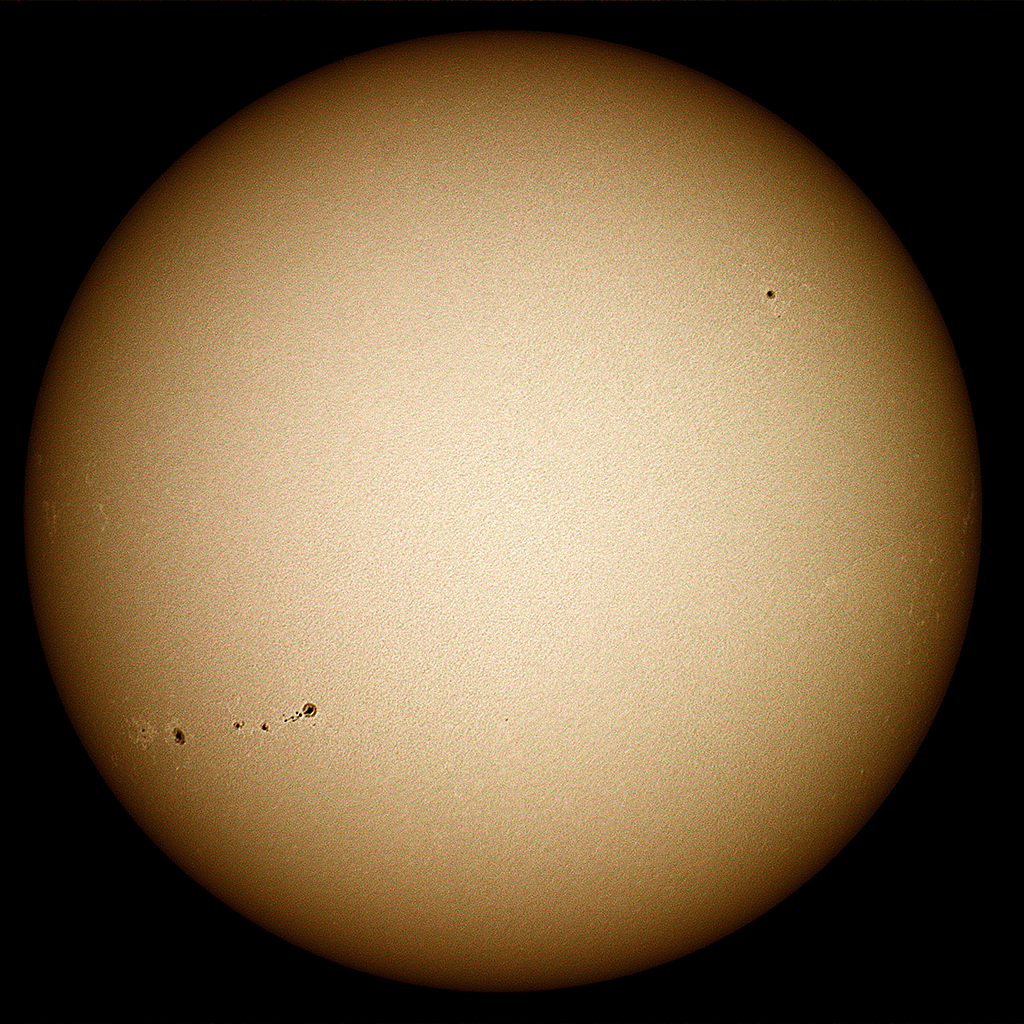
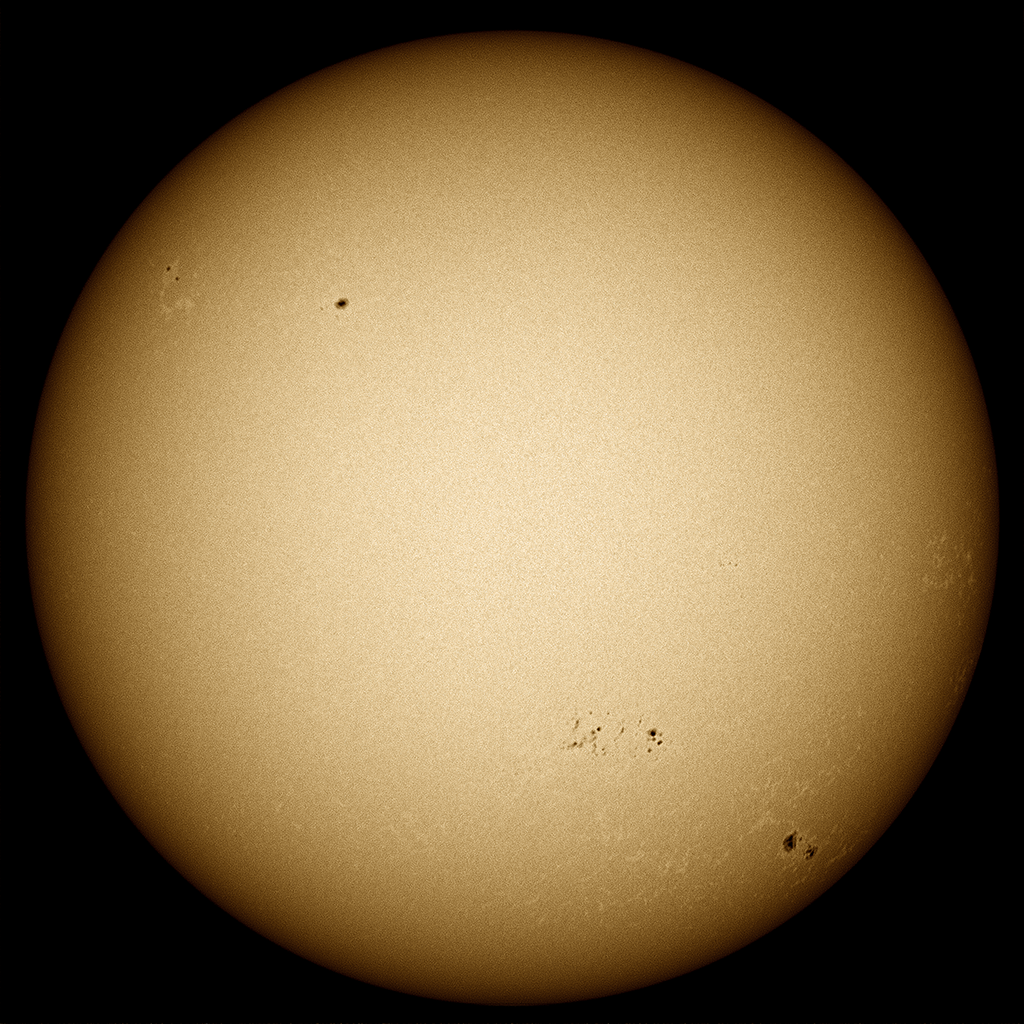
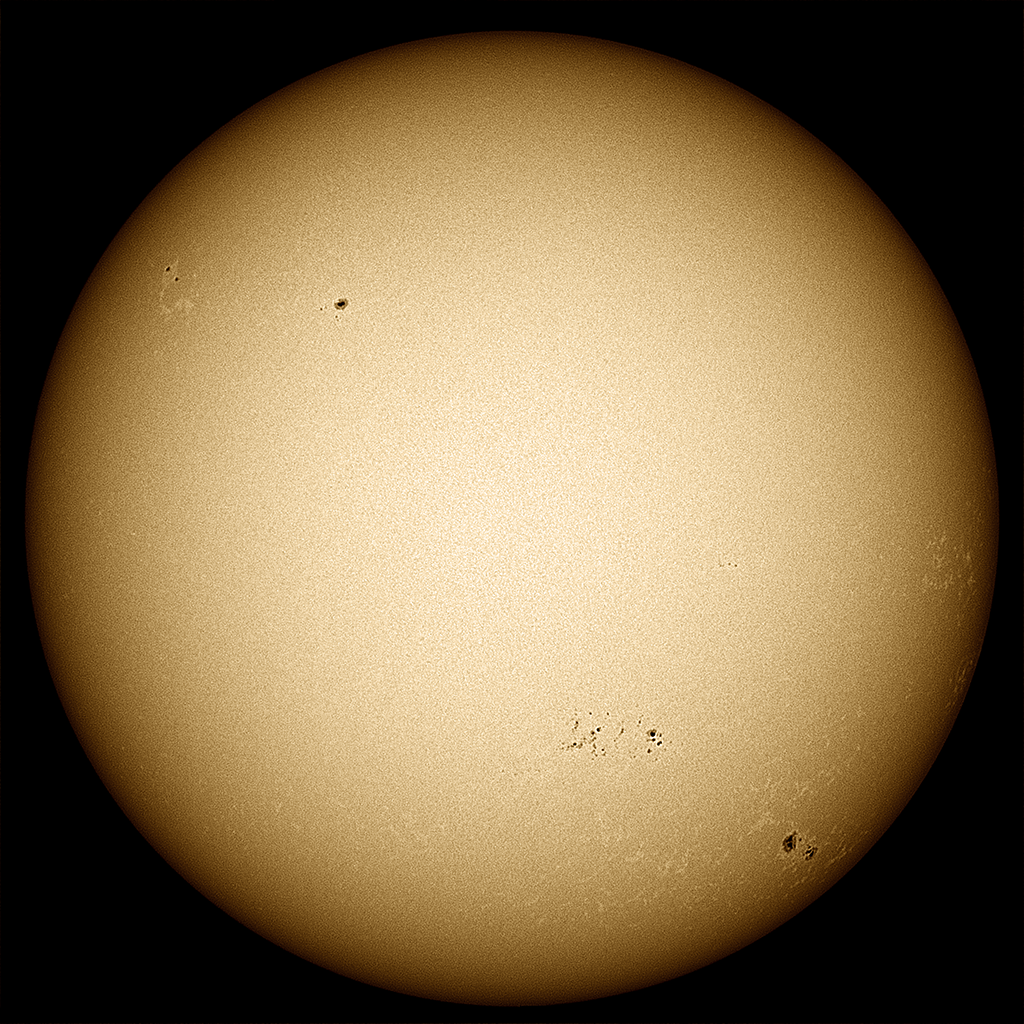
I almost didn’t post this because I can’t quite believe the results are so poor for the second image, but here it is. I’ll try again tomorrow if the weather holds out. A stack of 60 images, processed from RAW in PIPP, stacked in Registax v6 and finished in Photoshop. Identical processing other than the exposure time.

The first one is 1/1000th @ ISO100 which is what I normally use. This gives me a histogram peak about one third of the way across the graph in APT. The second is 1/320th @ ISO100, which I chose because it gave me a peak about two thirds of the way across.

To me, this second one looks out of focus but I didn’t touch anything but the APT controls between taking the two:

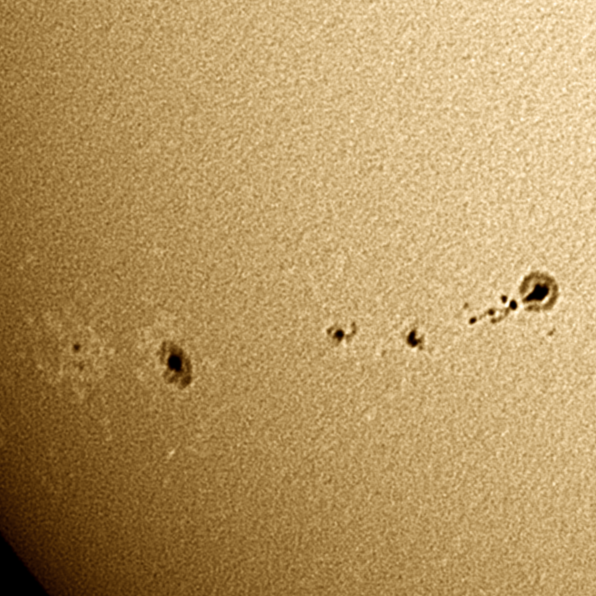
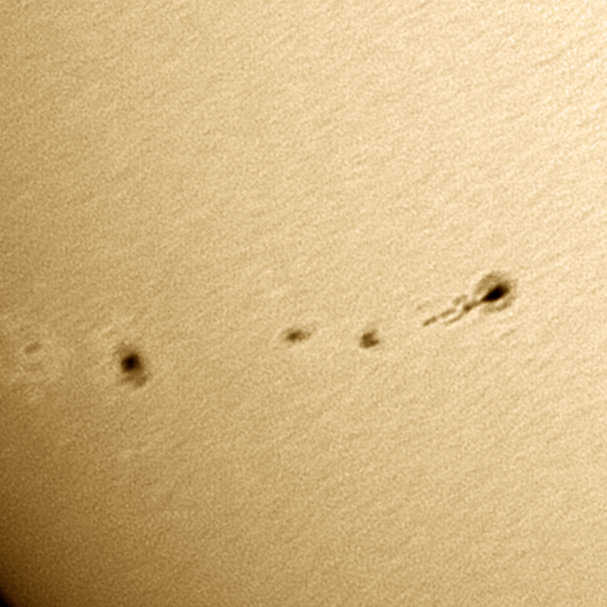
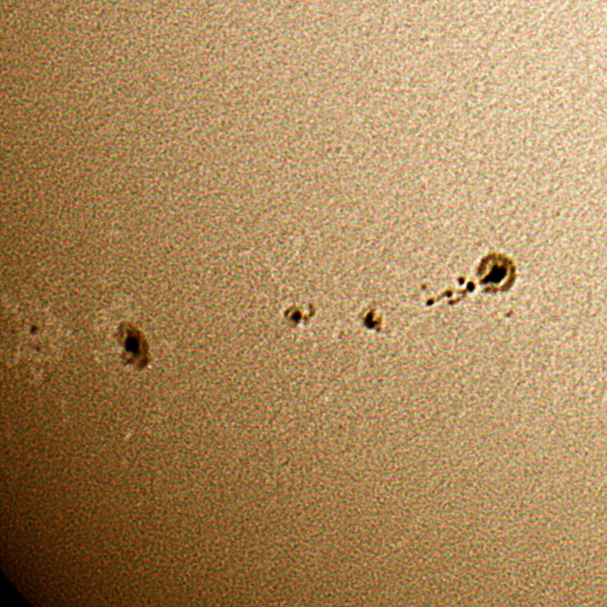
And a comparison of the sunspot area at the bottom left:

I don’t know if the brighter image caused Registax to have trouble aligning the frames, or if there’s some other processing issue, but clearly the 1/320th sec exposure image looks awful. I’ll post another test when I can do one, but on the the basis of this result I shall be keeping my histogram output well to the left.

Posted in Astroimaging, Astronomy | Tagged , | Leave a comment

Comparison of JPEG and RAW White Light Solar Images

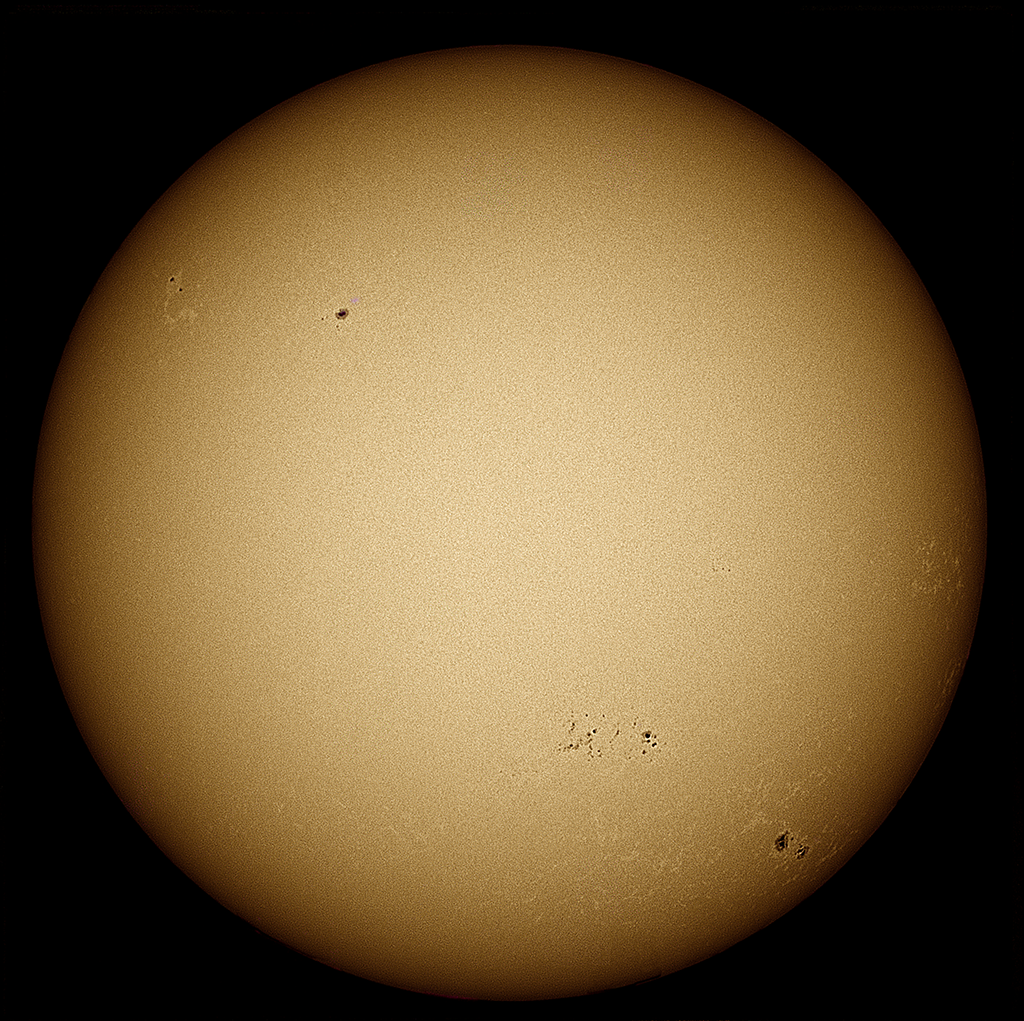
These two images were taken from the same imaging run, 60 of 120 images stacked, 1/1000th @ ISO100. The RAW files were processed with PIPP, but I couldn’t get Registax to process the TIFF files produced by PIPP from the JPEGs so I used the camera JPEG files directly. Both stacked in Registax v6 and finished off in Photoshop. I don’t think I need to hide which is which. It’s blindingly obvious…

First, the image from the RAW files:

and from the JPEGs:

And crops of the sunspots from the full size images:

I might try again, converting the JPEG to monochrome first, but I don’t think there’s any real comparison. The reduction in size of the JPEG in the full solar image clearly does it a lot of favours.

Posted in Astroimaging, Astronomy | Tagged , | Leave a comment

Another wide field Andromeda Galaxy Attempt

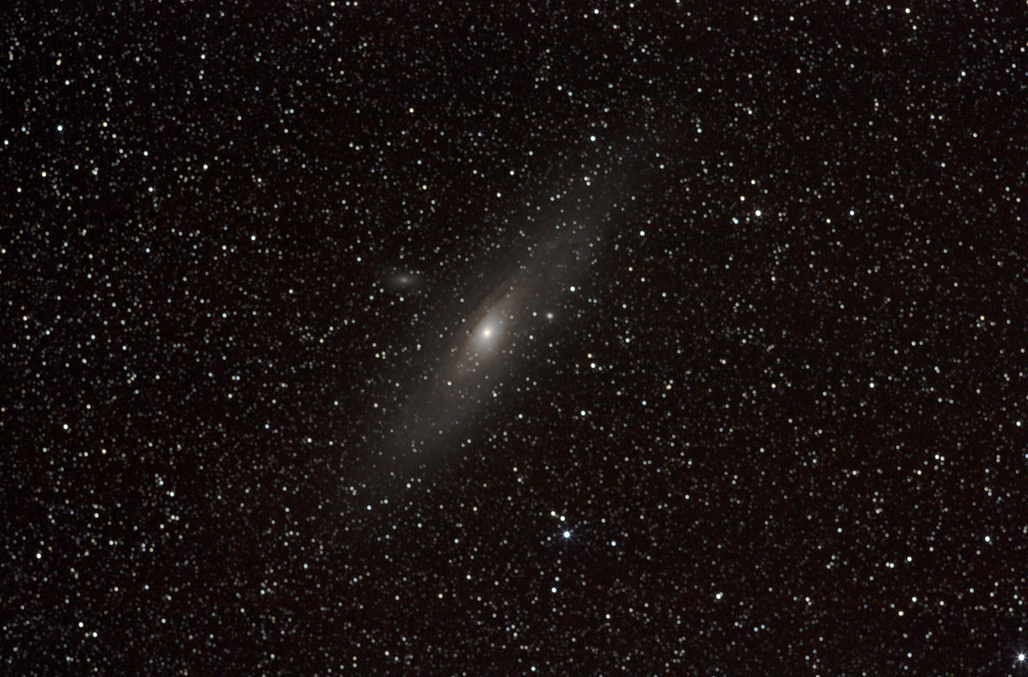
Fresh from my previous attempt at this I repeated the process, but this time in the capture application (APT) I pushed the live view zoom up to 10x and set the emulated ISO setting to 1600 with an exposure as long as it would stand. I then adjusted the focus to minimize the size of the (few) stars that I could see. This resulted in a much better-focused image. So much better in fact that a small amount of star trailing is evident 🙁 Without drift aligning I think that’s probably to be expected, but I might try to fix it for next time. Overall I think it’s a much better image than the previous one.

Posted in Astro Equipment, Astronomy | Tagged , , , | Leave a comment

Widefield Andromeda Galaxy

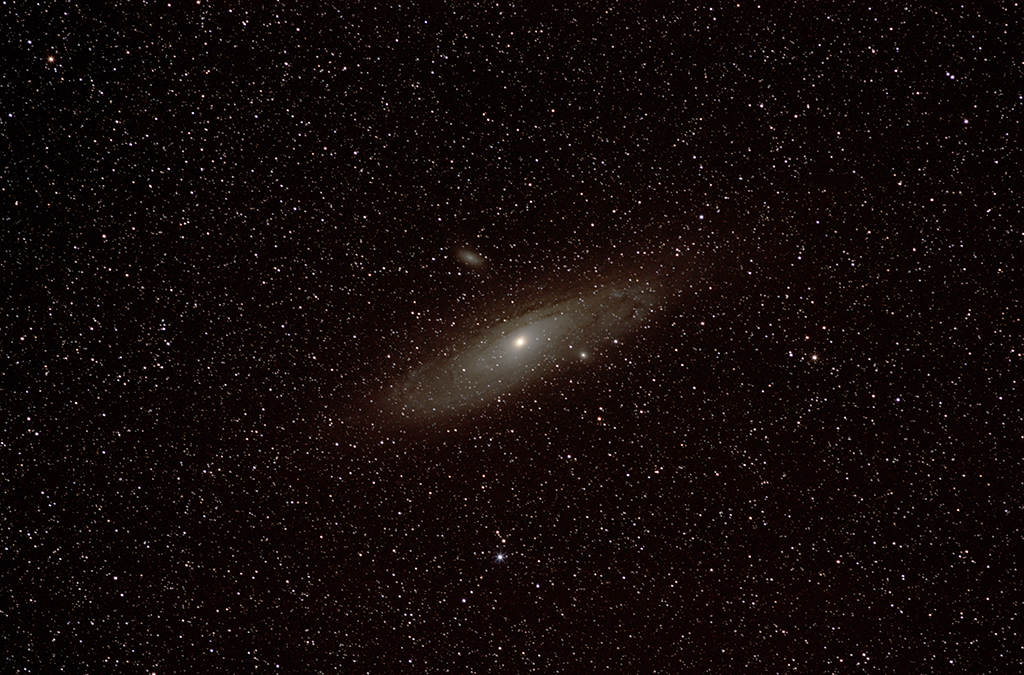
This is the first time I’ve ever attempted this sort of image. I left the telescopes in the house for this one, just taking out the Canon 450D and 200mm f/2.8L lens on my unguided EQ3-2 mount. I shot ten images of four minutes exposure at ISO800 and f/4.5 together with five darks and stacked them all using Deep Sky Stacker, tweaking levels and curves in Photoshop. For a first attempt I guess it’s ok, but I really didn’t get the focus right and it shows. I’m pleased at least to have picked up the some indication of the dust lanes.

What really amazes me about this picture is that all the stars are actually in the Milky Way, so far closer than the three galaxies (M31, M32, M110) visible.

Posted in Astroimaging, Astronomy | Tagged , , , | Leave a comment

Season of Mist and Mellow Fruitfulness

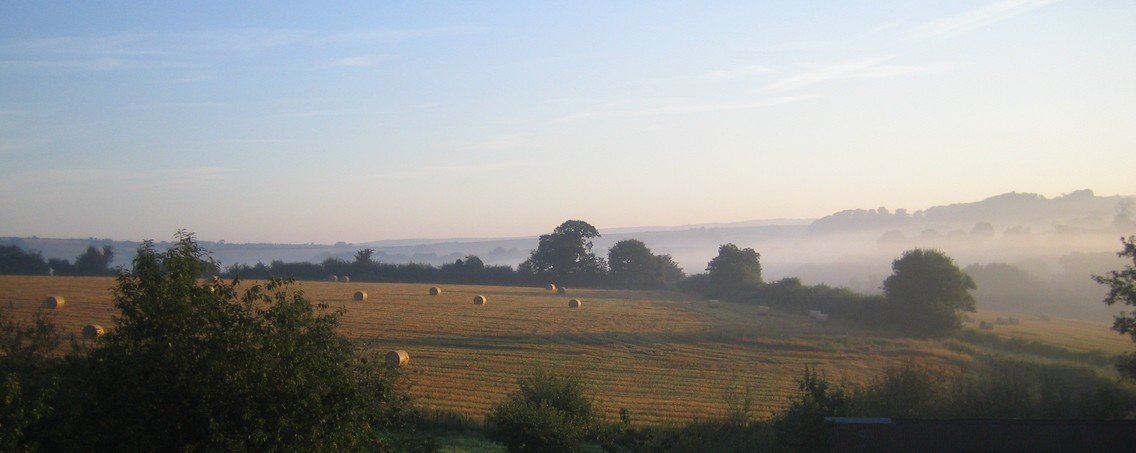
It seems that after a no-show Summer, Autumn is forcing its way onto the scene already. This was the scene from one of my windows a couple of days ago, first thing in the morning (look at the lengths of the shadows in the field). Sadly I didn’t have time to do it justice. I just had to get a quick picture with a compact camera.

Posted in Environment | Leave a comment

Solar Imaging with the 127 Mak

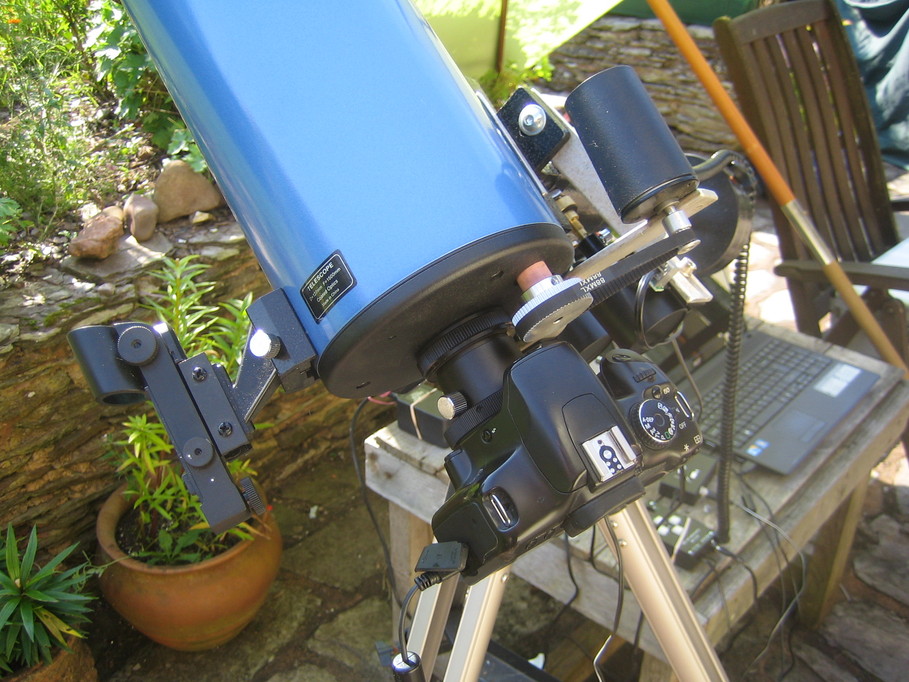
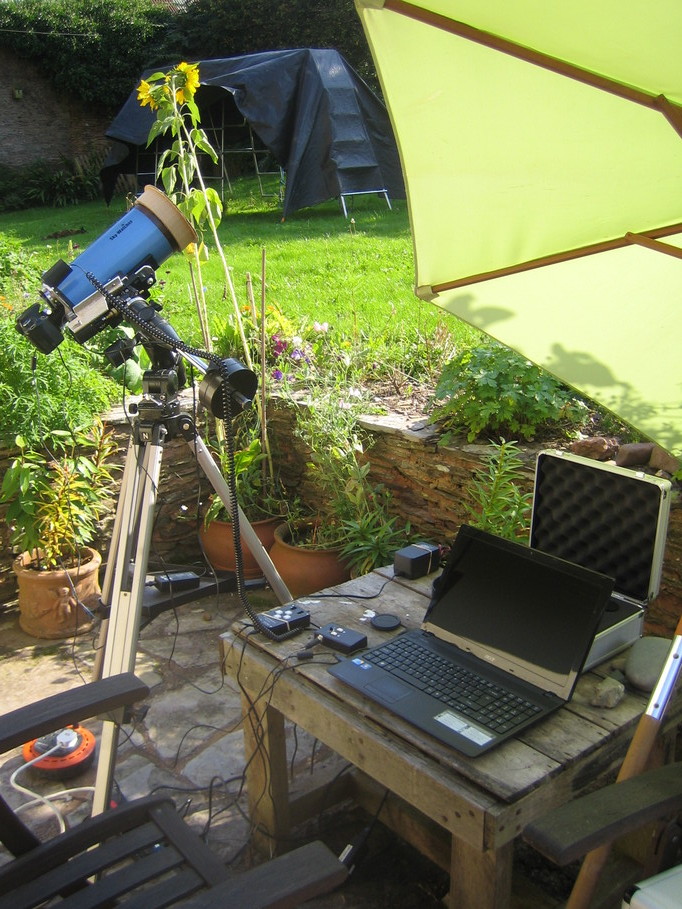
Someone was asking about the set-up of a solar imaging system, so I took these photos of mine “in action”. There’s really nothing special here other than the motor focuser that I cobbled onto the back of the Mak. The camera is a Canon 450D with a T2 adapter fitted straight to the visual back on the telescope. It has an external PSU and is controlled by a laptop using APT via a USB cable. The mount is my somewhat ancient EQ3-2 with dual axis motors. The solar filter is home-made, using Baader Solar Film.

Posted in Astro Equipment, Astronomy | Tagged , , , | 2 Comments

Stacking Canon RAW CR2 Files For Solar and Lunar Imaging

I use Deep Sky Stacker for stacking images from my 450D for wide field shots of the night sky, but I’ve struggled getting anything to work for solar and lunar images. Some people I’ve discussed it with have found no problems whilst others just haven’t been able to get it to work at all.

I was in the latter category and resorted to stacking the JPEG files produced by the camera rather than working from the RAW CR2 files which would always be my preference as the JPEG compression is lossy.

Initially I experimented with converting the CR2 files to TIFF using ImageMagick, but despite trying to stack those files with both versions 5 and 6 of Registax the stacking was very poor, and AutoStakkert 2 ran for ten hours without producing a usable result. Looking at the content of the TIFF files it appears that they contained a large amount of noise and I believe that to be the cause of the problem.

I then tried Canon’s DPP software which came with the camera. That can convert RAW images to TIFF in batch mode and appears to produce much cleaner files than ImageMagick. Again however all three stacking applications struggled to get anywhere, producing poor results.

Finally the author of PIPP suggested I try the new “almost-ready-for-release” version. It should read in the RAW files, crop them to a box just larger than the image and save them again as TIFF. I had a few niggles along the way but we got it to work fairly quickly and the resulting files now stack quite happily.

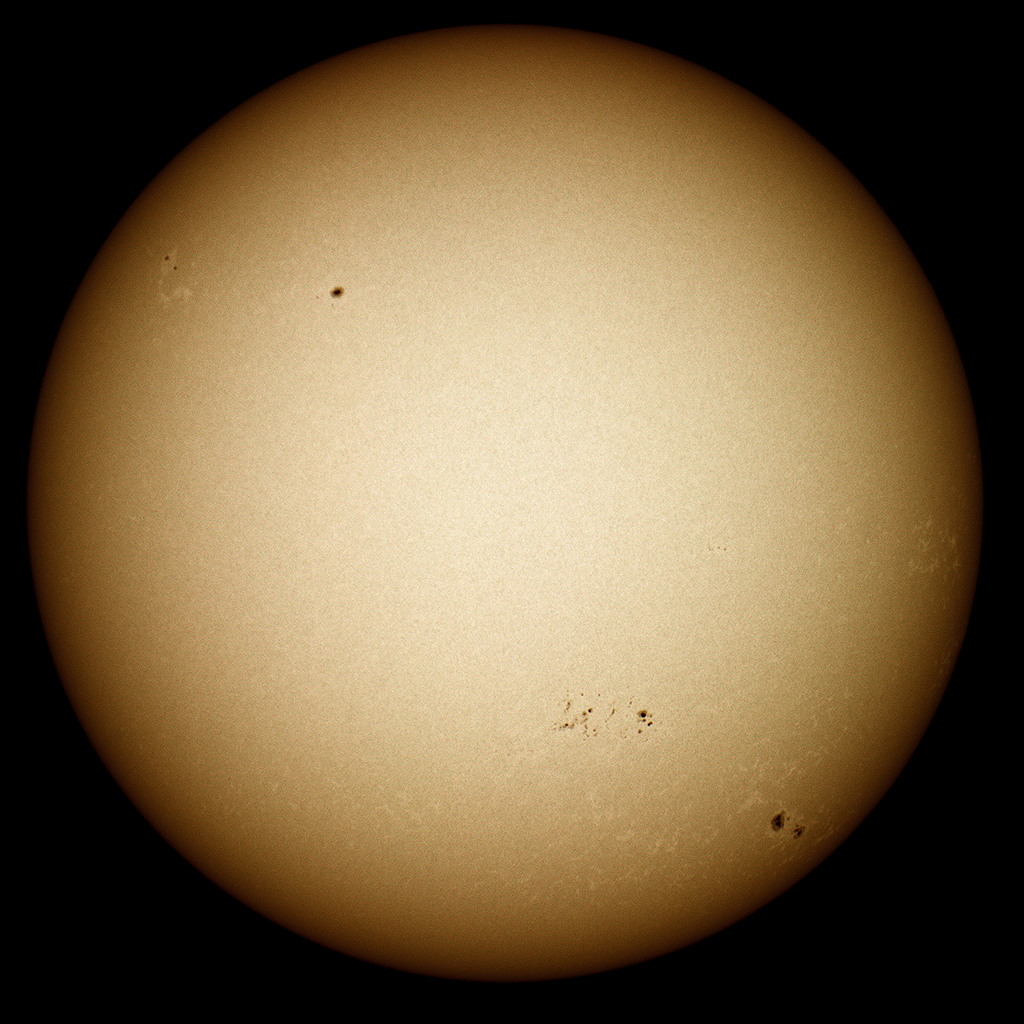
I intend to repeat this experiment when I next have the opportunity to do some solar imaging — the forecast is not looking good this week, but here are my results thus far. The processing is as far as possible the same except for the stacking, and all four images are taken from the same original imaging run. In the case of Registax, 54 frames were stacked in each case. I don’t know how many AS!2 chose to stack.

First, the result from using the JPEG files:

Then from the RAW files, preprocessed with PIPP and stacked with Registax v5:

And the same files stacked with Registax v6:

And finally stacked with AutoStakkert 2:

I think it’s a close call between the last two to decide which is best. I believe I can see a purple-ish “ghost” above the large dark sunspot towards the top left of the Sun in the last image though, so for the moment, for me, I think the third comes out marginally on top.

Posted in Astroimaging | Tagged , , | Leave a comment

Solar PV Generation Update, September 2012

We have reached the end of the first year with out solar PV installation and quite an odd one it has been, too. We had one of the mildest winters and generated far more in the first six months than I expected, followed by what is likely to be one of the wettest summers on record (and if it doesn’t turn out to be the wettest on record then it won’t be far off).

Despite this I’m pleased to say that the total generated power for the first year was 3,270kWh. This far exceeds the estimate given to us by the installer of 2,903kWh and is just over my own estimate based on our location and the orientation of the roof of 3,222kWh. Total generation for August was 356kWh, which is still lower than the models would predict.

This brings the total FIT income for the first year to £1507, with a further saving of up to about £490 on electricity we haven’t had to purchase from the grid.

Here’s hoping that the next year is somewhat better…

Posted in Environment, Projects | Tagged , , , | Leave a comment

10″ Dob First Light

Unbelievably it’s actually six weeks since I managed this, but I got around to writing it up in the end…

Very unexpectedly, having finished my dob build the day before, around midnight there was a break in the cloud and as I’d left it in the workshop the dob was suitably cooled already. The seeing was pretty poor, the ground was sodden, rain was still dripping from the trees and the moon was still bright, but I was determined to test my new scope out.

My first problem was immediate: “How on earth do you tell where it’s pointing?” It’s nowhere near as easy to “aim” as a fast ‘frac and the optical finder didn’t show me enough of the sky to work out where I was. Eventually I settled for sighting down the top truss tube on a brightish star which would then be in the eyepiece. A telrad or RDF at the very least is on the cards I think. The next issue was that the low-profile focuser didn’t have enough back-focus for the eyepieces to reach focus. I had to add an extension to sort that.

I’d only lifted the scope to just outside the door, so had a view of the south-western sky from the zenith down to about thirty degrees, and round from Ursa Major to the point where the moon washed everything out. Obviously then my first target had to be M13, especially as I can find it even with only a few visible reference points.

Oh

my

God

Absolutely nothing had prepared me for the quite astonishing view, especially given the poor seeing. I’ve been using the ST120 a lot of late and with it M13 is mostly a fuzzy grey blob with the odd star around the outside. I could see stars, more stars, and even more stars. Cackling like a witch I ran up the eyepiece focal lengths to 9mm and it just looked even better. Probably just as well everyone else was in bed, really. The detail was astonishing. I couldn’t make out the propeller, but in the conditions there was no way I expected to.

Time was ticking on and I’d not intended to be out at all, so I swung around to Sagitta which was barely visible in the moonlight. Hop up the “arrow” and right a bit; oh, no, hang on, left and right are the correct way around; it’s up and down that are reversed now. Ok, right a bit and “Whoa! That’s the Dumbell?! It’s *huge*!” I’d hardly claim it was stunning, half washed out by moonlight as it was, but the definition was very impressive.

Last DSO to try was M57. I skipped over to Vega which appeared astonishingly bright in the eyepiece and then star-hopped my way down. With the ST120, M57 is, well, a bit underwhelming, to be fair. With the 10″ it looked clear and bright and again very well defined as far as I cared to push the magnification.

As the moon had cleared the house I couldn’t not have a look at that too. Foolish of me not to fit the moon filter. I nearly blinded myself. Pushing the magnification up to 200x helped a bit, but keeping something in the field of view at that kind of magnification is clearly going to require a little practice on my “nudging” technique. Nonetheless I could easily make out the central peak of Tycho and the terraces inside the crater walls. Scooting about the surface to features I’ve viewed before showed up so much more detail, though getting my head around the opposite image inversion to a ‘frac caught me out quite a few times.

At 1am the clouds started to reappear and I called it a night. Overall I’m really happy with the optics and the functioning of the alt bearings. I’m not totally happy with the az bearings and those will require some adjustment to get right. And I need a non-magnifying finder. Probably the biggest issue is that I really do need a set of wide-angle eyepieces now. I was using my BGOs for the higher magnifications and whilst they produced very crisp views they just don’t have the field of view required for this scope. Oh, and collimation. It was easy to do with the exception of finding the secondary adjusters with an allen key in the dark. Bob’s knobs or something similar are going to be required there.

I can’t wait to see my first galaxy with it.
Posted in Astro Equipment, Astronomy | Tagged , , | Leave a comment