No dig diary, 3rd April 2021

Today I’ve sown more peas for shoots, using up the last of the seed from last year, some leeks and green and red basil. I’ve returned the aubergine seedlings that were in the greenhouse to the propagator as they seem to be struggling in the colder nights, particularly after they suffered a slug attack a few nights ago. Whilst reorganising trays to make room I noticed that I now have eleven multi-coloured pepper seedlings and all of the seeds of the two varieties of melon that my daughter sowed on Monday evening have already germinated.

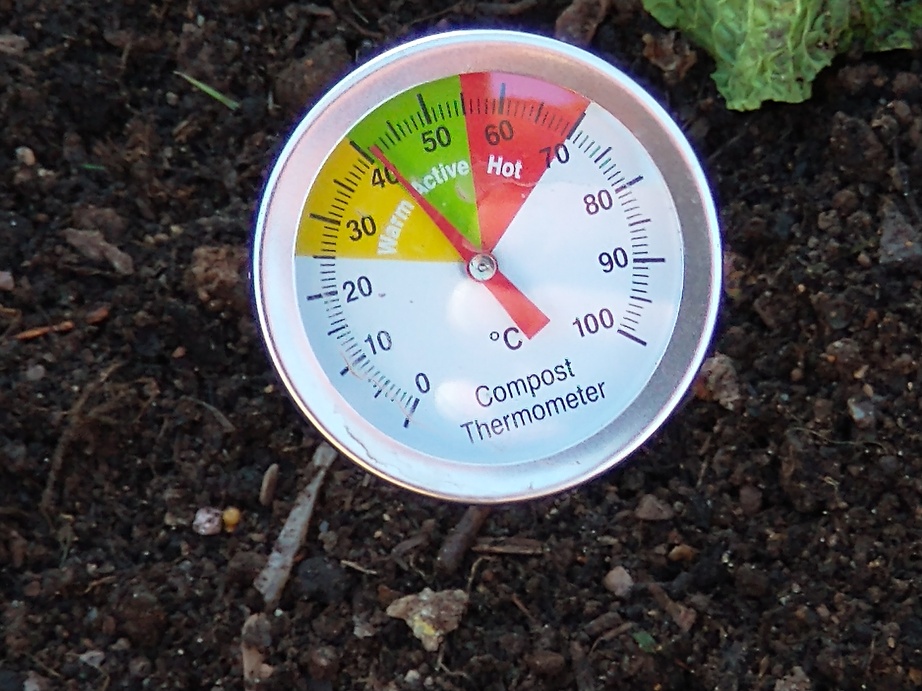
As a counterpoint to the chilly forecast, this evening I decided I’d put some cardboard across the front of the compost bin we’ve been filling since November and rake the composting material level. Initially there’s no front on the bins so we can walk in with stuff and dump it in a pile against the back wall, but the pile is now reaching the front anyhow. To allow us to keep filling it I put a pallet across the front and use cardboard to stop things falling through the holes. The compost seemed quite warm when I moved it, so I put the thermometer in:

I was quite impressed given that bar a couple of unusually warm days the maximum temperature here is hovering around 10C at the moment and it’s dipping close to freezing most nights.

Posted in Smallholding, Veg plot | Tagged , , , , , , | Leave a comment

No dig diary, 2nd April 2021

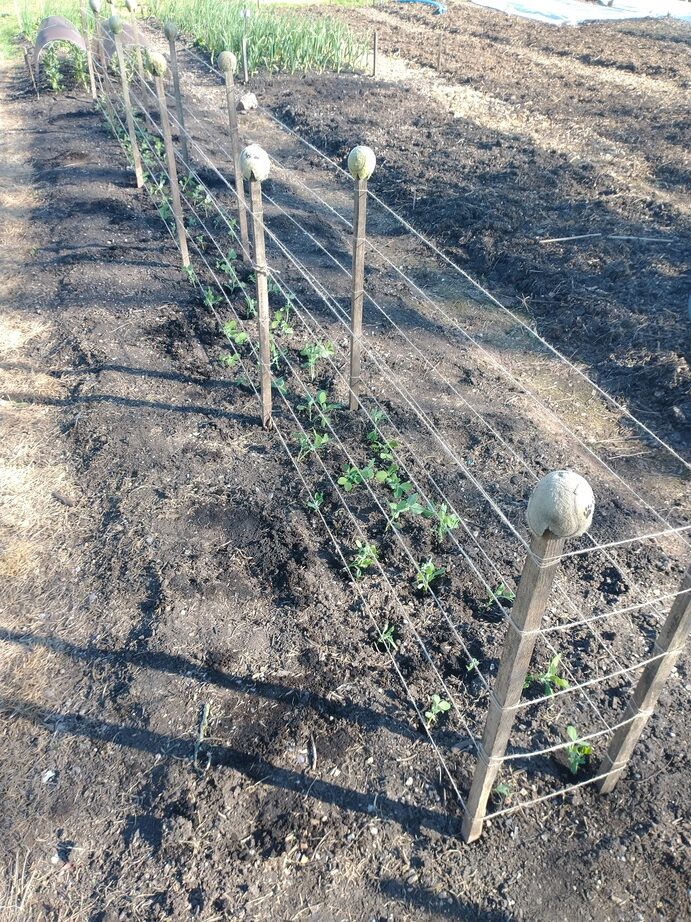
It being Easter weekend I felt that I should follow John and Yoko’s advice and give peas a chance. So yesterday afternoon I collected up all of my germinated pea plants, some giant matchsticks (or wooden stakes with worn out tennis balls over the ends) and jute string (because when the peas are done I can just cut it free and put it on the compost with all the plants — no need to separate it out). It took a while to get everything done, but now, in this little corner of West Somerset at least, we have peas on earth.

Last year I grew them with only a single set of strings and they struggled a bit to find their way up, perhaps because it can be quite breezy at times, so I’m hoping that with strings either side they’ll get the idea a bit more easily. I’ve also reduced the spacing between the strings a little.

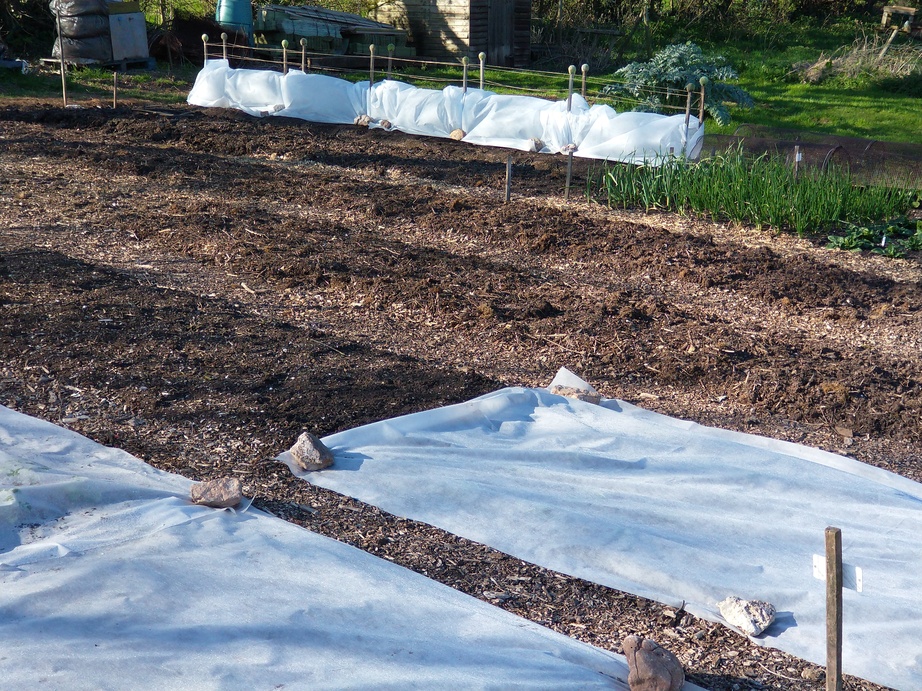
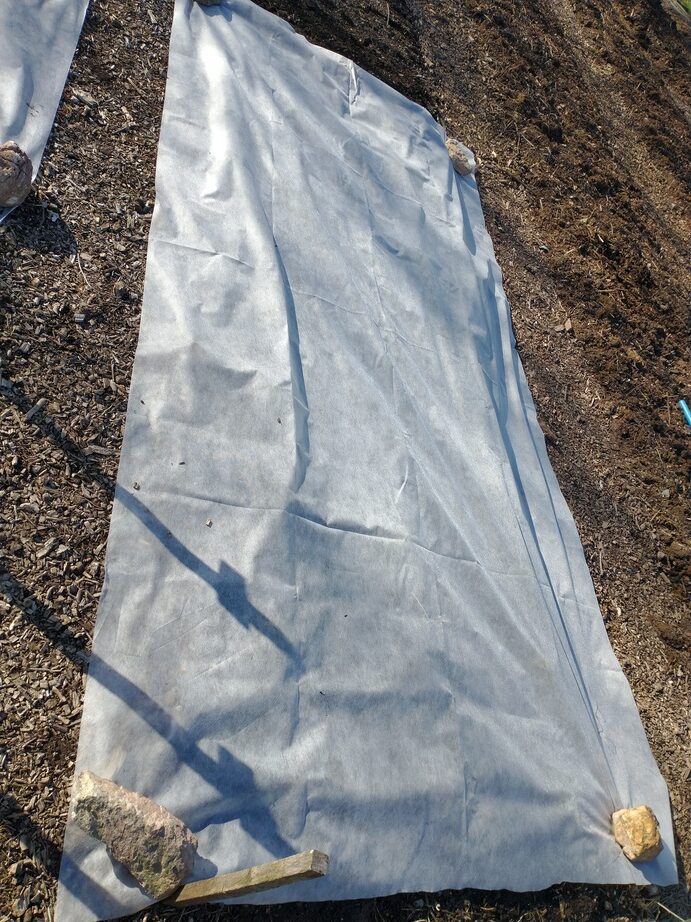
Unfortunately we’re forecast a very chilly week next week with temperatures dropping below freezing overnight, so I’ve also smothered them with fleece to give a bit of protection. The, err, peas de (frost) resistance, as it were.

I also planted out some peas germinated from seed left over from last year under the fleece in the foreground, but they’re just for shoots to eat in salads so they can trail on the ground.

Once the fleece comes off (hopefully by the end of the month) I’ll still need some sort of protection for all of them as the pair of partridge that raided the veg plot last year are still around and if I leave the plants uncovered I know they’ll be straight in there, taking the peas.

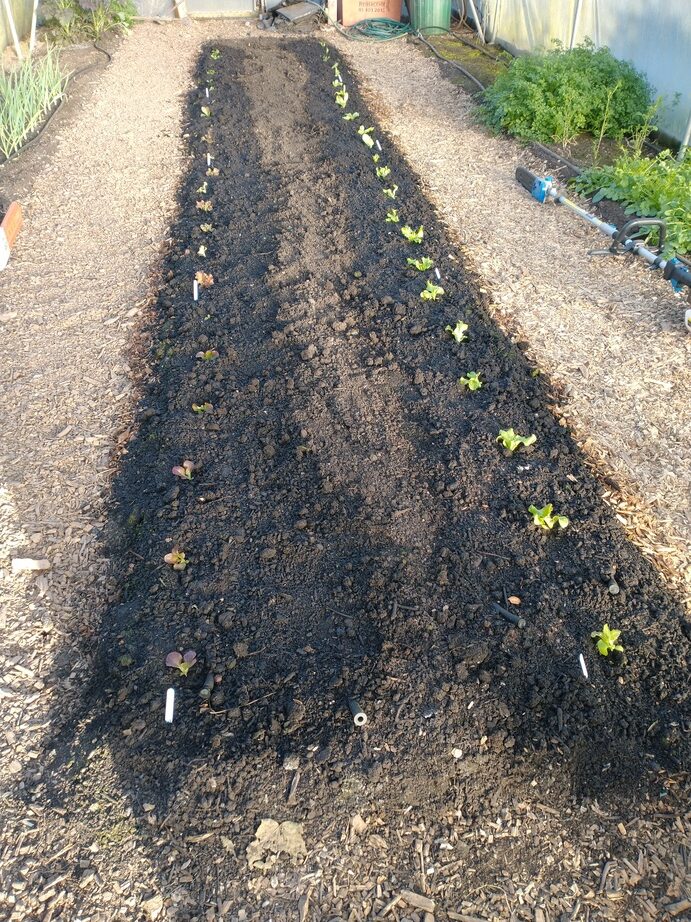
I had various types of lettuces and some wild rocket ready to plant out, so I’ve put them down the edges of the centre bed in the polytunnel. There’ll be a double row of tomatoes down this bed in the fullness of time, with some calendula in a single row right down the middle. The lettuces will get removed as we eat them and have more ready outside.

Posted in Smallholding, Veg plot | Tagged , , | Leave a comment

No dig diary, 29th March 2021

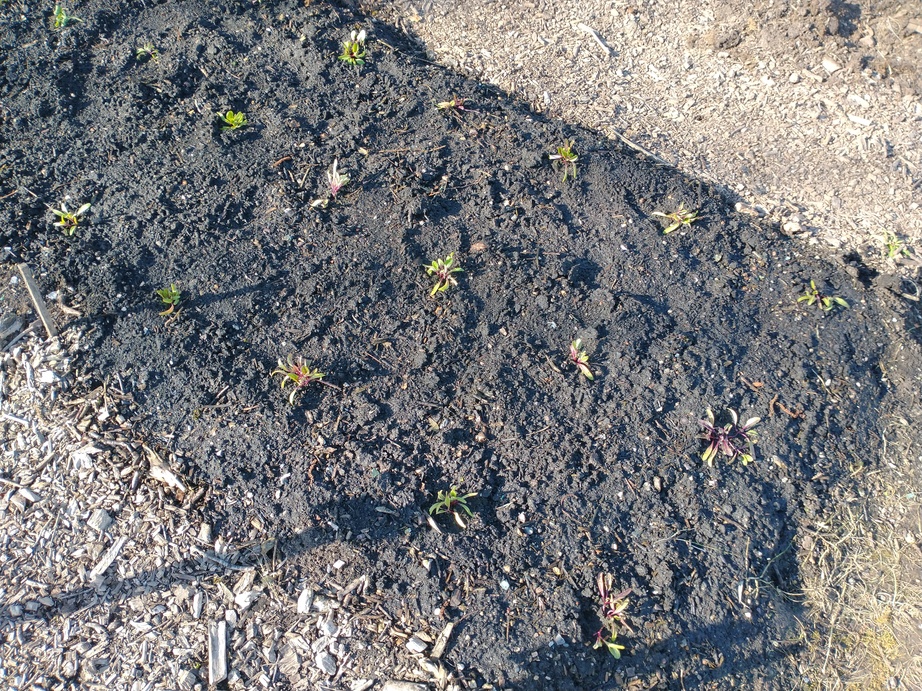
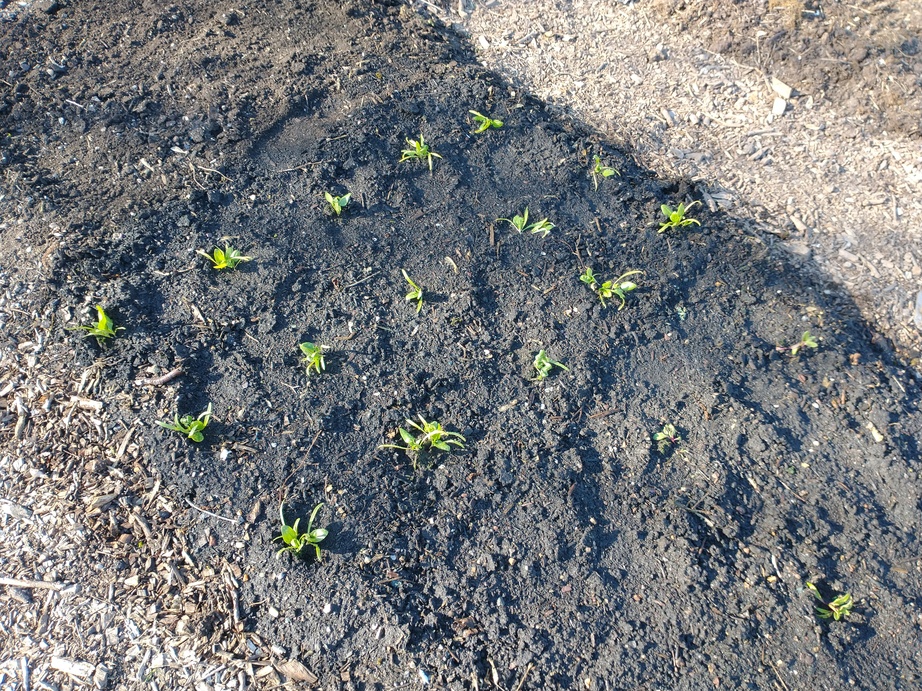
High time I planted out my first batches of beetroot and spinach, today. These were sown on 5th February with a few additional seeds sown on 19th February to make up for the fact that germination wasn’t brilliant. The beetroot were sown four seeds to a cell and the spinach three seeds to a cell. Where the beetroot germinated more than four seedlings, I thinned them back down to four.

For the beetroot I dibbed holes in the compost on a 12″/30cm grid and dropped the plants from the cells into the holes. Again I wasn’t really happy with the size of the cell. Having done it a few times I really do now think that the 5cm-ish cells are too large for this process.

The spinach was the same, but on an 10″/25cm grid.

Once planted I watered all the plants in and covered them with fleece as despite the weather being warm enough to wear shorts, it is possible that we may still have frosts for the next few weeks and the fleece should give the plants a little protection from the cold.

Posted in Smallholding, Veg plot | Tagged , , | Leave a comment

No dig diary, 27th March 2021

Today I wanted to sow a second batch of calabrese (Marathon F1) and some early cabbage (Greyhound). I’m hoping that successional sowings of the calabrese will give a crop over an extended period as last year we had heads ready to pick for about a week and then it was all over. I have been wondering if I shouldn’t perhaps just sow enough seed for perhaps four plants every two weeks for as long as three months to try to get a decent number of heads over the summer and autumn, but management of the plants would appear to be quite awkward in that case. It might in fact be easier to have an area of the plot that is “brassicas ready in July”, then “brassicas ready in August” etc. rather than keeping each variety in its own space. I have time to give that some thought, anyhow.

I used one of the new twenty-cell module trays with enlarged holes in the bottom of the cells and sowed one half with calabrese and the other with cabbages, three seeds to a cell. I’ll thin them down to two and then one as the plants germinate and start to develop, assuming all three seeds germinate in the first place. The seed is from last year so it may be the case that germination is patchy.

I also sowed a couple of trays each of cornflowers and calendula, mainly with the intention of using the flower petals in salads, but also because the calendula are supposed to be good companion plants for tomatoes, so I’ll plant a row down the middle of the double row of tomatoes in the polytunnel.

I noticed that some of my peppers have been attacked by greenfly that presumably moved over from the winter salads. I’ve been knocking the aphids off the plants and removing them, but more aggressive control may be required in time.

Posted in Smallholding, Veg plot | Tagged , , , , | Leave a comment

The trouble with module trays

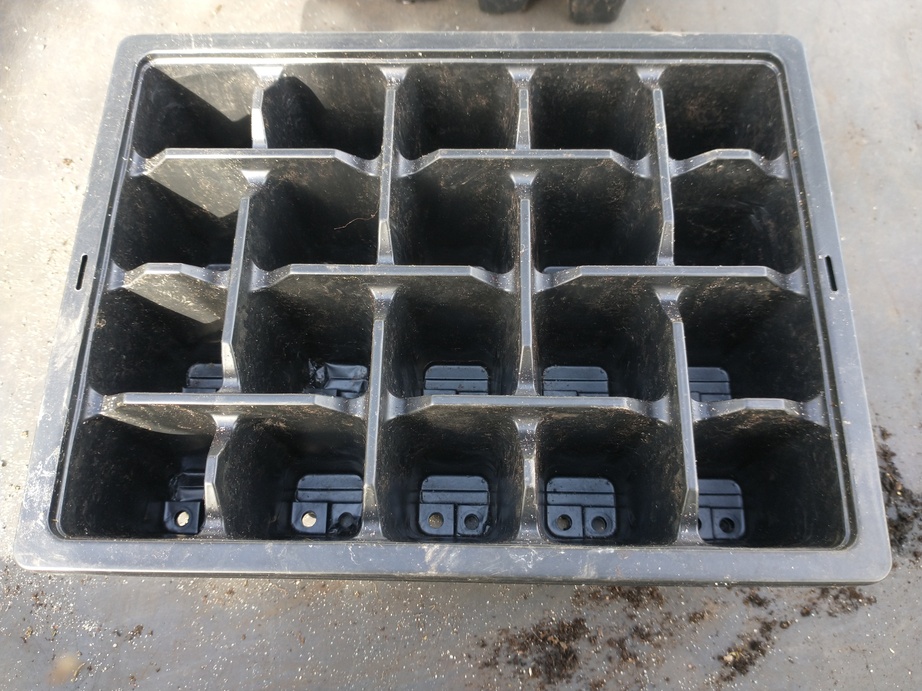
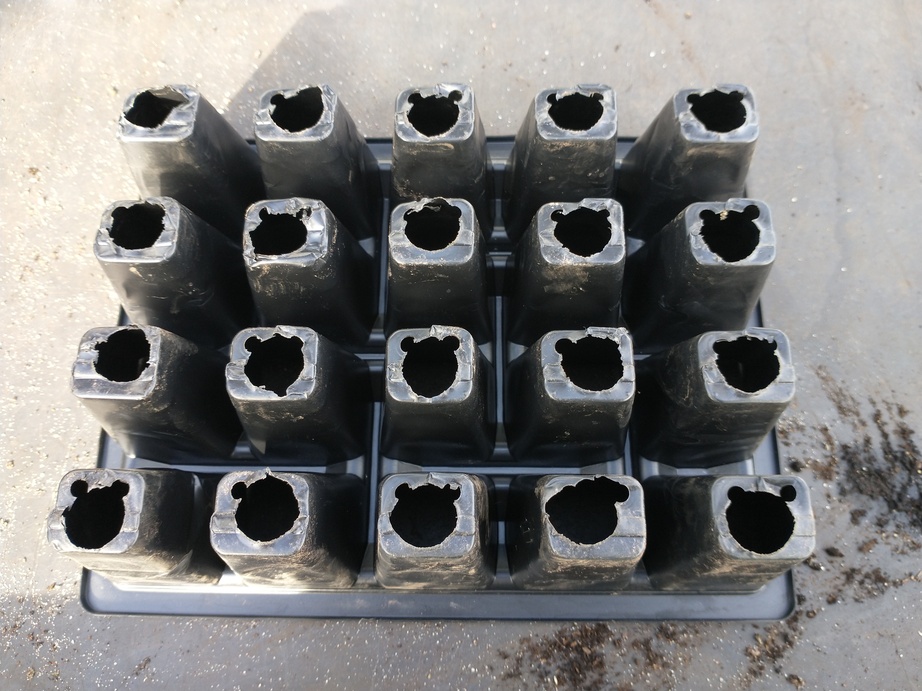
We have plenty of module trays around, but whilst they’re very convenient for sowing seeds in and raising seedlings they can be really awkward when it comes to getting the plants out without damaging either the plant or the plastic of the tray. I could buy different ones, but I don’t like throwing away plastic just because it doesn’t suit me and in fact the only ones I’ve seen with decent size holes in the base are about three times the size, which would be inconvenient from the point of view of keeping batches of seedlings separate. I have about forty of these trays (about 23cm x 18cm) in use at the moment and I could easily add another ten more this weekend:

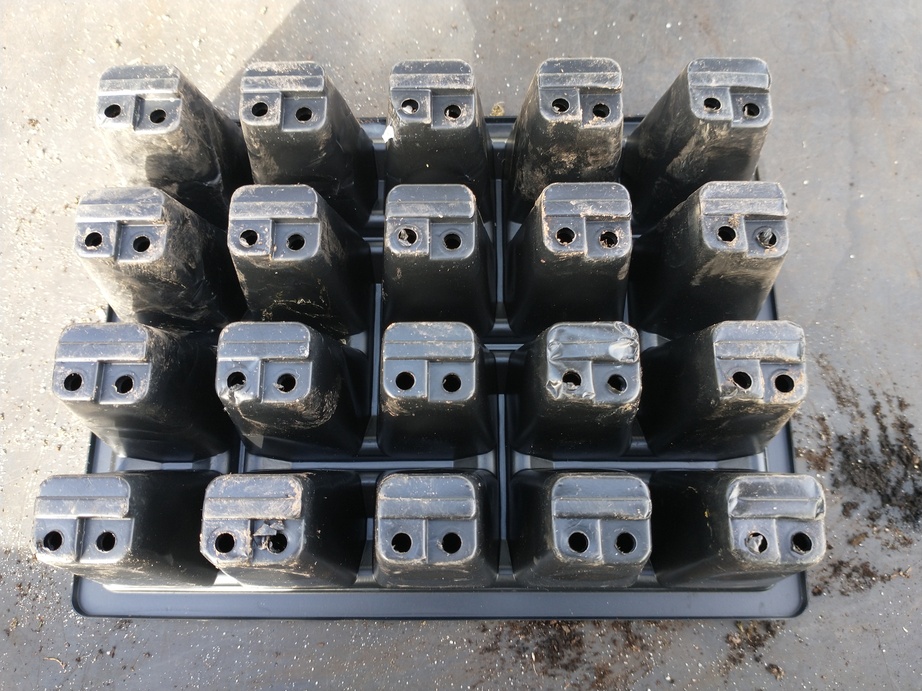
To remove a plant it’s often necessary to squidge the sides of the cell and pull the plant out by the stems, often whilst tipping the tray on its edge and risking other plants falling out or getting damaged. And if that doesn’t work then forcing the base of the cell upwards seems to be the only way, but that often splits the sides. What’s really required is a decent size hole in the bottom that I can put my finger through, to be able to push on the compost rather than the plastic. These are too small even to use a pencil:

Trying anything with scissors or a knife to make a large hole would probably drive me insane, especially if I were trying to do fifty or sixty trays. I did try grinding a length of 20mm electrical conduit to sharpen one edge and then hammering it into the bottom of the cell like a hole punch, but that just bent the bottom of the cell out of shape. What I didn’t realise at the time was that the piece of timber I was using to support the base of the cell at the time was just too soft. My father-in-law suggested I use a lump of lead that he has (he used to cast his own fishing weights) instead.

It works a treat! 🙂 I now have a number of trays with lovely big holes in the bottom of the cells.

The holes are about 15mm in diameter which is big enough for a finger to just push the plug of compost up from the bottom quite easily, and a quick “test drive” confirms that as long as it’s gently firmed into the cell, no compost falls out of the bottom. I can even cut the holes in several trays at once, though it was a bit awkward to separate them afterwards. When the time comes to replace them I’ll probably look for a different solution — perhaps soil blocks, but for now it (hopefully) means that more plastic won’t be needlessly going into landfill.

I have some brassicas to sow this weekend amongst other things. I look forward to seeing how well they work in a month or thereabouts when it comes to planting out time.

Posted in Smallholding, Veg plot | Tagged | Leave a comment

DIY hoops for supporting mesh over veg plot beds

My intention is that crops such as radish and carrots should be permanently under protective netting this year, to minimise the damage done by carrot root fly and flea beetle. I also want to try to protect the brassicas from whitefly as much as possible (and butterflies, come to that). In the kind of volume that I want them, hoops to support netting start to look quite expensive, so I’ve been thinking about DIY solutions.

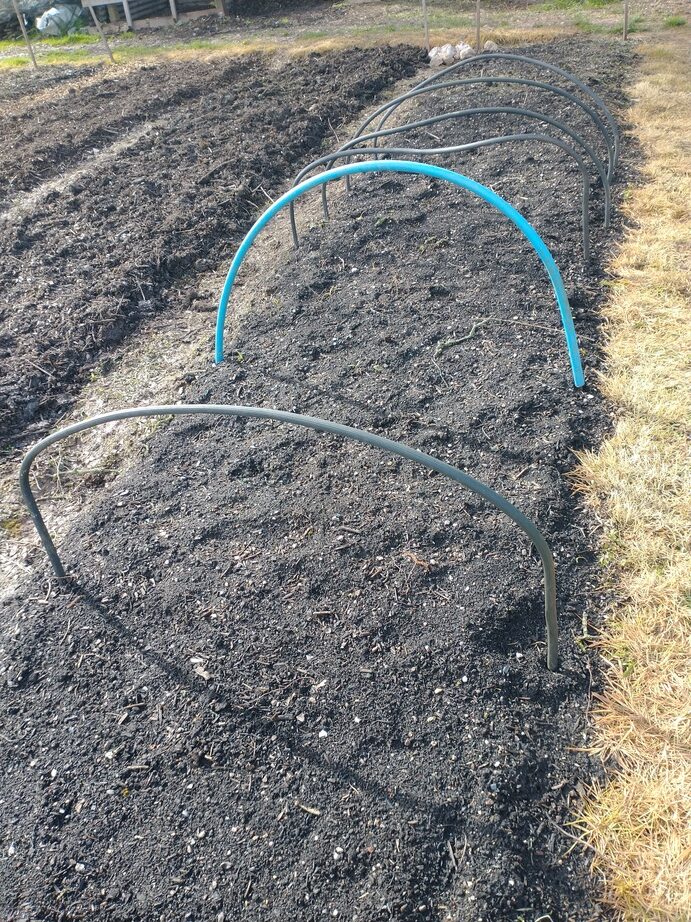
Initially my plant was to buy some 4mm galvanised fencing wire and bend my own hoops around a former. It’s a bit of a faff, but considerably cheaper than buying them. Last night I read some suggestions online about using either MDPE water pipe or lengths of garden hose, fitted over short lengths of garden cane at each end to make a hoop. As luck would have it I have a few off-cuts of MDPE pipe lying about, and some black 12mm hose pipe that must be close to thirty years old and has lost much of its flexibility, so I’ve made up a few hoops just to see if they stand up ok. Half of them I supported with canes pushed into the ground. For the others I found a 25mm square tree stake and ran it through the band saw to quarter it lengthwise and used lengths of those instead. My concern with the hose (which I certainly have plenty of) is that it might become too soft to support its weight in hot sun, but it may well work fine for the other 364 days of the year.

Posted in Smallholding, Veg plot | Leave a comment

No dig diary, 26th March 2021

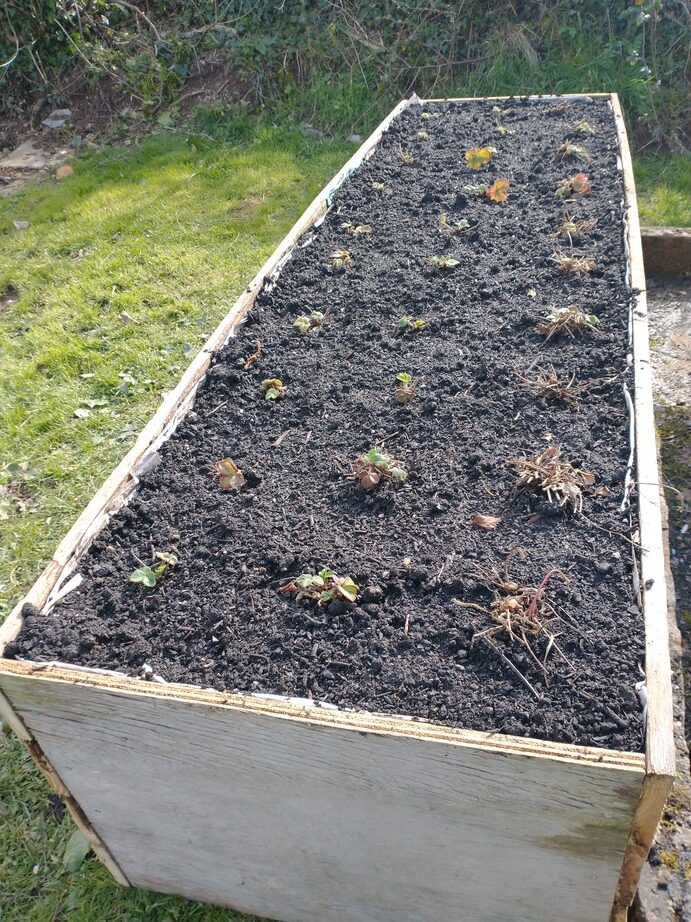
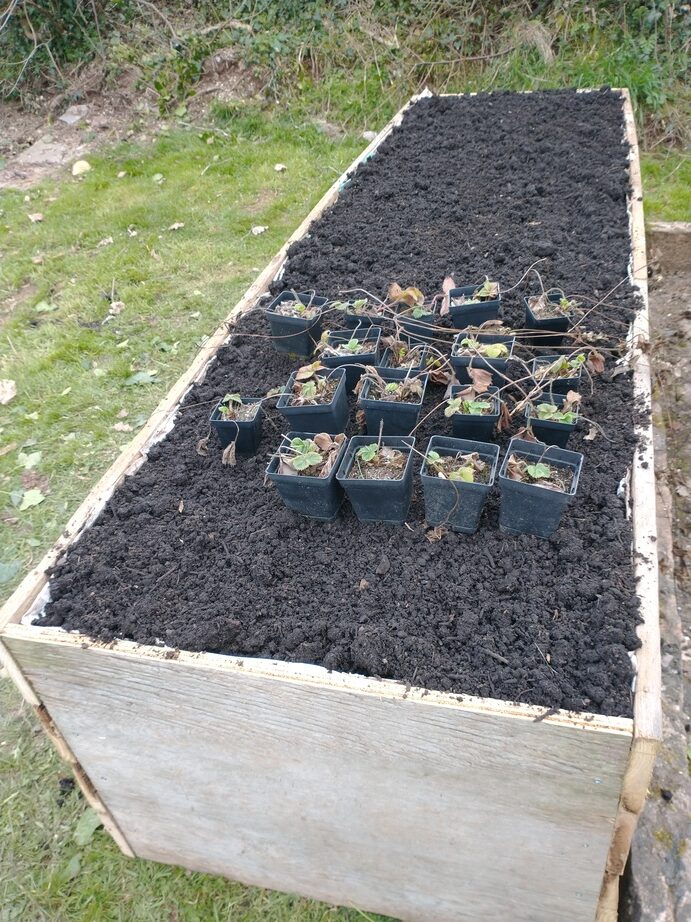
The no dig strawberry bed is now complete!

I went through all the runners that we rooted last year and picked out the ones that were already showing signs of life, planting them down the left and centre of the bed in the photo below. I then broke the original plants out of the growbags they were in and planted them down the right hand side.

There are about thirty runners that aren’t showing any sign of life yet, though it’s certainly early in the season, so I’ve brought them all into the greenhouse where I can look after them properly and I’ll see what happens. If many do burst into life then I’ll have to find somewhere new to plant them out, and perhaps make another no-dig bed for next year.

Posted in Smallholding, Veg plot | Tagged , | Leave a comment

Winter salads 2020/21 summary

So the experiment with growing salads for winter in re-used mushroom trays in the greenhouse is now over and I find myself considering how happy I am with the outcome, if I’d do it again and what I would do differently (if anything) if I do try again.

Overall, we’ve had a great mixture of flavours, colours, sizes and textures of salad leaves over perhaps three months of the last five (the first pick was on 25th October) totalling 1343g and they were a great pleasure to harvest and eat. Most of the plants did struggle to put on new growth through late January, February and early March however and I had to pick leaves from the excess plants I’d grown for this trial that I planted out in the polytunnel purely because I had the space available (albeit not the same space all of the winter…). I can’t deny that I’m pleased with the achievement, but I feel it could have gone better. In particular the green lettuces and salad rocket didn’t really perform very well with quite a few losses of the lettuces and I’d only rate the coriander as “fair” because it produced almost no leaves worth picking after Christmas. The Red Little Gem lettuces did ok, but the best performer of the lettuces was Lollo Rossa.

I will absolutely repeat the process this winter, but my circumstances have changed to make life a little easier for me in a way that may not be the case for others. The potential exists for me to grow salads over the winter in the polytunnel, the problem being that repeated hard frosts may well stunt or kill the plants and then I’d have nothing. Growing in the greenhouse is a hedge against that, and I had to grow in trays because at the time I only had access to a greenhouse with a solid floor. However, since I finished putting it together a short while ago I now have a greenhouse with no dig beds, which means I can plant salads in the ground there for the winter and don’t actually need to use the trays again. That is exactly what I will do this coming winter. The plants in the ground have generally outperformed those in the trays I would say, perhaps more so as we got into the new year, so planting in the ground in a greenhouse would seem to be the ideal method.

I will however give the trays another try because I’d like to see if I can do better, and I’ll make some changes along the way. First, I think I’ll sow seeds for all the plants I use a couple of weeks earlier and perhaps delay harvesting a little longer in order to allow them to establish better whilst light levels are a little higher. To try to maintain continuity I will attempt to keep other salad crops going in the greenhouse and/or polytunnel, interplanting them with earlier crops if necessary. I’ll also abandon sowing green-leaved lettuce varieties for the winter and stick with Lollo Rossa and a couple of known cold-tolerant varieties: Grenoble Red (aka Rouge Grenobloise) and Reine des Glaces. I’ll make sure the trays are absolutely brim-full of compost and that it is well tamped down. A number of the plants actually had roots grow out of the bottoms of the trays this year so any attempt to increase the depth available for roots even if it’s only a couple of centimetres would look to be worthwhile.

In terms of costs, back on 15th November I posted full details. The total cost to set everything up was £51.68, but given that trays and seeds may last more than one year I decided that £18.60 was a reasonable annual cost that could be reduced to just under £8.75 if I used my own compost and made up my own trays from scraps of wood. Balancing that we’ve had 1343g of organic salad leaves. A 100g bag of organic salad leaves seems to sell for around £2 based on a quick scan of my search results, so by that measure I’ve harvested just under £26.90 worth of salad for my £18.60. Organic salad leaves do seem hard to find, so it’s probably more likely we’d usually buy non-organic which look to average out at around £1.15 per 100g giving us just under £15.45 worth of leaves.

There are of course plenty of other positives to come out of this: the pleasure of growing one’s own food during a time when fresh produce is hard to grow, the lack of food miles, the reduction in waste plastic and packaging materials generally, the variety of leaves and having food the freshest it can possibly be (especially avoiding the use of modified atmosphere packaging and the associated environmental costs), so it’s not just about the money. It would however be nice to be able to say that it does make sense from a purely financial point of view and that all the other positives come for free, so that’s another reason I want to try again.

And one day I may not have the space and facilities I have now, so I should take the opportunity to experiment whilst I can and learn how to make it work as best I can so I know how to do it should the time come when all I have room for is a tiny little lean-to greenhouse with a few shelves inside (or something similar). Or if my children are in that position and want to grow some of their own food perhaps, though in all honesty my son is only likely to get interested in gardening if someone produces a pepperoni pizza seed 😀

So, a lot of words, but to summarise: Do I think it was worthwhile? Yes! Will I do it again? Certainly. Would I encourage others to give it a go? Definitely.

Posted in Smallholding, Veg plot | Tagged | Leave a comment

End of the winter salads

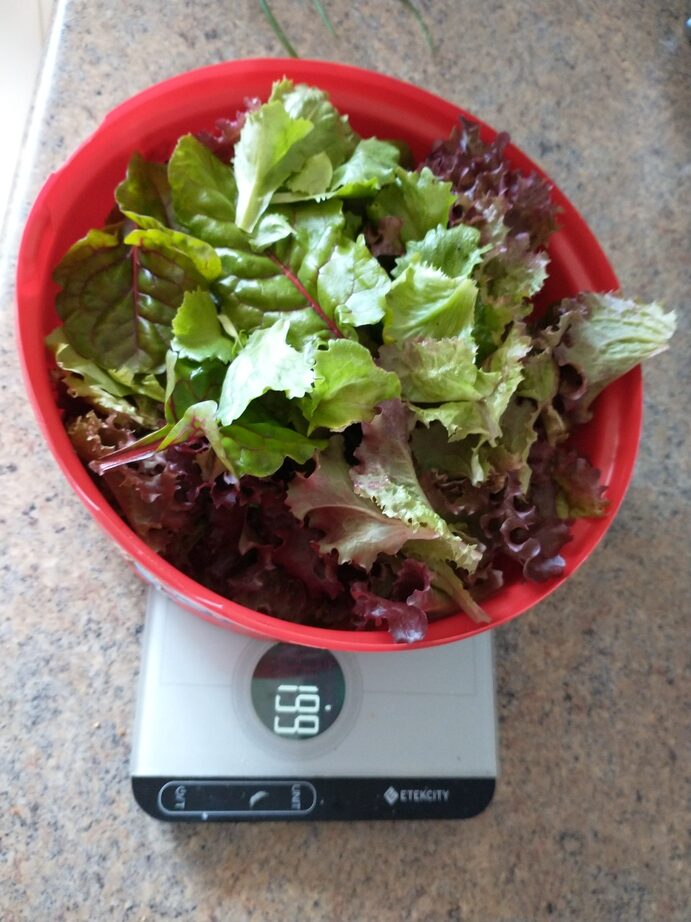
When I went out to pick salad leaves to accompany tonight’s dinner I discovered that more of the mustards are starting to flower, which left only the lettuces of all the plants I started with. The lettuces weren’t looking too stunning either, so I decided to call time on the project. We have other leaves available to eat in the polytunnel now and more lettuces are on the way in modules. So here’s the last pick before the contents of the trays went to the compost heap.

199g is 109g without the container and brings the total harvest to 1343g over the last five months, though to be fair we’ve had almost nothing off them since the middle of January and had to raid the plants in the polytunnel instead.

The positive side is that we’ve only bought a couple of lettuces all winter, and those because we specifically wanted an entire lettuce instead of just leaves. And all our salads have had a great combination of colours, sizes and textures.

I’ll write up a separate summary of the project later.

Posted in Smallholding, Veg plot | Tagged | Leave a comment

No dig diary, 24th March 2021

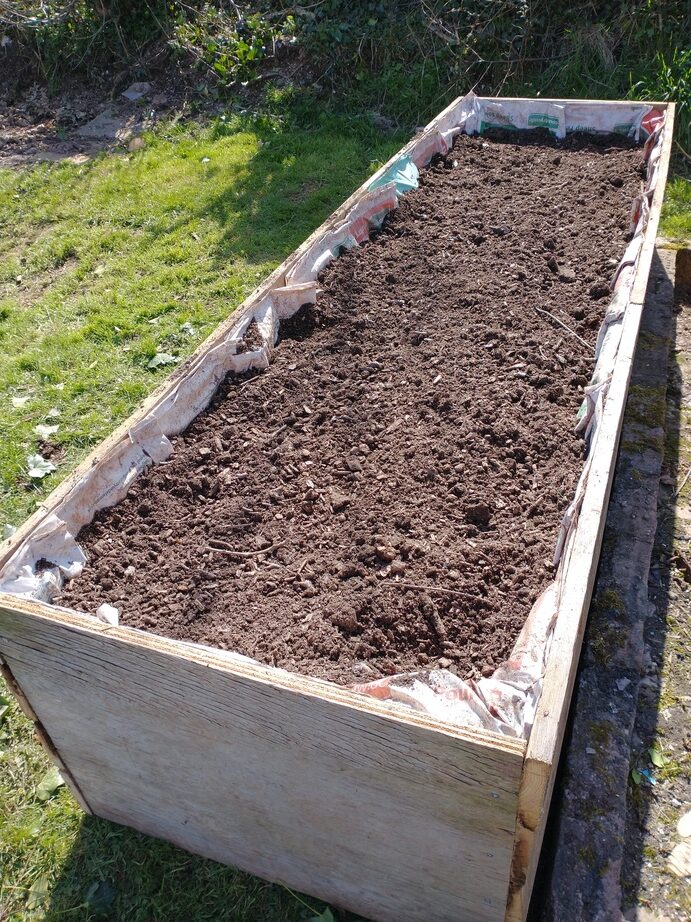
My wife wanted our strawberry plants to be in a raised bed (which does make them easier to pick), but I’ve struggled to come up with any ideas that weren’t going to cost an arm and a leg to set up. In the short term therefore I have scavenged the wood previously used for the sides of the beds in the polytunnel before I converted it to no dig beds and combined with a few other bits and pieces I have built a no dig raised strawberry bed.

In old money (because that’s how the timber was sized) the bed is nine feet long by two foot six wide by two foot high (about 2.75m x 75cm x 60cm in this new-fangled metric stuff). I lined the sides with some old plastic animal feed bags to try to help prevent the moisture from the soil inside rotting the timber away too fast, and then filled about three quarters or perhaps a shade more of the depth of the bed with soil.

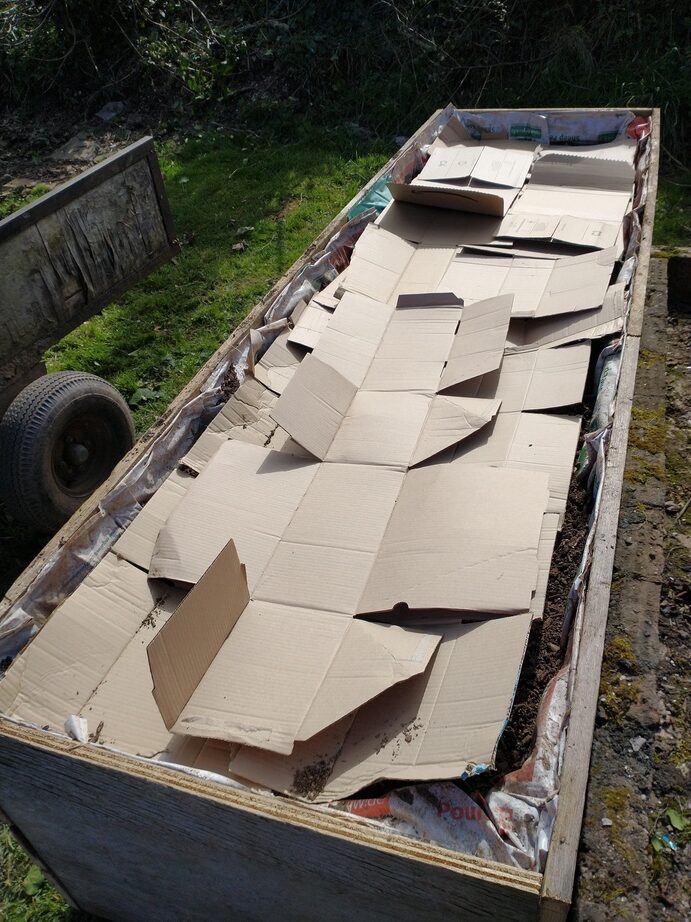
On top of that I put a layer of cardboard. I don’t think the soil actually has too many weeds in, but it has been sitting outdoors in a heap for a fair while and adding the cardboard surely can’t do any harm.

And finally I spread a layer of green waste compost over the top to fill up the bed (and started sorting out the plants we grew from runners last year).

It’s possible we could have more than thirty plants altogether, which is more than I can reasonably fit into that bed. I hate throwing away perfectly good plants though, so I might have to try to find some other space for growing the remainder. Is there such a thing as too many strawberries?

This bed is actually intended as a bit of a temporary thing, which is one of the reasons for trying to recycle the materials rather than buy anything new. I don’t really have a nice solution for raised strawberry beds that isn’t quite expensive. I’ve seen one or two quite attractive solutions, but from a maintenance point of view they appear to be a complete nightmare and anything using a container where the growing medium isn’t in contact with soil on the ground looks like a pain from a watering/drainage standpoint and probably doesn’t provide much fertility in the longer term.

Posted in Smallholding, Veg plot | Tagged , | Leave a comment