Collecting meteorites from rainwater

Allegedly it is possible to collect tiny fragments of meteorites from rainwater.  The story goes that they can drift in the atmosphere until they get caught in the rain and end up falling to the ground.  By trapping the flow of water from a gutter it’s believed that one can find some of these tiny bits of solar system debris.

I’m not personally sure if it’s 100% true and plenty of people will tell you that you’re more likely to end up with dust from industrial chimneys and suchlike, but my son and I thought it would be fun to have a go, so between us we built a little trap into which we could divert the downpipe from one of our gutters to see what happens.  We do at least have the advantage of living in the middle of the countryside with no heavy industry for miles around, so if we can’t do it, not many people can.

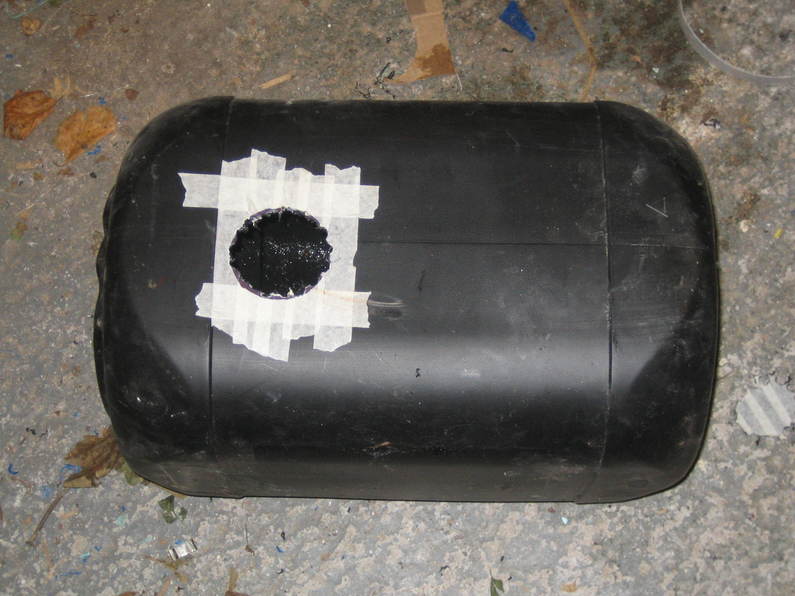
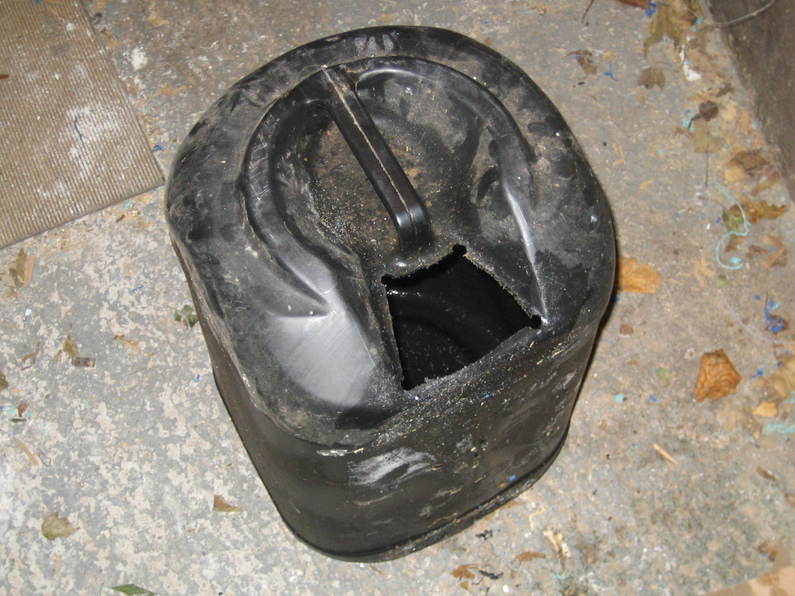
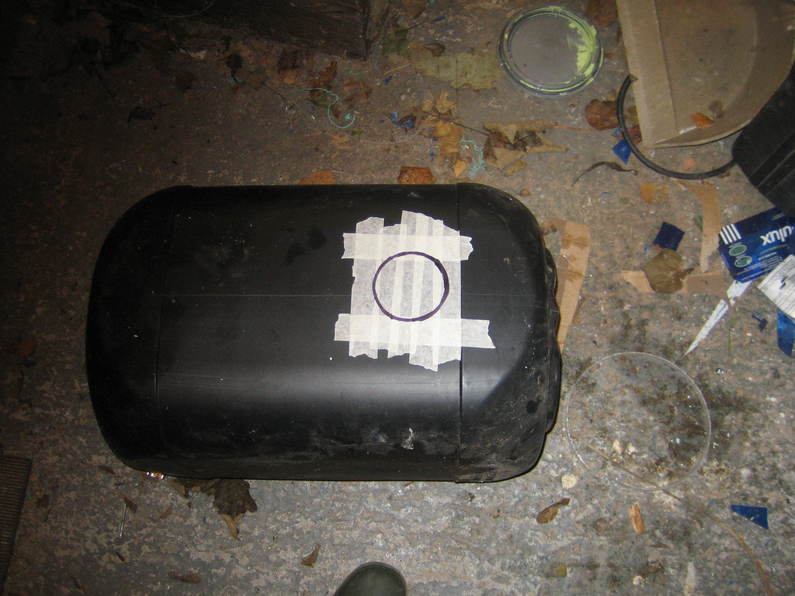
We took a 25 litre hypochlorite container and cut a hole in top to feed water in, and one in the side for the water to flow out:
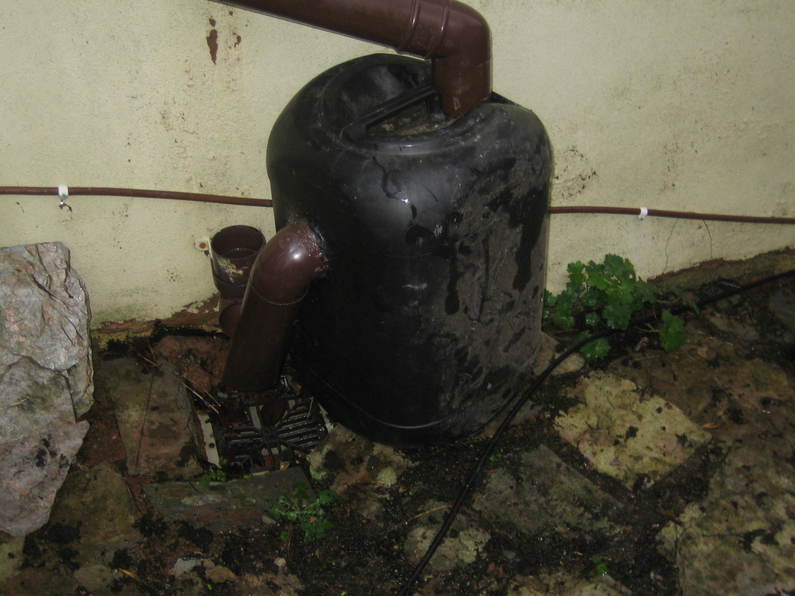
IMG_0038 IMG_0039 IMG_0040A few bits of scrap pipe and fittings that I had lying about allowed us to insert it into the downpipe:
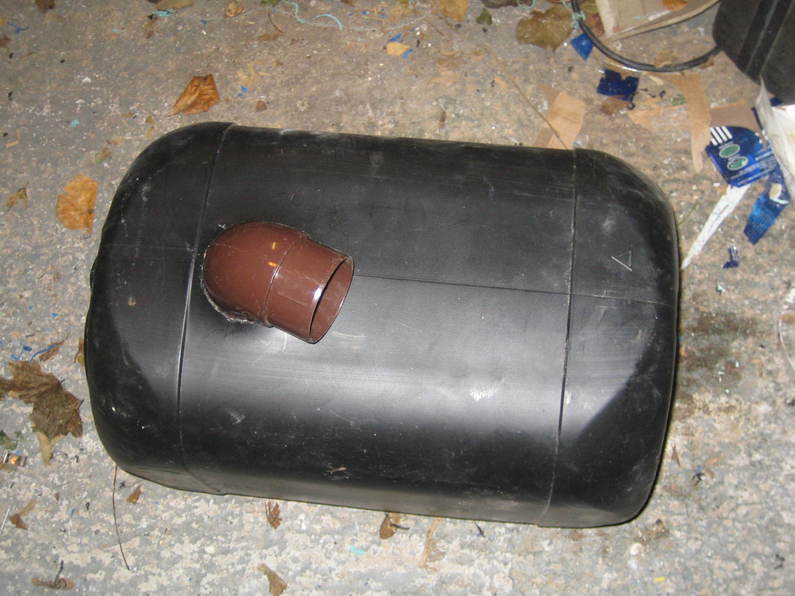
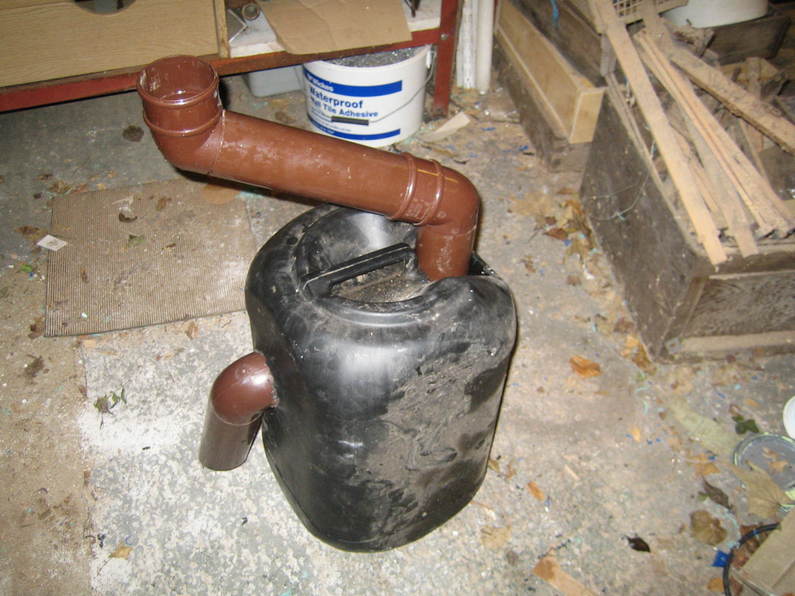
IMG_0041 IMG_0042 IMG_0043We’re only interested in iron-based meteorites as they’re easiest (so the theory goes) to trap, and to do that I bought a decent-size neodymium magnet about 40mm x 20mm x 5mm, sealed it inside a plastic bag and dropped it inside the container.

The water from the downpipe should come into the container through the top, but the pipe continues to the bottom where it is cut off at an angle, meaning it should slosh around near the magnet.  Water leaves the top and disappears down the drain.  If the meteorites are heavy enough hopefully they should stay somewhere near the bottom and the movement of water should eventually bring them near enough to the magnet to trap them.

Soon I think it will be time to take the magnet out and see what we have…


Posted in Astronomy, Environment, Projects | Leave a comment

QHY5 support in oacapture

Support for the QHY cameras is somewhat tricky.  There are all sorts of different versions of firmware floating about, not to mention various different versions of the open source interface library.  Even more awkwardly, whilst many other manufacturers have perhaps only one or two different interfaces across their entire range of astro cameras, QHY seem to have a different interface for each camera.

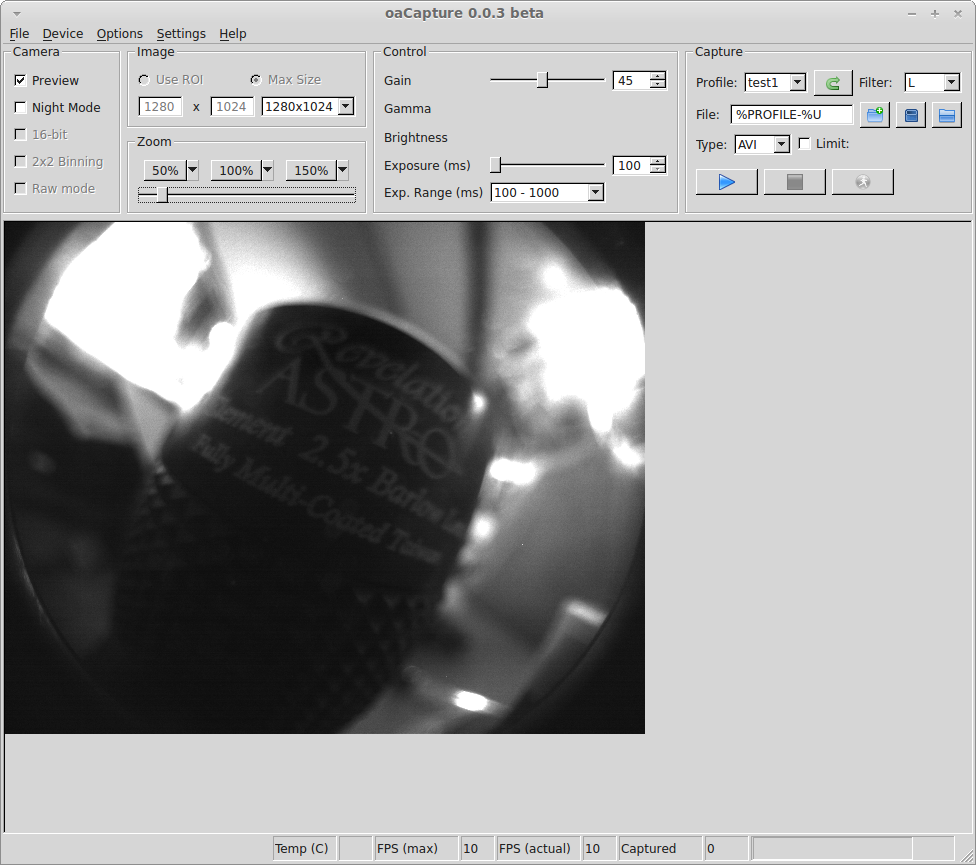
In the end I decided to write my own library based on pulling together various different versions that I found and that became part of oaCapture release 0.0.3.  I fitted a cheap CCTV lens to the camera and here’s a picture from the first time I had it working.

qhy5Obviously the QHY5 is fairly old hat now, but there are still an awful lot of them in use, so I think it’s worth the effort of supporting.  I’d very much like to add support for some of the other older QHY models, but they don’t seem to come up second hand at prices I can afford too often.

Posted in Astro Equipment, Astroimaging, Astronomy, Computing, Linux | Tagged , | Leave a comment

Time for a catch-up

Quite how half a year has passed since I last wrote anything is beyond me.  Work, life, family and all that jazz seem to have taken over from the little box in the corner of my office.

Time to start catching up, I think…

Posted in Uncategorized | Leave a comment

Amazon goes Subprime

Amazon has just announced that it is bundling it’s streaming media service with the existing “Prime” membership and putting the price up from £49 to £79. I don’t know what the business motivation is for such a change, but it certainly doesn’t suit me.

I’ve heard that their streaming service isn’t that great, but that’s not important to me one way or the other because the bottom line is that it isn’t possible to get an internet connection in this area with sufficient bandwidth to make video streaming viable. At times I can’t even get a reliable embedded youtube video to play, let alone something I’d want in far better quality before I’d consider paying to watch it.

Amazon’s current view on this seems to be “Tough. That’s the service we’re selling” and they’re entitled to their point of view, but it’s not exactly considerate of those existing Prime customers such as myself who see the price going up more than 60% for absolutely no benefit whatsoever. I have the impression that they know this wasn’t going to be a popular move. It’s hardly been trumpeted from the rooftops for months as some compelling new service they’ll be providing. It seems rather more to have been sneaked in at the last moment in the hope that no-one would notice or complain. Oops.

So I guess that leaves me keeping my money and going back to waiting a few days for deliveries from Amazon or, since I no longer have a specific reason to prefer to shop with them, spending the money elsewhere instead. Whatever it was costing Amazon to provide me with the Prime service I wanted, it’ll cost them a whole lot more when I stop buying from them.

Posted in Random | 1 Comment

First Light for Linux imaging application

It’s been a stupendous time coming thanks to the grim weather we’ve had over the last three months, but then if the weather hadn’t been grim I might not have got so far 😀

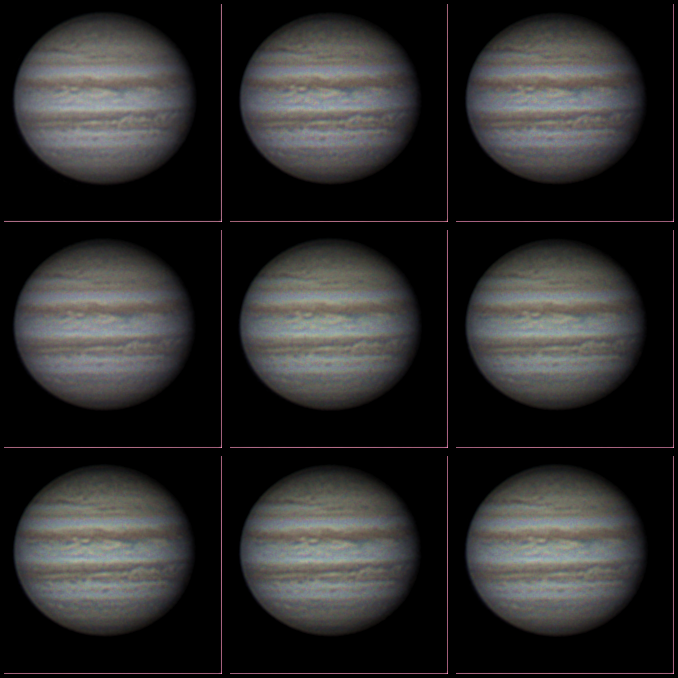
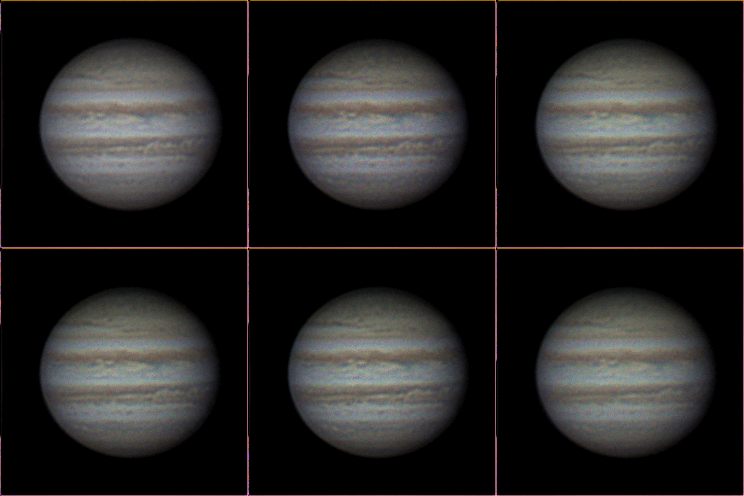
However, two nights ago I went out on a beautifully clear night and used the latest version of my imaging code to capture some images of Jupiter using the 127 Mak and ASI120MC. This was obviously quite a big deal because although I’ve managed to capture video before, up until now I had no idea how things would work out when actually imaging.

Here are the results. I think I may have oversharpened them slightly in the processing. I’m a little rusty after not doing any planetary imaging for six months. Otherwise however I’m very happy with them. Processing was with PIPP, AS!2 and Registax v6.

montage

And just for fun here’s an animation of ten frames

jupiter-anim

Posted in Astronomy, Computing, Linux | Tagged , , , | 1 Comment

Linux support for Imaging Source USB CCD astronomy cameras

I’ve been on something of a mystery tour over the last few days trying to work out exactly what is required to get the Imaging Source USB CCD astronomy cameras working on Linux. What information I’ve been able to find has been incomplete or even totally wrong.

The cameras I’m talking about here are these:

  • DFK 21AU04.AS
  • DMK 21AU04.AS
  • DFK 21AU618.AS
  • DMK 21AU618.AS
  • DFK 31AU03.AS
  • DMK 31AU03.AS
  • DFK 41AU02.AS
  • DMK 41AU02.AS

Whilst I’ve not found one to test, I assume the “DBK” variants of the colour cameras will be the same. There may even be others. Reading some German web pages that turned up in Google after I’d found the solution and searched for it again suggests that there are some TIS cameras intended for use with microscopes that may be the same too.

There is the hint of a suggestion on some web pages that all of these cameras are actually UVC or very close to it, but plug them in and they aren’t recognised and the UVC driver does not load. Inspection of the code makes it fairly obvious that this is because the UVC driver supports Imaging Source cameras with USB Vendor ID and Product ID of 199e:8102, whilst all of the above cameras have 199e:8101.

Apparently in the past it has been necessary to downgrade the firmware on these cameras to get them to function on Linux. I don’t know how that worked, but despite the insistence of TIS in their support forums it is no longer necessary. Neither is it necessary to use the unicap library (though I assume it would work if you did).

For my 3.8.0 kernel (and I am led to believe for all v3 kernels), all that is required to get the camera to function with V4L2 after plugging it in is to do this (as root):


modprobe uvcvideo
echo "199e 8101" > /sys/bus/usb/drivers/uvcvideo/new_id

The UVC driver should then recognise the camera. The colour cameras will not produce debayered image frames so there’s still work to do there unless you use an application that can handle the debayering itself, but it is at least possible to get data out of the camera now.

It’s possible to configure udev to do run a script that will execute the two lines above when the camera is inserted. I have a script called /usr/local/bin/config-tis-camera.sh that looks like this:


#!/bin/bash
#
# Load and appropriately configure UVC video driver for the USB TIS CCD
# cameras

USB_ID="199e 8101"
/sbin/modprobe uvcvideo && echo $USB_ID > /sys/bus/usb/drivers/uvcvideo/new_id

and a udev rules file /etc/udev/rules.d/70-tis-cameras.rules


# Udev rules for TIS CCD cameras
#

ACTION!="add", GOTO="tis_end"
SUBSYSTEM=="usb", ENV{DEVTYPE}=="usb_device", GOTO="tis_test"
SUBSYSTEM!="usb_device", GOTO="tis_end"

LABEL="tis_test"

ATTRS{idVendor}=="199e", ATTRS{idProduct}=="8101", RUN+="/usr/local/bin/config-tis-camera.sh"

LABEL="tis_end"

which works for me on Mint 15.

Posted in Astro Equipment, Astroimaging, Astronomy, Computing, Linux | Tagged | 3 Comments

Dehydrated to the core

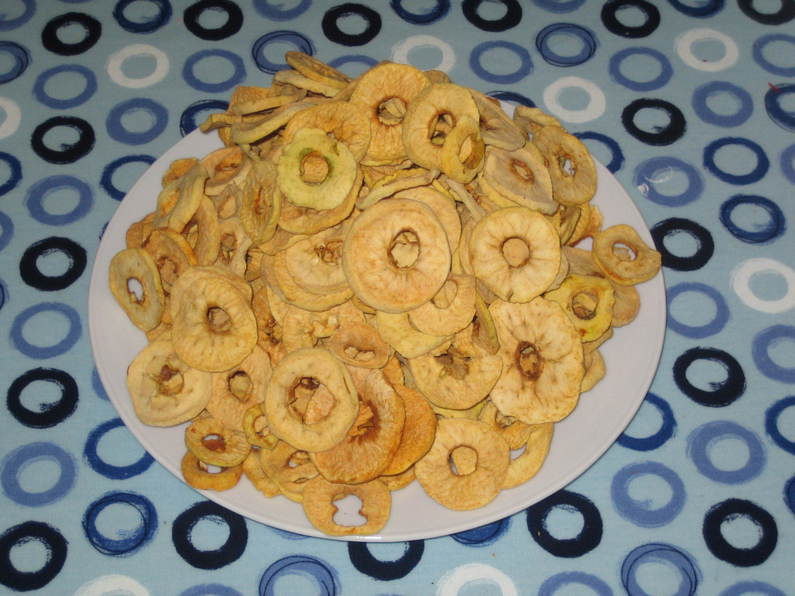
It’s been a busy weekend fruit-wise. Yesterday the children and I collected some of our ripe dessert apples and cored, peeled and sliced them. It took about forty apples to fill our dehydrator which I left on overnight. The result is firm but not hard dehydrated apple rings with an intense flavour. I had intended that they might be used for snacks and packed lunches when the children are at school, but if they don’t finish them first, I might well…

IMG_0022

Posted in Smallholding | Tagged | Leave a comment

Home made pasta sauce base

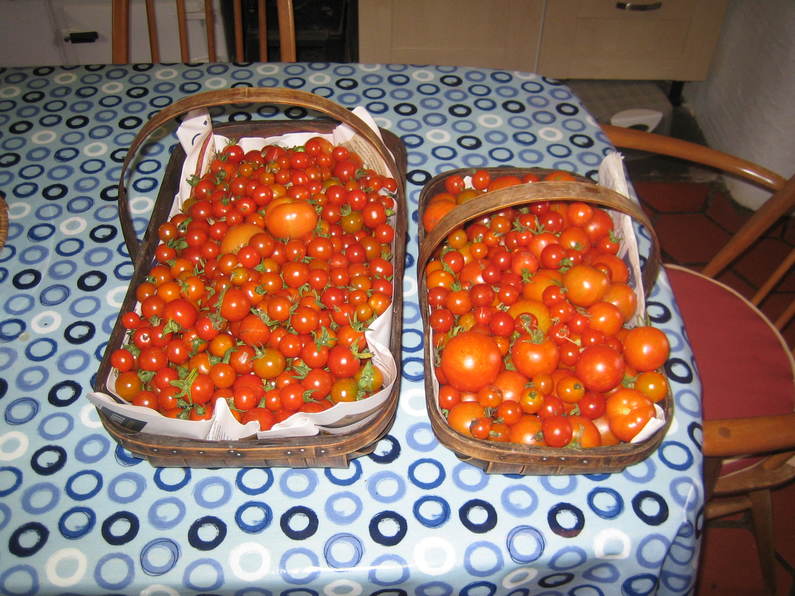
The days are getting shorter and the remaining tomatoes in the polytunnel don’t look like they’re getting that much riper, so today we picked about two thirds of the ripest, which actually turned out to be far more tomatoes than I expected:

IMG_0021

Chopped into chunks on trays and given a splash of olive oil, garlic, herbs and for one tray, chiles, they were roasted in the oven for a few hours and then put through the food processor to remove the seeds and skins. The resulting sauce tastes fantastic, though the chile version may need a bit of calming down before anyone other than me will eat it.

Posted in Polytunnel, Smallholding, Veg plot | Tagged | Leave a comment

Fruits of my labour

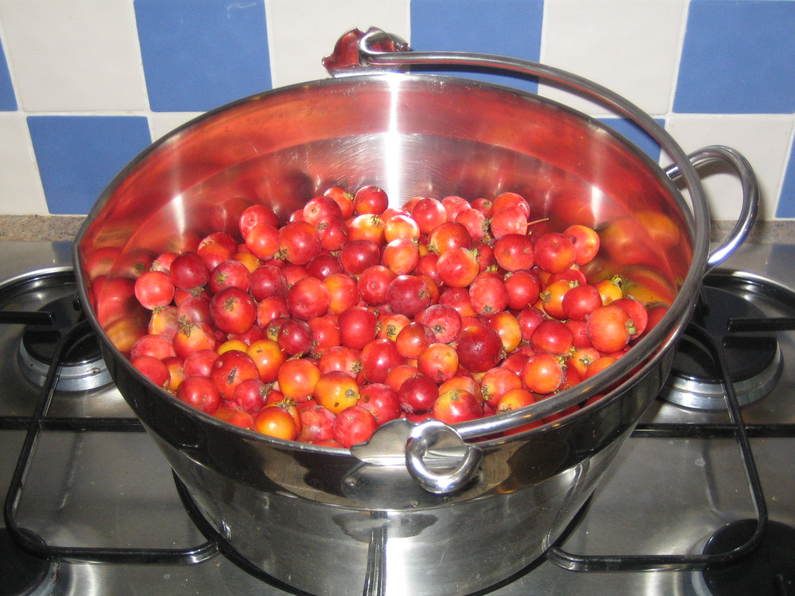
A few days ago the children and I picked a decent basketful of crab apples from one of our trees. I reckon there must have been perhaps 3kg or so. A real pleasure as the last couple of years have provided a pretty poor harvest. I cleaned them up and got them into the preserving pan to boil down:

IMG_0016

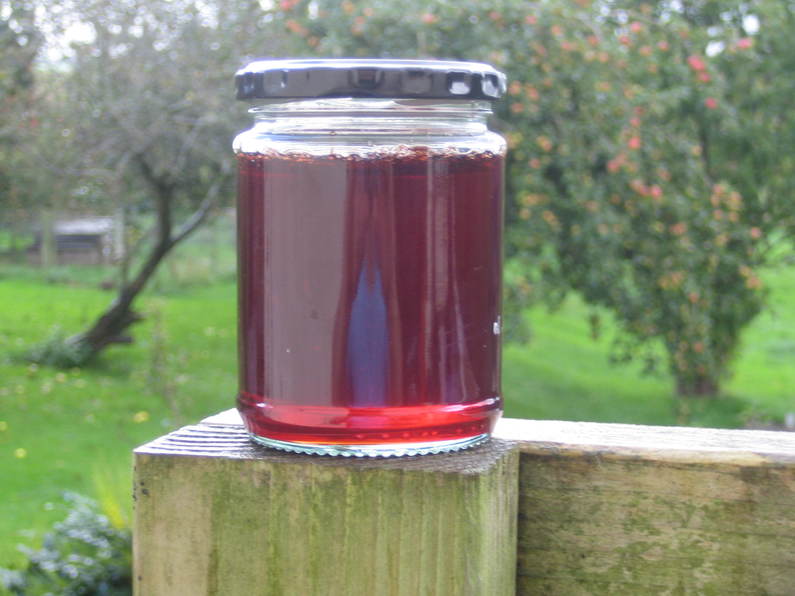
After leaving the pulp in a jelly bag to drip through overnight I was rewarded this morning with about three and a half pints of liquid to which I added three and a half pounds of sugar and brought the lot to setting point. In the end I filled eight jars full of deep rich red crab apple jelly…

IMG_0020

I’m not sure eight jars will see us through the winter, but I’m now processing some cooking apple windfalls the same way to make apple and chile jelly which should help eke things out a little.

Posted in Smallholding | Tagged , | Leave a comment

Colour histogram and reticle for Linux capture app

Progress, progress…

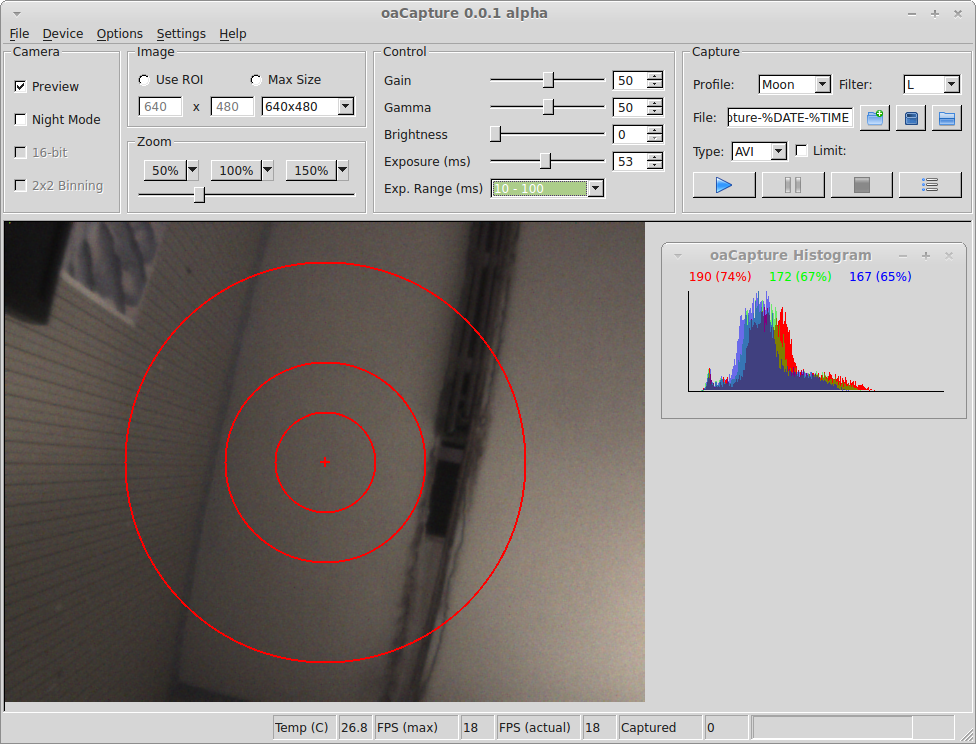
Here’s my reticle and the colour version of the histogram. I may add some options for changing the style of the reticle and splitting the histogram into three, but those are for later. I also killed a few bugs yesterday and I’m now installing a load of different distributions so I can make up an alpha release.

hist-reticle

Posted in Astro Equipment, Astronomy, Computing, Linux | Tagged , , | Leave a comment