Revisiting Naked Eye Limiting Magnitude

Back in March I tried checking stars in Usra Major to get an idea of the naked eye limiting magnitude (NELM) for my home. The seeing wasn’t great that night, but I obtained a figure of 5.55 for NELM. Earlier this week I was out and whilst there is no true astronomical darkness at the moment the seeing was pretty good so at the end of the evening (about 2am) I repeated the test.

This time “star 11” between ηUMi and ζUMi was visible with direct vision suggesting an NELM figure for that night of 5.70 which I think is quite exceptional under the circumstances.

I look forward to the opportunity to try the test again when the seeing is good and the sky is genuinely dark.

Posted in Astronomy | Leave a comment

Xbox Live Camera Base Removal

If you’re modding the Xbox Live camera for astro imaging then the base is just one more thing to get in the way. Here’s how to remove it. I’ll assume you’ve already got the front shell off to start with.

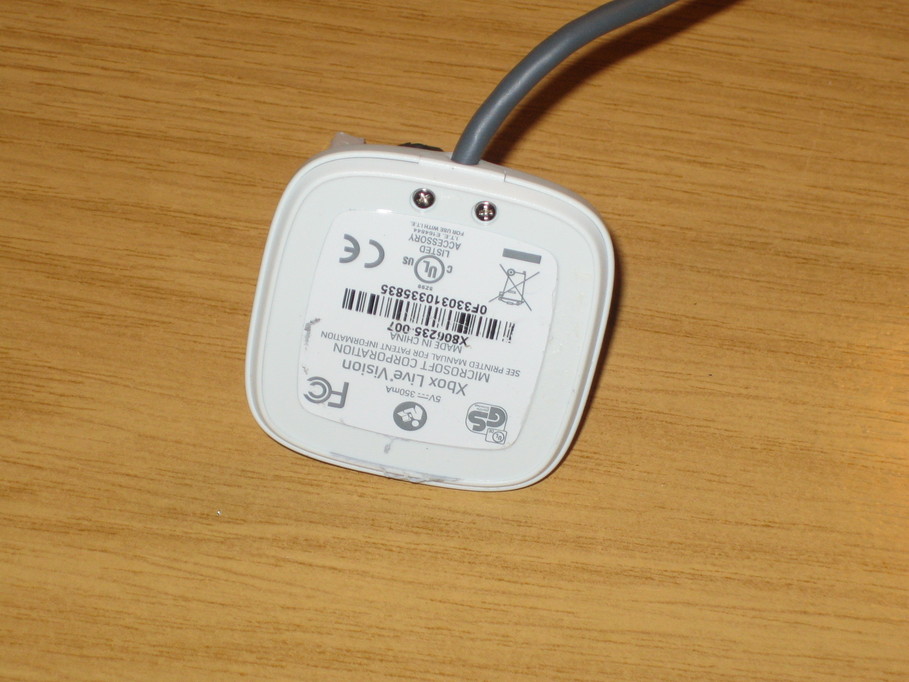
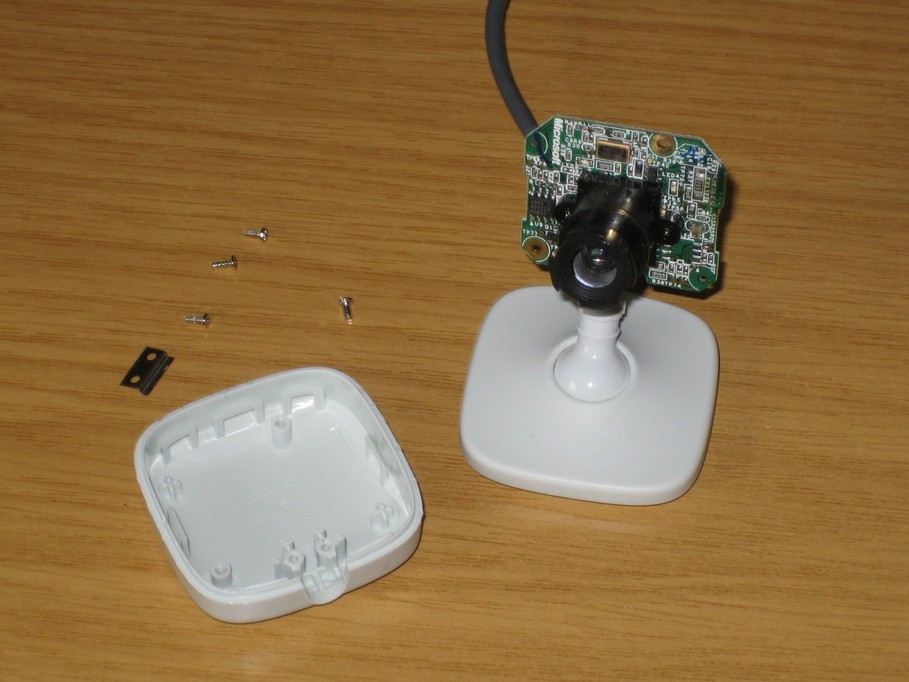
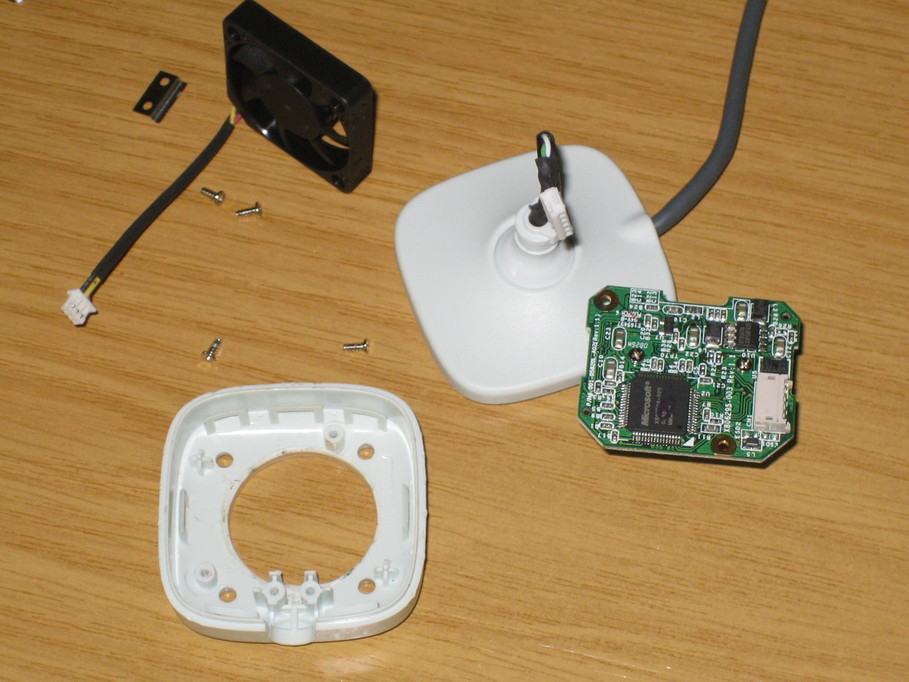
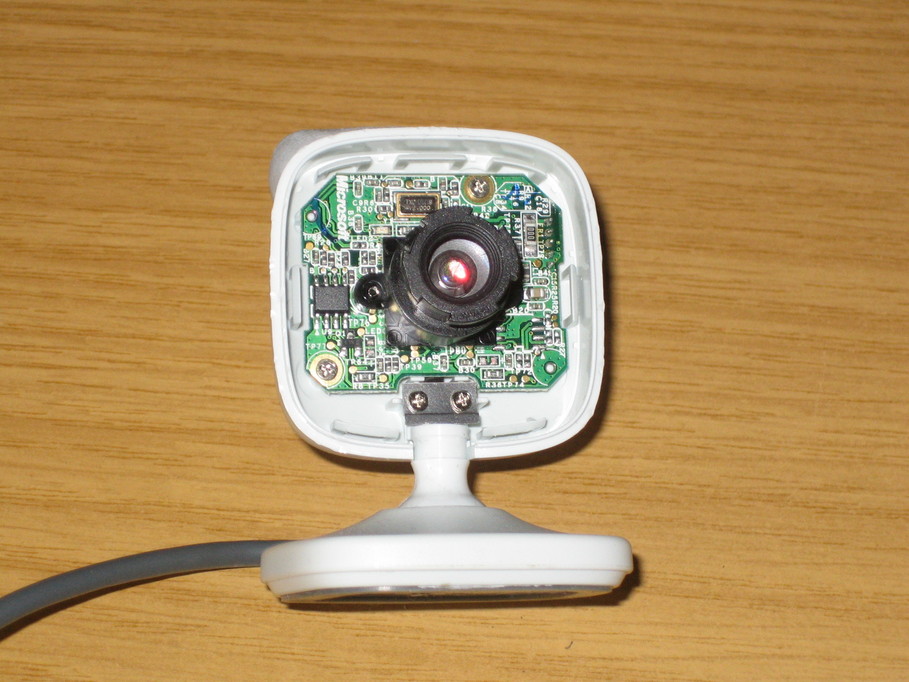
First, remove the four screws (two holding in the PCB, two in the retaining clip). Pay attention to the orientation of the post carrying the USB cable up through the foot as the camera won’t go back together properly if you replace it the wrong way around.


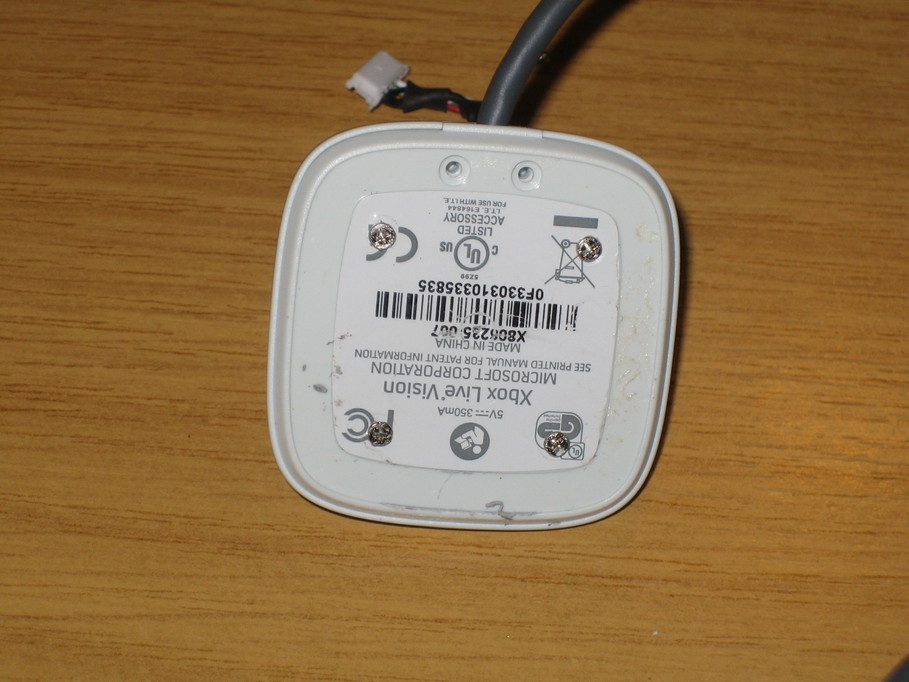
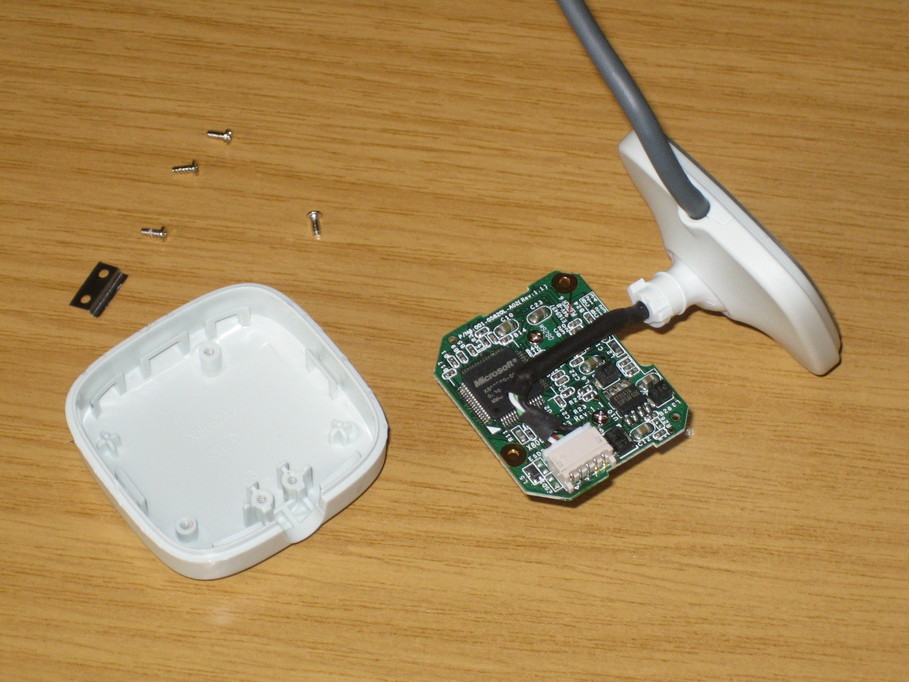
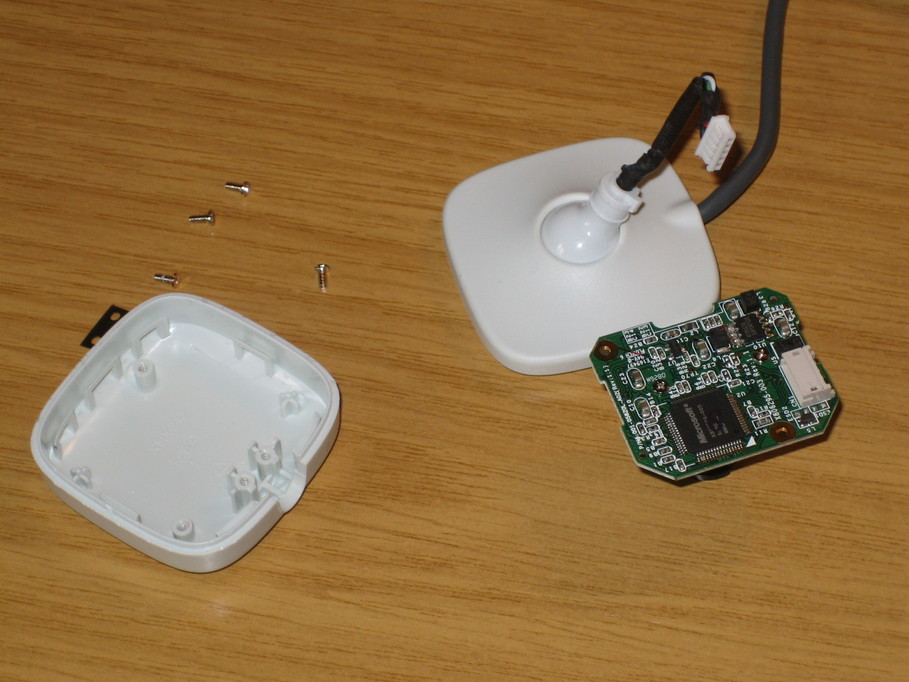
Remove the USB connector from the back of the PCB. It can be gently wiggled out with a small screwdriver. Just don’t slip and gouge a huge hole in the PCB. Now turn the foot upside down and remove the non-slip ring with a knife or screwdriver to reveal two screws that must be removed:


There are four more screws hidden by the label that also need to be removed. Just feel for them through the label with a screwdriver and pierce the label when you find the holes to unscrew the screws:


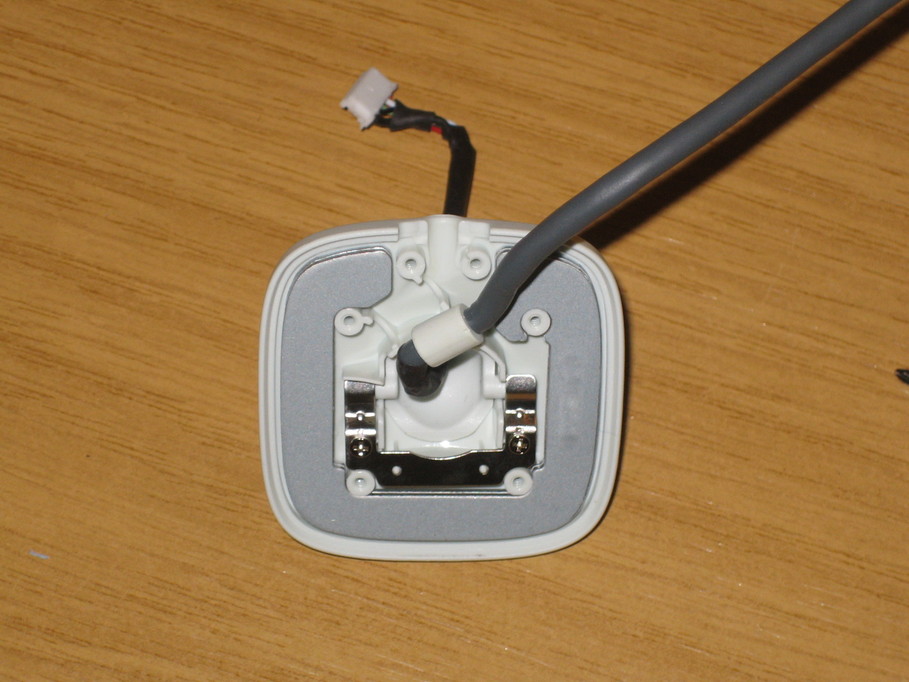
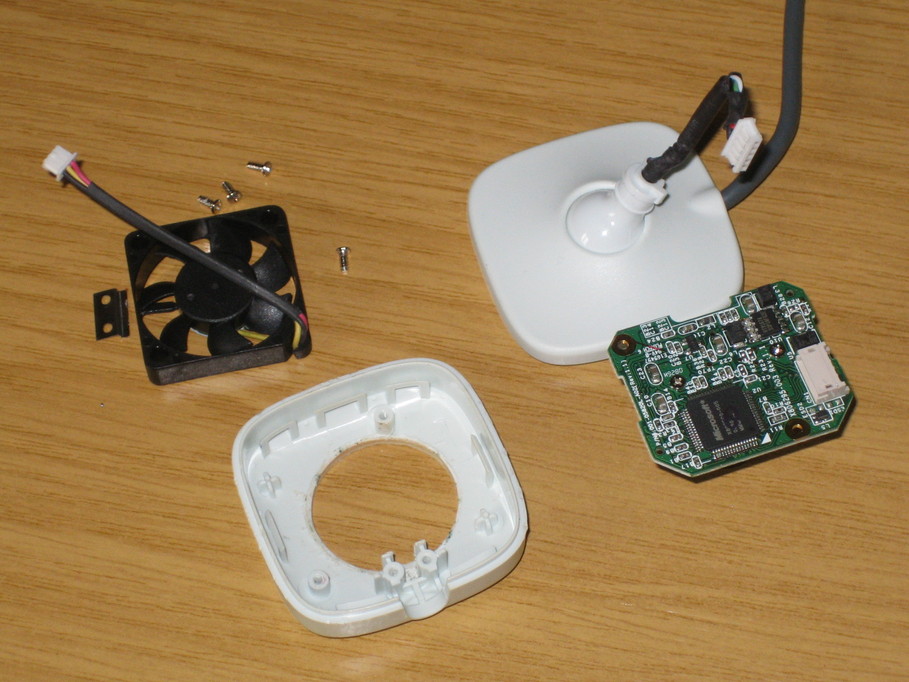
It should now be possible to split the top and bottom halves of the foot to reveal some weights and another bracket holding the bottom end of the post:


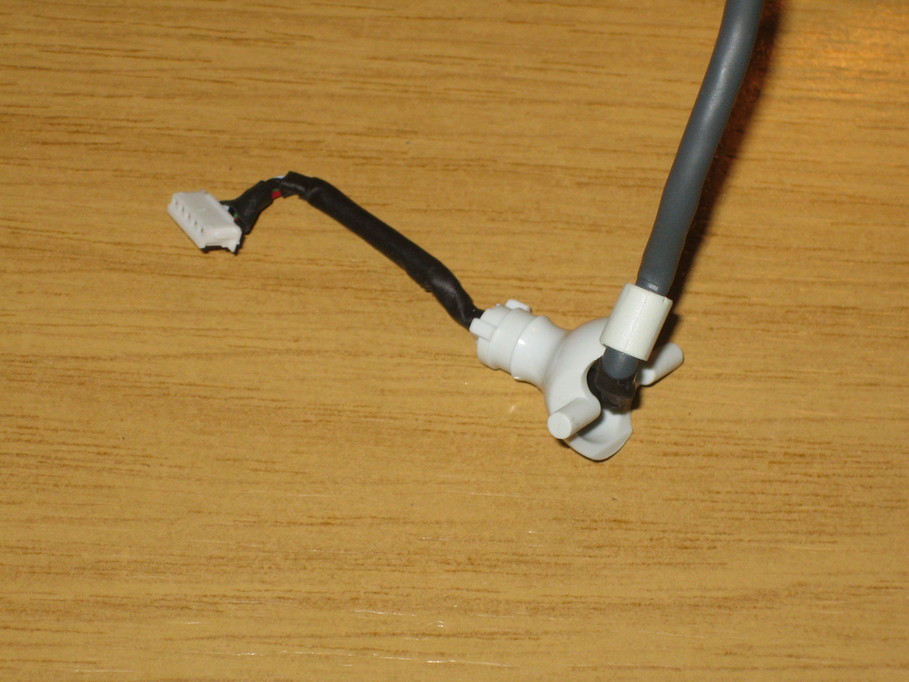
Unscrew the bracket and the cable will pull through:


The camera can then be reassembled.

Posted in Projects | Leave a comment

Fan-Cooled Xbox Live Camera Howto

I modded a second Xbox Live camera to add a fan today and this time took photos, so here’s how it’s done. This one is slightly different from the first in that I’ve not chopped down the lens housing to fit a nosepiece yet. I also routed the cables for the fan slightly differently because I had problems with a screw head fouling the PCB USB connector. The fan is a 30mm 5VDC fan that I picked up from ebay for very little beer money.

Anyhow, I’ve assumed you can get the front shell off the camera. I’d write instructions on how to do that if I could remember how myself. I think you have to unscrew the lens as far as possible, pry off the front shell and then unscrew the lens completely as there’s a retaining lug inside the lens housing that stops the lens coming out first.

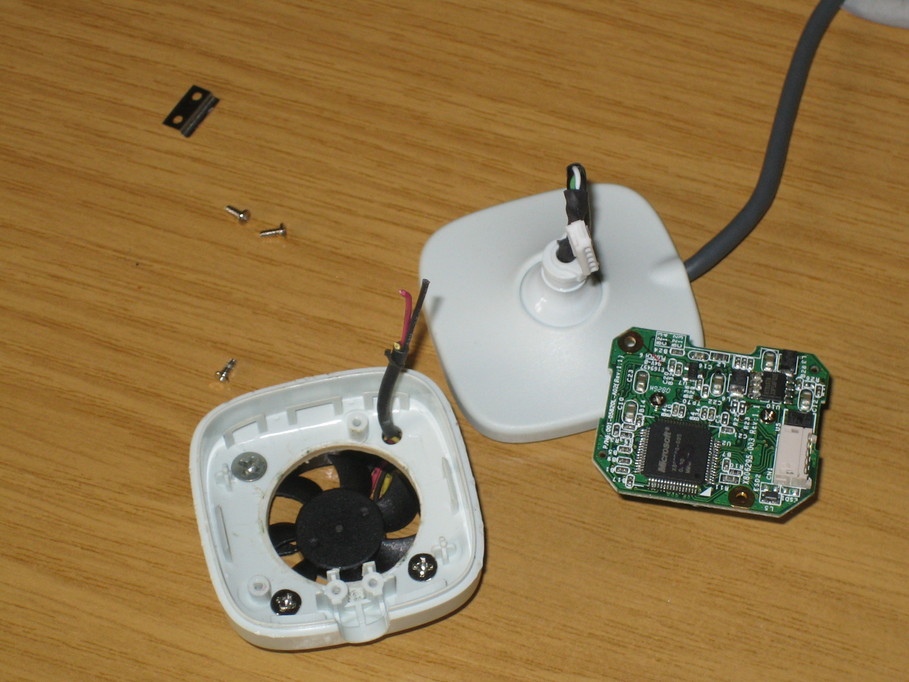
That sorted, you first need to remove all four screws visible here. Pay attention to the orientation of the post that carries the USB cable up from the camera foot. The camera won’t go back together properly if it’s replaced the wrong way around:


That allows the rear shell to be removed completely. Here are both front and rear views of the removed PCB:

It’s a convenient time to remove the USB plug. You can probably get by without removing this at all if you want, but it just makes life easier not to have the cable trailing about all of the time. The plug can be gently wiggled out of the socket with a small screwdriver. Just be careful not to slip and gouge a big piece out of the PCB:


The next step is to cut the hole in the back for the vent. Lots of small holes would probably work here, but I preferred to make one large one. The important thing is not to damage either the posts that hold the screws retaining the PCB or the posts that support the PCB at the corners without screws. Because it allowed me to place the hole much more predictably, I used a 25mm Forstner bit to cut the hole:


With the main hole done, the holes for the screws to retain the fan need to be cut. The fan has holes in three corners, the wires all meeting at the fourth. I held the fan against the back of the shell, marked the three holes and then rotated the fan ninety degrees, re-aligning the holes to mark the fourth for the cables. Again, care needs to be taken to position the holes where the posts will not be damaged. It doesn’t show too well in any of the photos, but there’s also a slight indentation inside the shell in the top right corner to give a bit more room for the USB socket. You don’t want to be bringing cables through there either.


I cut the connector off the fan wires, opened up the heatshrink sleeving a little and trimmed the yellow cable (the fan speed speed sensor on this fan) back, then fed the wires through and screwed the fan housing down. You can just see that I had to trim back the post on the top left a little to make room for the screw head. Don’t do the screws up so tight that the fan blades foul the shell. You can check at this point by just blowing through the fan.


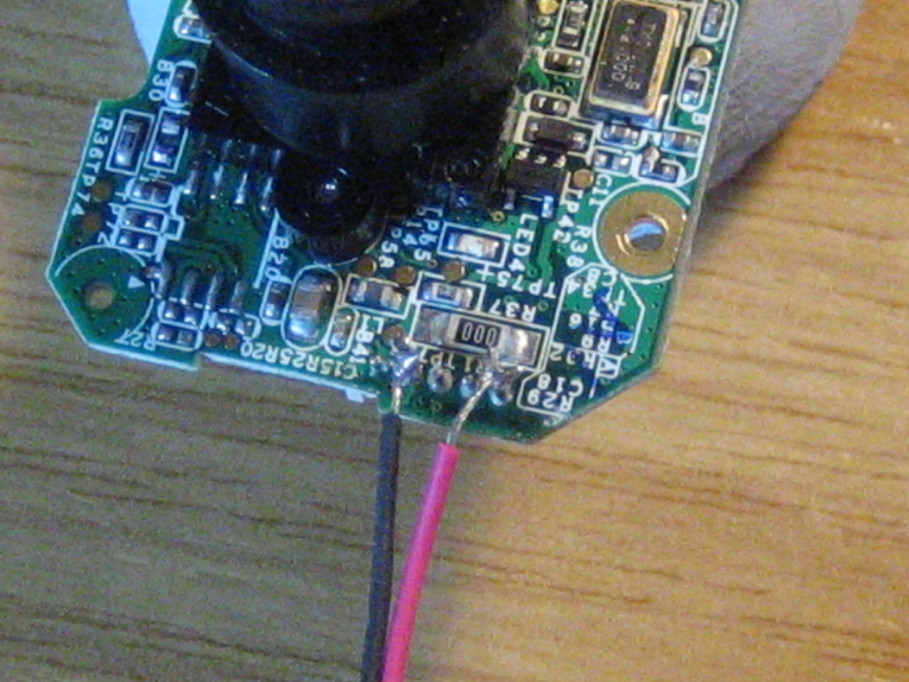
Now strip back and tin the fan leads and solder them to the USB socket pins. This image doesn’t show it too well, but the red 5V fan lead is connected to the rightmost (or top) pin on the camera sensor side of the PCB, and the black ground lead is soldered to the fourth pin (there are five altogether):


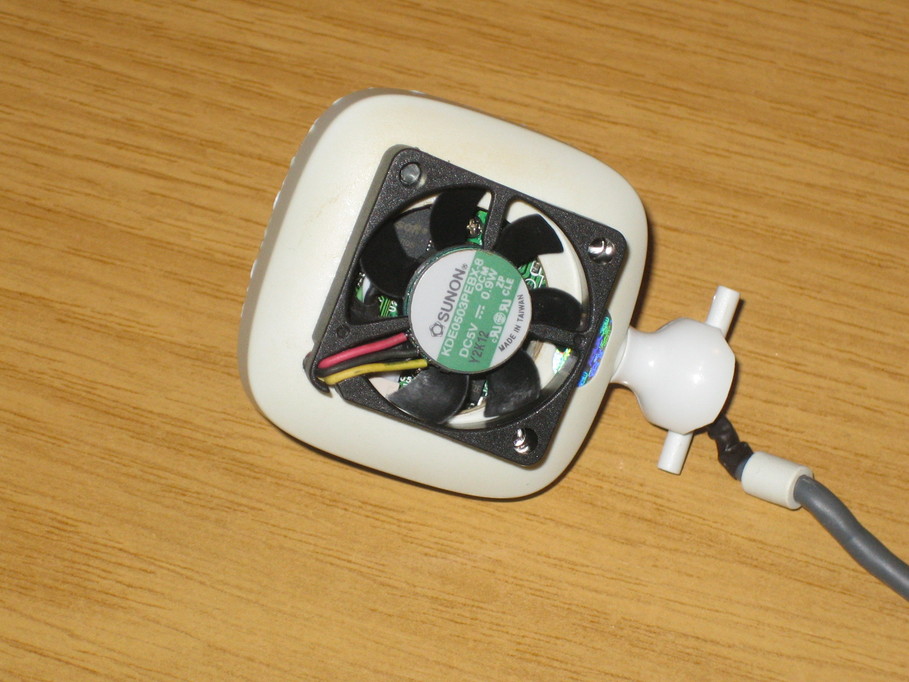
At this point I decided I might as well remove the base, but I’ll cover that separately. Before reassembling everything it makes sense to plug the USB connector back in and test everything. Of course it will work first time and it’s just a matter of routing the leads where they’re out of the way, re-seating the PCB (make sure you get it sitting square on the pins supporting the corners without screws) and screwing everything back together before replacing the front half of the shell. I routed the fan leads around the corner of the PCB and looped across the top of the front of the PCB. Unfortunately the “spring” in the leads meant I couldn’t really get a useful shot of that.

But, in true Blue Peter fashion, here’s one I made earlier:


Posted in Astro Equipment, Astroimaging, Astronomy, Projects | Leave a comment

It’s mid-summer, so where’s the Sun?

Someone was asking today why the sky is so bright at night at this time of year, so I had to have a think about where the Sun actually goes…

So we’re clear what I’m talking about, let’s say you’re standing outside around midsummer in the northern hemisphere, facing south.  Take a flask; you’re going to be there a while.  The sun rises behind your left shoulder to the north-east, travels across the sky until noon when it’s high, but to the south of you, and then drops back down over your right shoulder to the north-west, passing around “behind” the earth to the north before coming up again in the north-east.  Unless you’re in the tropics the sun never travels around the earth “under your feet”, just as it never goes directly above your head.

The Earth is currently inclined at about 23.5 degrees from the vertical, northern hemisphere towards the sun during the day.  After scribbling on a bit of paper I think I’m correct in saying that as the sun passes in front of you to the south then at its highest it will reach an altitude of ( 90 – latitude + 23.5 ), so 62.5 degrees above the horizon for me at 51N.  At night as it passes behind your head and the planet to the north it will be at most ( 90 – latitude – 23.5 ) below the horizon, so 15.5 degrees for me.  As “astronomical darkness” is defined as “when the sun is 18 degrees or more below the horizon” it’s not going to be that dark here.  And I’m fairly well south for the UK.  If you’re at 59N in the Orkneys the sun won’t drop more than seven degrees below the northern horizon and I imagine it’s pretty light all the time.

Posted in Astronomy | Tagged | Leave a comment

Observation Report, 19th June 2012

Well, it’s been a full month since I last got out with a telescope thanks to the weather, which has been on the wrong side of depressingly atrocious for all of the last four weeks. Despite feeling fairly tired therefore, I was determined to make it out tonight.

The plan for the evening, which has been sitting on my desk for just as long, was to take out the ST120 and go hunting for the late teen and early twenties Messier objects around Sagittarius, Scutum and Scorpius. As it turned out the remaining cloud drifted away and at half past eleven I was outside setting up under a beautiful sky, the Milky Way clear from the southern horizon all the way over my head, finally disappearing in the lighter sky to the north.

I check the scope and finder were aligned using Saturn and then rearranged the tripod to point it in the general direction of Sagittarius, took a peek in the eyepiece to check I wasn’t just pointed at trees and right there in the middle of the eyepiece was my first DSO of the evening! The next bit is perhaps the most challenging for users of unaligned manual mounts. Which DSO was it? Triangulating off Ophiucus I decided that I must be looking at M22 and I was off and running…

I guickly found M25 and M28 just navigating around the sky using a 32mm eyepiece and then dropped down to M20 and M21. Wow! Even with a 120mm scope under mid-summer skies and with a touch of light pollution as well there is so much nebulosity visible around that group of objects. I could probably have stopped right there for the evening. I did keep coming back to them afterwards.

Moving up I found M23 and then came back eastwards to pick up M25, marvelling at the sheer number of stars visible in some of the clusters. It was like looking into the Total Perspective Vortex. From M25 it’s a short hop up to M18 and then M17. An absolute jaw-dropper. I really just wasn’t expecting it. About this time something appeared on my shoulder and started whispering into my ear “You need more aperture. You need lots more aperture”. Yes, yes, I’m working on it.

I should have hit M16 before M17. It almost seemed an anticlimax the other way around which really isn’t fair as it’s a lovely object in its own right.

Starting to feel a bit tired now I thought I’d have a quick look for M62 which I’d tried before but couldn’t find. I was on such a roll that it popped out of the eyepiece really easily, a small fuzzy ball.

I was on the point of packing up the eyepieces at that point when I found that I just wasn’t ready to stop. I had to try a few more objects. M6 and M8 were easier to find than I expected, but M7 was just in the tree line by this time and I took that as a sign that it really was time to call it a night.

My only “failure” of the evening was M24. I could find where it ought to have been, no problem, but just couldn’t see it. Stellarium lists it as magnitude 11, so perhaps it was just too big a stretch for my ST120 on that night under those skies. Despite this my “Messier Total” has now reached 96. If I can find M24 and M83 I stand a reasonable chance of finishing them all this year.

As I was packing up I had a quick check of the stars in Ursa Minor. The magnitude 5.7 star between ηUMi and ζUMi was definitely visible with direct vision. For the day before the solstice, I can be very happy with that.

People rave about M45, but I reckon the clusters in this area of sky are at least as outstanding, and there are so many of them. Unfortunately they’re visible for such a short time at the worst possible time of year for viewing. I feel quite envious of those who are further south and get a better view for longer.
Posted in Astronomy | Tagged , | Leave a comment

May 2012 FIT Payment

At the end of May we received our second FIT payment, somewhat less than the first as expected. It does mean however that about 4.3% of the installation cost is now covered. Unfortunately the late Spring and early Summer months have proved themselves to be less than optimal for electricity generation so we’re not going to receive as much as predicted for that period when the payment arrives in August. We’re still “ahead of plan” though, so I shan’t be complaining just yet…

Posted in Environment | Tagged , , | Leave a comment

Solar PV Generation Update, June 2012

Well, another awful month weather-wise and they say there’s more to come 🙁

Generation for May was, oddly, exactly the same as for April at 395kWh. I was hoping for anything between 500kWh and 650kWh. You’d think all of those fans they’re building out in the North Sea would blow the cloud away. Anyhow, total generation is now 2,180kWh so far, bringing in about £990 in FIT payments and saving up to £320 in electricity not purchased from the grid.

For reasons I don’t entirely understand, May is supposed to be our best month for generation and the poor output has therefore knocked back predicted output a fair bit, to around 3,680kWh for the year. Surely June can’t get any worse?

Posted in Environment, Projects | Tagged , , | Leave a comment

Solar PV Generation Update, May 2012

Well, for the first time since installation we’ve had a poorer-than-expected month. No great surprises there, given how utterly awful the weather has been.

Output for April came it at a measly 395kWh when based on past performance I was expecting somewhere nearer 580kWh. Hey ho. That’s the way the croissant crumbles. Total generation since installation is now 1,785kWh. On the bright side the tariffs have been increased and we now receive 45.4p per kWh generated and 3.2p per kWh exported. We earned approximately £625 in FIT payments on the previous rate and this month adds about £185 at the new rate taking us up to £810 overall, with up to £270 saved in electricity used from the grid.

This month does knock our predicted output back a fair bit, to around 4,100kWh for the year, but we’re still way over what I’d expect.

Posted in Environment, Projects | Tagged , , | Leave a comment

Solar PV Generation Update, April 2012

Somewhat delayed, this, as I’d lost the piece of paper that I wrote the reading down on. Doh!

Anyhow, output for March was 383kWh, another good month thanks to the unusually good weather. That takes our generation total since installation in September up to 1,390kWh which is about £625 in FIT payments and up to £210 in saved electricity.

As with last month, based on the models I have we’d expect to generate around 31% of our electricity in that period which would put our total expected output for the year up to around 4,500 units. I just don’t believe that will happen (though I’ll be partying if it does 🙂

Posted in Environment, Projects | Tagged , , | Leave a comment

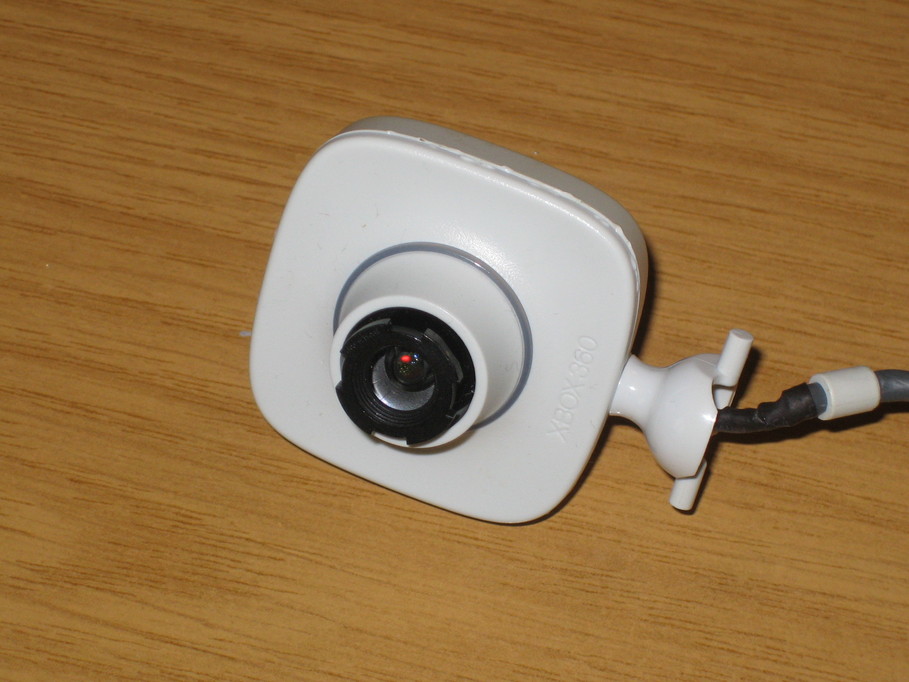
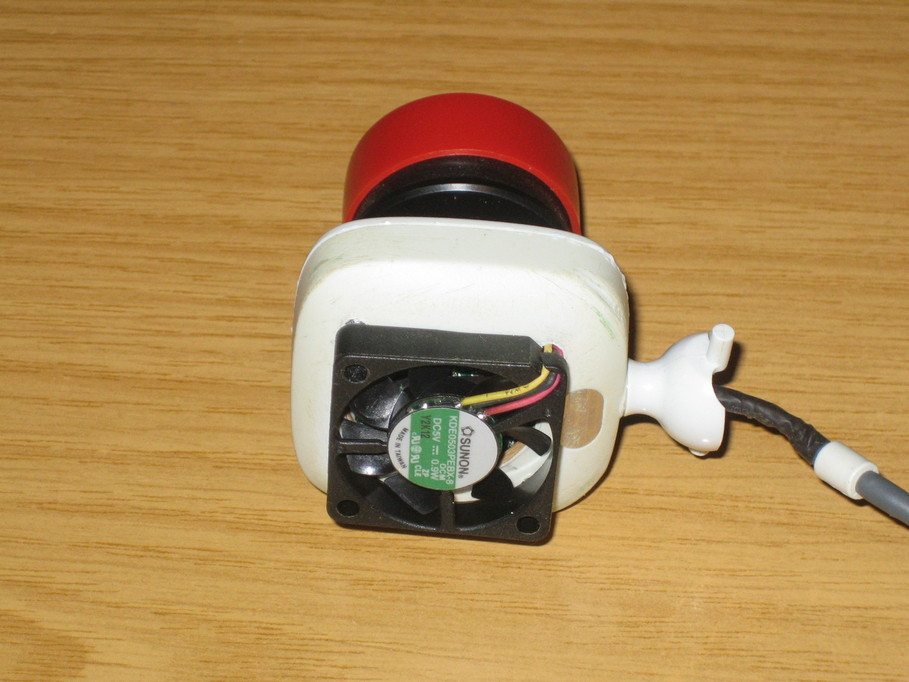
Fan-Cooled Xbox Live Camera for Planetary Imaging

The Xbox Live camera has found something of a following as a cheap planetary/lunar imaging camera since the SPC900 (which is undoubtedly a far better camera) started fetching silly prices. I’ve always found it very noisy however. The camera does get quite warm and it seems reasonable to assume therefore that the noise is partly due to heat. I’d seen someone else mod the camera to fit a fan, so I thought I’d have a go myself. I picked up a 30mm 5V fan from Ebay, cut a suitable hole in the back of the case, wired the fan to the USB 5V and ground lines and it seems to work nicely, at least as far as desktop testing goes. Proper testing will have to wait for a clear night I’ve not had one of those for a month 🙁 Here’s a photo of how it looks, anyhow:

Posted in Astro Equipment, Projects | Leave a comment