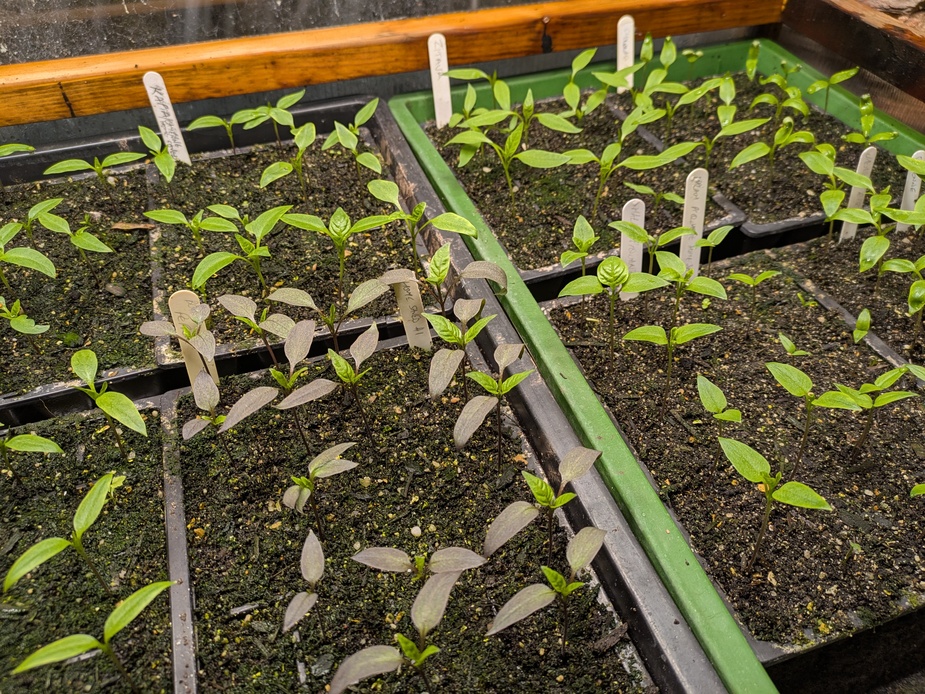
Well, Cayenne chiles to start with. Not ripe, but still looking fairly healthy.

And, err, strawberries in flower? Really?

Well, Cayenne chiles to start with. Not ripe, but still looking fairly healthy.

And, err, strawberries in flower? Really?

Finally! It’s open!
I cheated a bit though. I discovered that I could by a new lock mechanism for about £20 from ebay. So I did. Then I took a hammer and cold chisel to the old one. That soon releases the mechanism 😀
Unbolt it from the door, fit the new one and we’re all good. Well, sort of. Now I have to reassemble everything. (Note the remains of the old lock on the dash.)

I reckon it looks pretty good. A fair bit thicker than the stuff you buy, but perhaps I can improve on that over time. And in fact this will probably get cut into starter strips anyhow.

Yay! I managed to get the steel door liner out!
I actually found instructions for doing this online, but they obviously assume that you can open the door in the first place. It’s much the same for a VW Passat, but if you splashed the extra cash to buy a Passat then the liner is held in using screws whereas the cheap Skoda version uses pop-rivets.
So, having disconnected the window from the mechanism (which is attached to the liner) and taped it closed, I drilled out most of the rivets. All except the ones I couldn’t get a drill on because the seat was in the way. Then out came the Dremel (other multi-tools are available) and I ground those off.
That allowed me to lift out the door liner after removing some of the attached wiring. Didn’t help me open the door though. That remained resolutely locked with no easy way to get at the mechanism to release it, even after I’d cut a few extra holes to allow me to get tools in.

My wife had a load of burnt-out candles in glass pots, but rather than throw them away it struck me that I might be able to use them to keep frost off the greenhouse on cold nights. All I needed to do was to remake them into new candles.
Melting them down was a bit of a challenge. By putting the glass container in a bain marie I could remove the wax fairly easily, but actually getting the wax melted properly often required sawing the solid wax into chunks an grating it with an old cheese grater. I got there in the end though.


For moulds I used some old bread yeast tins with a little washing up liquid wiped around the inside as a release agent.

Shrinkage of the wax was quite significant though. In the end I was partially-filling the moulds and topping them up several times to stop huge cavities appearing in the wax as it solidified again.

They burnt very nicely though.

So I ended up making quite a few.

On nights when frosts were likely I stood one in a metal dish, lit it and inverted a flower pot resting on a few stones (to allow air in from the bottom) over the top.
Might as well dive straight in, eh? 😀
I started with a simple keyring:

And then, a “bee-ring”:

I’m happy with these, but not 100%. I think ideally the air pump needs to be off when the engraving is done and then should be switched on when the cutting starts so that the engraving doesn’t have the edges softened by “soot” whilst leaving the cuts as clean as possible.
After those, I just had to try a simple box from standard 5.5mm ply:

I’m quite impressed that it fitted together tightly without any adhesive being required. The edges are quite black and sooty however. More experience required, I think.
Catching up with the aftermath of Storm Cornetto Goretti, I’ve just read on the BBC News website:
More than 44,000 properties across the UK remain without power, according to updated figures from the National Grid
But National Grid are not national. They only cover about a third of the area of England and (south) Wales. Presumably they therefore only have figures for how many properties that they serve are without power. Of course that doesn’t falsify the above statement, but may well mean that there are significantly more people affected (for the most part in south-east and northern England, north Wales and Scotland).
I bought an XTool D1 Pro laser (20W version, with an air pump) to experiment with laser cutting and engraving. First though, I made a little cabinet for it.

Not sure these are going to make it to next season…

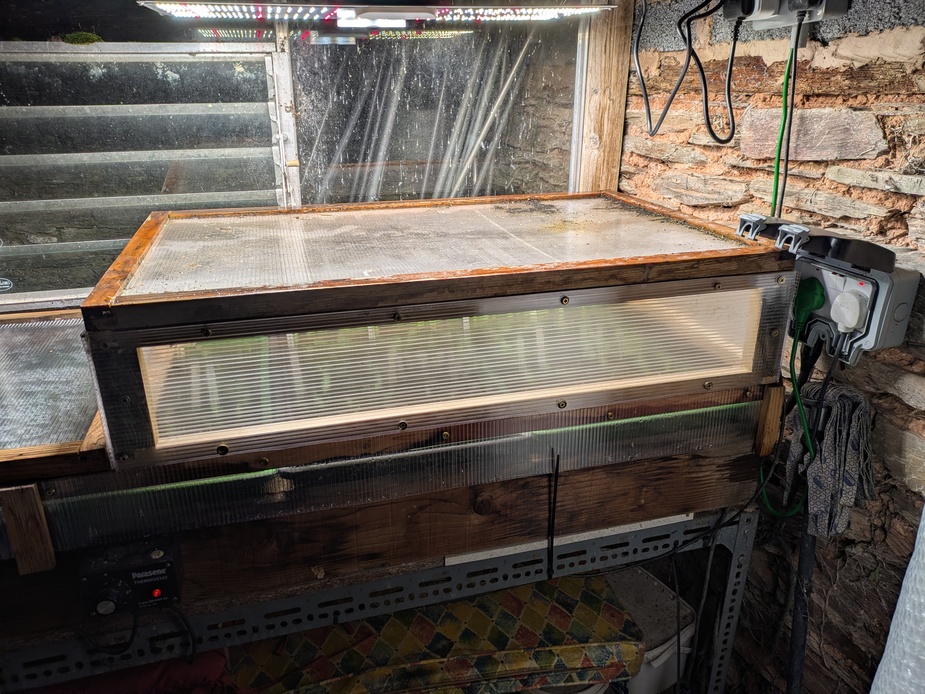
On the other hand, these ones in Frankenstein’s greenhouse are still looking pretty good.


Or so I thought. Completely snapped. Must be at least 200mm diameter.

But no, it just got snapped off here.

Still, it’s all good firewood, eh? Wouldn’t be surprised if the rest came down in the next decent storm we have…