Observation Report 30/01/2011

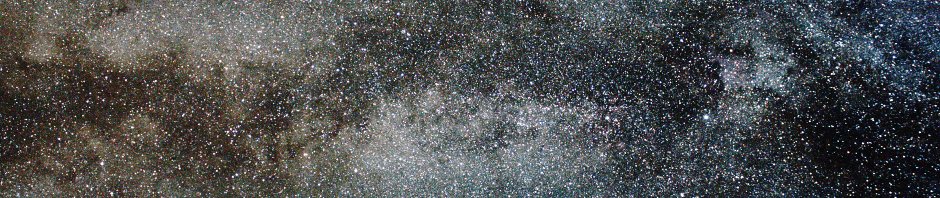
It’s been a beautifully clear day here, so I put the scope outside as the sun was going down on the off-chance of getting some clear sky despite the signs of cloud coming in. At 8pm there was still some cloud hanging around to the north, but it was clear to the south and I could make out at least some of the Milky Way so I decided to go out and pick off a few Messier objects.

I quickly found M42/M43 just to get my eye in and then went hunting M36, M37 and M38 which I was determined to find tonight having miserably failed on Friday. Switching between the bins and finder scope I finally located one and hopped to the next, but whilst I decided I could see all three in the bins I just couldn’t find the last one in the scope. It took quite a while for me to realise I’d found M36 and M37 when I thought I’d found M38 and then M36, so I was looking at the wrong end of the group for the last one. That problem sorted I found M38 fairly easily. Now I’m back inside and have had a chance to look at Stellarium I think that through the scope I’d mistaken the cluster of stars around Chi-Aurigae for those around 14-,18- and 19-Aurigae, so misidentified the first cluster I found. I’m not entirely surprised that should happen; I’m at a pretty dark site so there are a large number of stars visible in both the finder and scope. Inexperienced as I am, I find it far too easy to pick the wrong star as I’m star-hopping between objects.

From there I moved on to the Crab Nebula, which I’m fairly sure I found given that there doesn’t appear to be much else to mistake it for in that area of the sky, but in my scope it didn’t seem much more than a very small fuzzy patch.
To finish off for the evening I had a look for M41 which was pretty much jumping up and down shouting “Over here!” by comparison to the others.
That took me up to about midnight by which time I was starting to lose the feeling in my feet, so I had a brief look at Saturn before calling it a night.
Given practice and time to get more at home with what I can see through the scope I think I could find them all far faster than I did tonight, but we’ve only had three reasonably clear nights since I got the scope at Christmas, so I’m happy with what I achieved.

Posted in Astronomy | Tagged | Leave a comment

Observation Report 18/01/2011

I had two trips out with the scope today.

The first time was around 8am when the sky was clear and Venus was visible about 15° above the horizon before the sun had risen. The planet was a clear crescent shape, close to half-lit.

In the evening the sky was clear though much of it was washed out by the near full moon. It was possible to see Jupiter and make out the northern equatorial band. The four Galilean moons were also visible. Close to Jupiter I found Uranus, but no detail was apparent other than being a fuzzy pale blue disc. Targets for the evening included a few Messier objects:
M45 (The Pleiades) was bright and many stars were visible in the scope.
I tried to find M36, M37 and M38 in Auriga, but it was too washed out by the moon.
In Orion, the Trapezium was clear, but M42 and M43 were again too washed out. The A/B, D & E stars were easy to pick out in Sigma Orionis, but there was no obvious difference in colour.
Alpha Geminorum was clearly elongated, but I wasn’t able to split the stars.
All my other targets in Canis Major, Monoceros and Gemini were too washed out by moonlight to find.

Posted in Astronomy | Tagged | Leave a comment

Nuisance phone calls

We’re ex-directory and on the TPS lists, but lately we’ve been receiving a fair few random sales and “you have won a Caribbean holiday!” type calls from “international, number unavailable” sources. I used to just hang up, but of late I’ve been leaving the line open, especially if it’s a machine doing the calling. Anything that uses up the caller’s time or causes them to pay more in call charges is fine as far as I’m concerned. I know some people string what we shall loosely term “human” callers along, but to be honest I probably have other things I should be doing. I’m open to suggestions for alternatives — perhaps plugging the phone lines into Asterisk and getting them to talk to another machine for a while for instance.

We have three phone lines here, all ex-directory and on TPS, but only one receives these calls. The number on that line had clearly been re-used as for years after we moved in we received calls from Sky wanting to talk to a “Mr. Gardiner” about his contract or something. Perhaps there’s a connection between those and the calls we’ve now started receiving?

Posted in Uncategorized | Leave a comment

My First Astro Image

Fuzzy picture of SaturnI didn’t really know what I was doing when I took this — just put a webcam in the end of the diagonal and did my best with to get an image as it travelled across the camera. I know it’s very poor quality and I wasn’t helped by taking it low in the sky, but look, it really is Saturn!

Posted in Astroimaging | Tagged | Leave a comment

Skywatcher Startravel 80 Telescope Review

I’ve had the ST80 for about seven weeks since I was given it at Christmas and I’ve had a few decent nights stargazing with it so I thought it was about time I wrote down some of my thoughts. The scope had been recommended to my wife by SCS Astro, who are fairly close (in fact we go past the shop on the school run), as a good “beginner’s” scope that fitted her budget.

The scope arrived in a single large box containing the tripod, an EQ1 mount, telescope body, star diagonal, the standard 25mm and 10mm eyepieces, finder scope, scope rings, a few tools and some less than wonderful instructions, all carefully packed in multiple cardboard boxes like sets of Russian dolls. There’s even a tray for the tripod which is possibly really intended to stiffen the legs. Lots of websites show the Startravel scope range as having a blue body, but mine is in fact a newer black one. The tripod isn’t the most robust of affairs and the EQ1 mount is clearly not intended to carry a great deal of weight, but the scope itself appeared well-engineered without giving the impression that someone had made it their lifetime’s work.

Despite the skimpy instructions assembly wasn’t too traumatic. There’s only one place most things can go and the only bit that really wasn’t particularly obvious was a rubber grommet. I eventually worked out that this is supposed to go around the body of the finder scope and inside the front of the finder scope mount to hold it steady, allowing directional adjustment with the screws at the rear.

Predictably the next week or so was overcast so I had to entertain myself reading a couple of astronomy books I’d also been given and working out how to move the scope around. With equatorial mounts its necessary to “flip” the scope over to be able to view certain parts of the sky, which can in turn mean having to release the scope rings slightly and spin the scope body around to get the finder into a usable position and then spinning the diagonal back so the eyepiece is in the right place. I also took the scope outside and attempted to align the finder with the main scope. I found that quite tricky as the finder moved about a bit and as a beginner it’s not easy to tell when something is definitely centered in the eyepiece. I think the problems with the finder were actually that the afore-mentioned rubber grommet wasn’t far enough inside the finder mount and was allowing some slop.

Eventually the clouds cleared late one afternoon and I managed to get a view of Jupiter. Very appropriate given that it was a conversation last summer about being able to see Jupiter from Earth with the naked eye that rekindled my interest in having a telescope. The planet and the four Galilean moons were clearly visible, but a grey image of the northern equatorial band was about the limit of detail that I could see. I had to get a chair out so the children could also see it when they arrived home from school and we spent a little time looking at the gibbous moon. The image of Jupiter was a bit fuzzy around the edge due to chromatic aberration as was the moon though it was nowhere near as noticeable away from the edge. In fact at higher magnification the view of the lunar surface was stunning for someone who’s never seen it up close before.

I had to wait another week for a chance to actually look at any stars in detail and perhaps fairly obviously for mid-winter my first target was the Orion Nebula (M42). I wasn’t entirely sure what to expect, but I could definitely see a hazy grey area around a concentration of light with the 25mm eyepiece and could actually make out the trapezium at higher magnification. Again at lower magnification I could get a good view of the Plieades and the Beehive Cluster, but the Crab Nebula for instance was little more than a small grey fuzzy blob.

It was during these somewhat extended stargazing sessions that a few problems presented themselves. Firstly the entire scope wobbled noticeably. The focus tube also rocked in the scope body when I was moving the focuser and the scope took some time to stop shaking after I’d moved the focus. During the day I went over the scope and tightened all the bolts up. The most obvious cause of trouble was in fact the bolts at the top of the tripod legs. Getting those properly done up improved the overall steadiness quite a bit. There’s nothing in the instructions about adjusting the focus tube, but I eventually noticed two small grub screws on the opposite side to the focusing rack. Screwing those in a little improved things no end. In fact, I had to screw the front one in a fair bit. The shaking after moving the focus I decided to fix with a technological solution and bought a focussing motor with a remote handset. More on that another time.

The improvements made I found it much easier to find objects I was looking for and it became apparent that the stock eyepieces (which I think Skywatcher ship with most of their lower end scopes) were really only in sharp focus in the middle 50%, with the stars towards the edge of the field of view becoming quite fuzzy. I’ve since bought a couple of the cheaper Celestron eyepieces and they are a considerable improvement.

Overall I’m very happy with the telescope. It’s not as good for looking at the planets as some other scopes at not too different a price might be, but it is better at deep space objects and generally for giving a taste of what’s possible. I know quite a few people use them as finders and guide scopes for astrophotography, so I won’t be getting rid of it any time soon. Positives are that it’s (relatively) cheap, it’s small enough to get indoors and outdoors easily and when all’s said and done, it does exactly what it says on the tin. Negatives are that it isn’t great for looking at the planets because of the chromatic aberration which may well be important to a beginner, and the focus adjustment is a bit coarse. I would have light something with a little more “light grasp”, but I’ve managed to pick up the 102mm version of the same scope second hand to compare it with. More on that when I’ve used it.

In the last seven weeks I’ve become utterly hooked on the stars, surprised myself by how much I’ve learned and missed a fair chunk of sleep. It’s been great!

Posted in Astronomy | Tagged , | 4 Comments

Chainsaw chain-changing cheer

When we moved here I “inherited” a heft Stihl 08S chainsaw. It was a bit of an animal when it came to cutting up logs, having a 21″ bar, but really too heavy to use comfortably for a long time and doesn’t have a chain-brake, so I decided I’d get something more convenient.

In the end I went for another Stihl. An MS210 this time with a 14″ bar, which duly arrived from the unreassuringly-named company “Easy Rider Europe”. It was initially a bit of a pig to get to start although now it just needs a few pulls from cold and it’s away. A couple of weeks back I was using it to cut up a load of scrap wood I’d been given by a friend who’d pulled down his garage. Needless to say it was full of nails and whilst I was pretty careful I managed to catch a couple with the saw, damaging a couple of teeth and ending up with a blade that would only cut around corners.

I looked up the saw details on the net and ordered a couple of chains (from Amazon, of all places) which arrived within a couple of days, but when I tried to fit one I found it was too tight in the groove in the chain bar and on closer inspection the teeth on the new chain were clearly larger than the old ones. A little investigation of part numbers revealed that the original bar and chain were not the intended fitting for my saw, but from smaller models such as the MS170. I’ve had the saw for a few years now so the easiest and quickest solution was to get another bar of the correct size. That arrived this morning from CNS Powertools and I now have everything refitted and I’m ready to cut more logs this weekend, assuming the weather improves. I’ll also get to play with my other new toy for this week, a log-splitting maul.

Posted in Smallholding | Tagged , | Leave a comment

Loading MySQL data for phpunit testing

I’d been bugged for a while because when I was writing phpunit tests for some of my code, I couldn’t find a tidy way of pre-loading data into a MySQL database for testing against. Everything I came up with seemed really kludgy and the documentation hadn’t really enlightened me much.

Eventually I resorted to reading the code for phpunit and discovered that it can load a database from an XML dump, which can be created directly from mysqldump. This means that if I have a database containing a large amount of static data that I need to test against I can first do:

mysqldump --xml ... > test-data.xml

and as long as the database is created my phpunit test classes just start as follows:
<?php

require_once 'PHPUnit/Extensions/Database/TestCase.php';

class ExampleTest extends PHPUnit_Extensions_Database_TestCase
{
  protected function
  getConnection()
  {
    try {
      $pdo = new PDO('mysql:host='.DBHOST.';dbname='.DBNAME, DBUSER,
          DBPASS );
    } catch ( PDOException $e ) {
      throw ( new Exception ( $e->getMessage()));
    }
    return $this->createDefaultDBConnection( $pdo, DBNAME );
  }

  protected function getDataSet()
  {
    return $this->createMySQLXMLDataSet(
        dirname(__FILE__).'/test-data.xml' );
  }

  // test case functions follow

which is far neater than the previous mess I was using to initialise the database.

Posted in Computing | Tagged , , , | Leave a comment

Searching for the longest match with MySQL

I’ve been involved with Carbon Guerrilla, a project to allow organisations to manage and track their CO2 emissions for some time now. Yesterday I was working on some code to allow people to compare emissions across locations by re-basing emissions from heating by degree day values for the locations in question. The degree day data is based on splitting the UK into eighteen different regions and I had a table of mappings from postcodes (actually prefixes of postcodes) to those regions, so to find the correct region for any given location I wanted to find the best match in the postcode table, where "best" means longest in this case.

Google came up with some very complex ways to find the longest match, apparently mostly relating to finding telephone number prefixes for billing (probably from asterisk), but I couldn’t believe there wouldn’t be a relatively simple way to do it. In the end I came up with this:

SELECT regionId FROM regionByPostcode WHERE <location-postcode>
LIKE CONCAT( postcodePrefix, '%' ) ORDER BY LENGTH( postcodePrefix)
LIMIT 1

I’ve not managed to break that in testing yet and I think I’m happy with it. I’m only matching against a few hundred postcodes so it’s never going to be too slow. I’m not sure about performance if it had to match against many millions though.

Posted in Computing | Tagged , | Leave a comment

Sortable list of Messier Objects

Although I’ve been interested in the stars for years, I’ve only recently become a telescope owner.  Despite the lack of clear nights since receiving my new toy, I’ve spent some time looking at the obvious things like the moon and whichever planets happen to be in the right place at the right time.  So far I’ve managed to find Jupiter and Venus (both fairly obvious because they’re so bright), Saturn and Uranus (more by luck  than judgement if I’m honest: it was very close in the sky to Jupiter at the time and easy to “star-hop” to from there).

That done, I’ve decided that it would help “get my eye in” and I’d get some useful practice at using the scope if I started hunting for some of the easier Messier objects; a list of 110 deep space objects catalogued by Charles Messier getting on for 250 years ago.  He was actually interested in finding comets (and did find quite a few), but this list was all the things he’d found that he was sure weren’t comets.  Some are other galaxies such as the Andromeda Galaxy, some are nebulae where stars are dying and others forming (like the one in Orion’s sword) and others are just dense groups of stars (the Beehive, in Cancer, for example).

Hunting specific deep space objects requires a little planning, so it was going to be useful to know which DSOs were in which constellations and how bright they might be.  My telescope isn’t huge, and unless the air is exceptionally clear it just wouldn’t be possible to find some of the fainter ones.  Some of the constellations aren’t visible at all times of the year, either, so there’s no point looking for objects in Orion, for example, in the middle of summer.  Wikipedia has a full list of the Messier objects, but it doesn’t sort very well, so I created my own.  I’m sure it’s possible to do in Open Office or Excel, but I’m not particularly competent at driving either of those, so I stuck the data in a database and built a web-based sortable table of Messier Objects instead using PHP and Javascript. When I have another few minutes spare, I’ll add more data for each object such as the common names and Right Ascension/Declination.

Posted in Astronomy, Computing | Tagged , , | Leave a comment