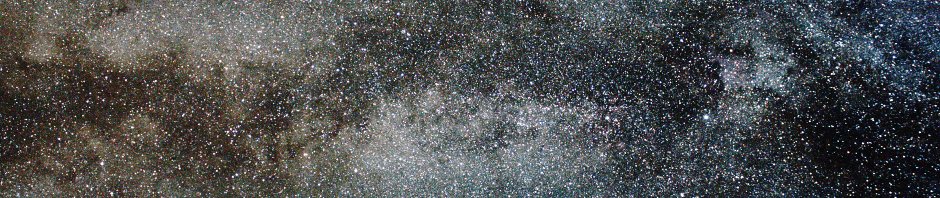
Observation Report 7/3/2011

It’s the 7th March. I received my first telescope — the ST80, for Christmas 2010. And tonight is the first really pin-sharp night sky we’ve had. I still haven’t sorted out the mount for the 127 Mak, so the ST102 is out again.

I’d planned to spend some time looking at multiple stars tonight following some of the suggestions in Turn Left At Orion, but had to have one more go at M106 first. This time I star-hopped over from Chara and within a couple of minutes there it was in the eyepiece. Don’t understand how I’d failed to find it previously. In fact, I recognised the stars around it as being ones I’d spent ages staring at on previous nights whilst completely failing to see the galaxy itself!

My first multiple star target was Castor which I found split very nicely giving two sharp star images with a diffraction ring around them. I think I also found the third star, but wasn’t able to match the positions of the stars I could see with Stellarium so need to visit this one again.

Next on the list were ι-Cancri and Struve 1266. ι-Cancri I found fairly easily and could split, but I’m unconvinced that I found Struve 1266 and will have to try that again another time. After these two I moved on to Cor Caroli and γ-Leonis without any problems.

Despite being still fairly early it was unusually cold and I decided I’d have a brief view of Saturn before calling it a night. I’m so glad I did. Even at 125x magnification with my 4mm eyepiece the image of Saturn was very sharp and I could make out three moons that I believe to be Titan, Rhea and Hyperion. Enceladus was in front of the planet at the time according to Stellarium, with Mimas and Tethys on the opposite side close to the rings. Dione should have been visible, but I didn’t see it. Very pleased to have had such a good view of the planet though. I look forward to getting the Mak into service soon.

Posted in Astronomy | Tagged , , , | Leave a comment

Observation Report 6/3/2011

Another clear night, but again with unexceptional transparency. The more I go out the better I am getting at judging the quality of the seeing. I’ll still go out pretty much any night there are stars to be seen nonetheless. The practice at finding objects is well worth the effort, to be able to make the most of those times with the seeing is good.

Back to the ST102 for this evening and on with some hardcore Messier-hunting.

I wanted to revisit a few of the objects I’d first seen with the ST80 having gained a bit more experience finding them, mostly just to confirm my original sightings, so initially I found M1, M35, M42, M43, M44, M48 and M67 in quick succession before moving on to newer things.

As with my previous session the objects in the western sky were too obscured by the haze on the horizon to be worth spending time on. I think I’ll have to wait until the late summer before I can see them. So, the first new target for tonight was M106 and, like last time, another failure. With M88 it was a completely different story though. Working from Stellarium I put the red dot finder in what I thought was roughly the right place and as soon as I put my eye to the eyepiece a galaxy jumped out at me. Unfortunately, given the number of galaxies in this area of Coma Berenices and Virgo I couldn’t be sure which one it was. For the same reason I was able to hunt around, occasionally returning to the first one to find my bearings and pick out two more galaxies and by sketching their relative positions and those of the stars around them and comparing the result to what I could see in Stellarium I decided I’d found M87 first of all, followed by M86 and M84.

Given the locations of these three objects I decided I ought to be able to navigate around and find a lot more and was happy to have my deductions confirmed by finding a long list: M88, M91, M98, M99, M100, M58, M59, M60, M89 and M90. The last I visited was M98 which, being edge-on, is unmistakable in shape. I was very pleased to have found all these and to have identified where I was in the first place. I look forward to viewing these again when Virgo is higher in the sky.

To finish off for the night I decided I’d have another go at finding some of the galaxies in Leo that I’d failed on previously. Starting from ρ-Leo I managed to star-hop neatly to M95 and M96 and M105 was then an easy jump. I was surprised to see two fuzzy blobs in the eyepiece once I got to M105 though. According to Stellarium the second would have been NGC3384.

A busy night, but I’m pleased to have found so many objects, taking my total Messier count up to forty-eight. I think my “eye” is definitely improving. If only the seeing would…

Posted in Astronomy | Tagged , | Leave a comment

Observation Report 4/3/2011

Another less-than-brilliant night, seeing-wise. Clear skies, but poor transparency. This was my first time out with the 127 Mak which I’d temporarily bodged onto an EQ1 mount though, so I wasn’t going to miss the opportunity even though I did end up hunting Messier objects with it when my ST102 would probably have been more suited.

Starting in the west, M32 and M110 proved impossible to separate from M31, probably due to a combination of the wrong scope, poor seeing and being low on the horizon. I abandoned M33, M39 and M74 for the same reason. After a such a sorry start I eventually managed to find M103, but it did take quite some hunting down and wasn’t visible as much more than a few points of light, if that. One to try with the refractor another time.

Having had such poor luck with the western sky I moved over to Canes Venatici and identified M3, M63 and M94, but utterly failed to pick out M106 when I’m sure I must have had the scope pointing straight at it more than once.

I also failed with my first target in Coma Berenices — M88, but located M53 with some difficulty and then M85.

Hercules hasn’t really been far enough above the horizon to view until now, but tonight my first sight of M13 was stunning, as was M92. Definitely ones to revisit with a refractor when they’re higher in the sky.

Finally for this evening I spent a short while viewing Saturn, but it was really still too low and the seeing in its direction (which is unfortunately towards the light dome of Taunton from my usual observation position) was too poor to make it worth spending a lot of time on.

Overall I was very pleased with the Mak, despite it being far too heavy for the mount and using it for viewing objects it’s not particularly well-suited for. I look forward to getting it onto an EQ3-2 mount and spending some more time looking at the moon and Saturn.

Posted in Astronomy | Tagged , | Leave a comment

View of ISS and Discovery on its way home

I was looking at some galaxy information in Stellarium last night with my son when I noticed the ISS pop up over the horizon. I’ve never seen it before, so we rushed outside to watch it pass overhead and were treated to far more. Discovery had just undocked from the ISS and started its journey home and we were treated to a view of the shuttle leading the ISS by a few seconds across the entire sky. Fantastic to see, and all the more poignant because it is planned to be the last trip Discovery will make.

Shame I didn’t have a suitable camera and scope set up, but we were lucky to notice it happening in the first place.

Posted in Astronomy | Tagged | Leave a comment

Spawny Frogs

Once upon a many years ago, a cart track ran from a nearby road and turned at our yard to run down to the local corn mill. The track has long since fallen out of use, but a dip in the track next to the yard has slowly collected water and now contains a large population of frogs. Sadly it’s heavily shaded by sycamore weedstrees that shed their leaves into the pond each autumn. At some point I intend to get rid of the sycamore except where it shades the pond from direct sun and rake a lot of the leaves out to try to keep the water healthier.

A couple of weeks ago whilst chainsawing logs near the pond I stopped to rest and initially thought I heard a distant tractor engine, but eventually realised that what I was hearing was lots of frogs croaking. A quick visit to the pond revealed perhaps around fifty frogs with their heads poking through the surface of the water, croaking away. A couple of days ago I went back to see if they were still there. They weren’t, but this not particularly great image shows what I did find:

I don’t know why it seems to be two different colours. Perhaps two different breeds of frog, or different ages of spawn, or perhaps one isn’t even frogs. Maybe one day I’ll find out. I’ll try to remember to go back regularly to see how they’re getting on.

Posted in Environment, Smallholding | Tagged , , , | Leave a comment

Cider Press Construction (Part 1)

For pressing my cider apples I decided I couldn’t justify the price of even the smaller commercially-produced presses and after a fair bit of research I felt I could build one myself that should do an acceptable job. As it worked out, the first one I built worked ok, but really wasn’t strong enough to withstand the twelve tonne bottle jack I’m using to drive the press, so I’ve rebuilt another to the same plans but with heavier-duty components.

The first job was to build the frame. It’s constructed from 6″x2″ planed square edge timber glued together and secured with 12mm threaded steel rod and large square washers:

The cutting list is:

  • 2 x 100cm for the outer base sections
  • 2 x 92cm for the outer top sections
  • 2 x 64cm, one for the centre base and top sections
  • 2 x 109cm for the uprights
  • 2 x 40cm for the “feet”

I started by laying out an outer base and top section and gluing the base and top centers and uprights to them to form a rectangle, holding all the parts together with clamps whilst I fixed the remaining top and bottom outer sections and again clamped them in position. I could then drill out all the holes for the threaded rods which I cut to length and bolted up. I chose to put two rods through each of the corner joints, one through the centre of the base (where the pressing load will be well spread out by the press tray) and two to strengthen the top beam (where the load from the top of the bottle jack is distributed over a much smaller area). That done I left everything to dry.

The final step for the frame was to attach the “feet” to the protruding ends of the base which I did with eight 4″ #10 screws.

Because of the large timber sizes and the additional metalwork, the press frame is heavy. I’d guess around 25kg to 30kg. I’d say it’s about the minimum for pressing apples in the kind of volumes I’m after though.

Next, the press tray.

Posted in Cider-making, Smallholding | Tagged | Leave a comment

Observation Report 2/3/2011

Another night when the seeing was far from great, not helped by having a breakdown truck parked nearby with all the lights flashing whilst I was setting up, and then someone wandering through the adjoining field at about 10pm flashing a very bright torch around, all set off by the sheep on the nearby cricket pitch setting off all the security lights on the pavilion! I had new toys again though, in the guise of a set of Revelation (allegedly the same as GSO) eyepieces, that I wanted to try out.

However, having decided that some of my targets from last time weren’t going to be worth spending time on, I perhaps unwisely picked M76 for my first target. Had I looked at Stellarium and realised that I was going after a tiny planetary nebula with an apparent magnitude of 12, perhaps I’d have looked for something else. Nonetheless I spent a long time hunting from star to star, switching up and down eyepieces to get different magnifications, until I found what I had no other choice than to identify as the nebula in question, though I wasn’t able to identify any detail. It and HIP8053 complete what appears to me as a “pawprint” asterism with φ-Perseii, 2 Perseii, HIP8771 and HIP8598.

Thinking I’d try something a little easier I opted to give M103 a try, but completely failed to locate it for no reason that I could understand, so moving up the magnitudes a little more I moved on to M52 which I located as being near the crossing points of lines drawn between Shedir and Caph in Cassiopeia and β-Cephi and ι-Cephi. Finding the cluster needed 25x magnification and once found opened up to give a good view at around 50x.

After this success I found M31 again thinking that I might look for M32 or M110, but I really couldn’t make enough detail out to say that I could see them. By this time the cloud cover had increased to the point where very little sky was visible so I decided to call it a night, taking my Messier total up to twenty-four.

And the EPs? I’m very pleased with them. The 32mm makes a great EP for scanning the sky and the views through them all are clean and sharp. A proper try out really needs somewhat better seeing than was on offer on this particular night though.

Posted in Astronomy | Tagged , | Leave a comment

Observation Report 26/2/2011

Despite not being a great night in terms of seeing, this was the first time I’d been able to give the ST102 a good try out so I wasn’t going to miss the opportunity.

Initially I skipped a few Messier targets in Andromeda and Cassiopeia because the sky wasn’t sufficiently clear, but eventually managed to locate M34 in Perseus. The wind was rising and began to make viewing tricky from my usual site in the field in front of the house, so I decided to leave things for a while to see if they’d improve.

An hour or so later there was still a strong breeze, so I moved into the lee of the house where the view of the sky is far more restricted. By this time my original targets had set or moved sufficiently far to be obstructed by trees, so I moved around to targets to the east and north-east. First up was M65 which I’d tried unsuccessfully to find with the ST80. This time I found it surprisingly easily, getting both M65 and M66 into the same frame in a V shaped group, two elliptical fuzzy patches.

Pleased by finding these two I scanned the sky between Virgo, Leo and Coma Berenices for other Messier objects, but failed to find any after fifteen minutes or so search, so took a break and attempted M64, the Black Eye Galaxy instead, which proved to be far less elusive. I’ve not yet worked out why this is so-named, and the view didn’t really enlighten me.

It was getting towards 1am by now and the temperature was dropping, so I made one final attempt to locate another failure in the ST80 — M51, the Whirlpool Galaxy. After some hunting around off Alkaid this time I found it, though sadly it wasn’t clear enough to see more than a fuzzy egg-shaped blob.

Not unexpectedly I guess, the ST102 is just like a “big brother” to the ST80, but I’m very pleased that I’ve been able to find objects with it that I struggled to see with the 80mm version.

Posted in Astronomy | Tagged , | Leave a comment

DIY Small-Scale Anaerobic Digestion (part one)

Fans of the 1970’s BBC comedy series “The Good Life” will remember that Tom and Barbara had an electricity generator in the cellar that was powered using pig manure. What may be surprising is that it’s based on a fundamentally sound idea. Under the right conditions organic matter can be broken down by bacteria-like organisms (“composted”, if you will) to produce a mixture of carbon dioxide, hydrogen sulphide and methane. The CO2 and H2S isn’t too hard to extract, leaving methane which can be burned for cooking, heating, or in a generator. Small-scale digesters that do this aren’t at all uncommon in India and Africa where there are suitable “raw materials” and are often little more than one steel drum inverted inside another filled with the waste.

I’ve thought it would be fun for a while to try to build an AD unit myself and feed it chicken manure, kitchen waste and whatever else I could get my hands on for free. A friend gave me his old 2,500 litre oil tank (thanks Mark) and in fits and starts I’m making progress.

The first thing to do was to provide a large-bore pipe through which the tank could be filled and emptied. I decided to use 100mm soil pipe for this and fitted it into the tank using some flanges intended for large aquarium installations. I’ll seal them in place with silicon sealant.

The next problem is that ideally the contents of the tank needs stirring on a regular basis, but without letting all of the gas escape. As some form of heating is required to get the methane-producing beasties to work, I decided to use the pump circuit to swirl the contents of the tank around. I fitted a pipe from the original tap fitting into an old central heating pump and connected that to the bottom of the coil in a disused copper hot water cylinder. The top of the coil then goes into a second pipe that feeds back into the tank half-way up side, but where the bulkhead fitting goes back into the tank I’ve fitted a bend inside so the flow is back into the tank around the circumference. Hopefully that will start a stirring motion inside. The idea is that the hot water cylinder will be filled with hot water, initially heated by an immersion element, but subsequently perhaps by coolant from a generator and act as a large reservoir of heat to warm the contents of the tank, rather like a domestic heat store hot water system.

The filler cap has also been replaced with a clear perspex sheet allowing me to see inside (and which will seal tight to the top of the tank) and I’ve stood everything on a wooden platform on top of a couple of sheets of 50mm thick insulating material.

This is as far as I’ve reached so far. The next stage is probably to seal everything up and see if it can produce any gas at all, but before I do that I’ll built a cover of polythene sheeting to trap air around everything to try to retain some more heat. I’ll probably also lag the tank with a few layers of loft insulation, or perhaps even bubble-wrap.

Here’s what it looks like so far:

Posted in Environment, Projects, Smallholding | Tagged , , , | 2 Comments

Solar wax melter

Solar wax melters are available commercially and there are a fair few designs about on the web. Here’s one I made a couple of years ago.

I started with the tray that the frames would sit in. I had some steel sheet lying around that I’d removed from our oil boiler before it went to the tip, thinking it would come in handy one day, so I cleaned that up and drew out a “net” for a tray 18″ wide, 18.5″ long at the sides down to 20.5″ in the middle and with 3″ high sides. This was actually the largest I could make it given the sheet I had available, but actually worked out fairly well as I was planning to make something I could stack four National brood frames or six Nation super frames in. I made tabs on the edges that were to be joined and was intening to pop-rivet them once the sheet was folded up, but in the end they were welded instead. Out of an off-cut of the sheet I folded up a spout and riveted that to the base of the tray, then sprayed the entire tray with flat black Hammerite paint and placed some mesh against the walls above the spout to filter out the worst of the rubbish. This is the finished tray:

To house the tray I built an open-top wooden box from 12mm marine ply with internal dimensions 18.5″ wide, 29.5″ deep and 5.5″ high. At 45° at one end I added a shelf for the wax collector to stand on. I found the tray wasn’t quite high enough for the spout to reach over the collector, so added a few scraps of ply to the frame to push the tray further up, and a couple of screws hold the tray in place at the top of the box when it’s tilted up. I would liked to have used glass for the top of the box, but with two children running about the place it made more sense to use a scrap of acrylic sheet. To hold the sheet in place at the top I used a length of timber into which I’d cut a rebate with a router, and another length without a rebate at the bottom:

First tests showed the air temperature at the top of the box to reach 90C on a warm summer day and the melter has worked excellently for a couple of years. It does need a little tidying up now. A coat of preservative would probably be sensible as well as a retaining strap to hold the perspex tight to the walls of the box, as small gaps mean bees get interested in getting inside and die very quickly if they do.

The other major change I intend is to make a metal or plastic “lip” to go under the bottom edge of the perspex so rain will be carried off to the sides. I didn’t think this would initially be a problem because I was intending to use it where there’s an overhang that prevents rain reaching it, but that’s near the front door and the box does tend to attract bees which distresses visitors, so it now sits out in the elements.

Generally though I’m very pleased with it, especially given that it cost me nothing but time and a few scraps of material that I had lying around.

Posted in Bee-keeping, Projects | Tagged , | Leave a comment