Another Attempt at a Cygnus Widefield Image

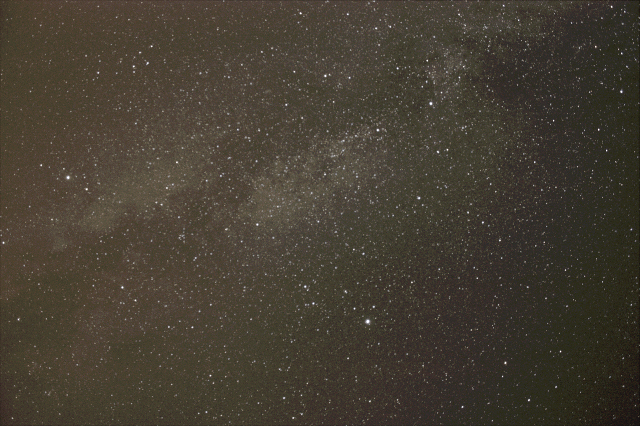
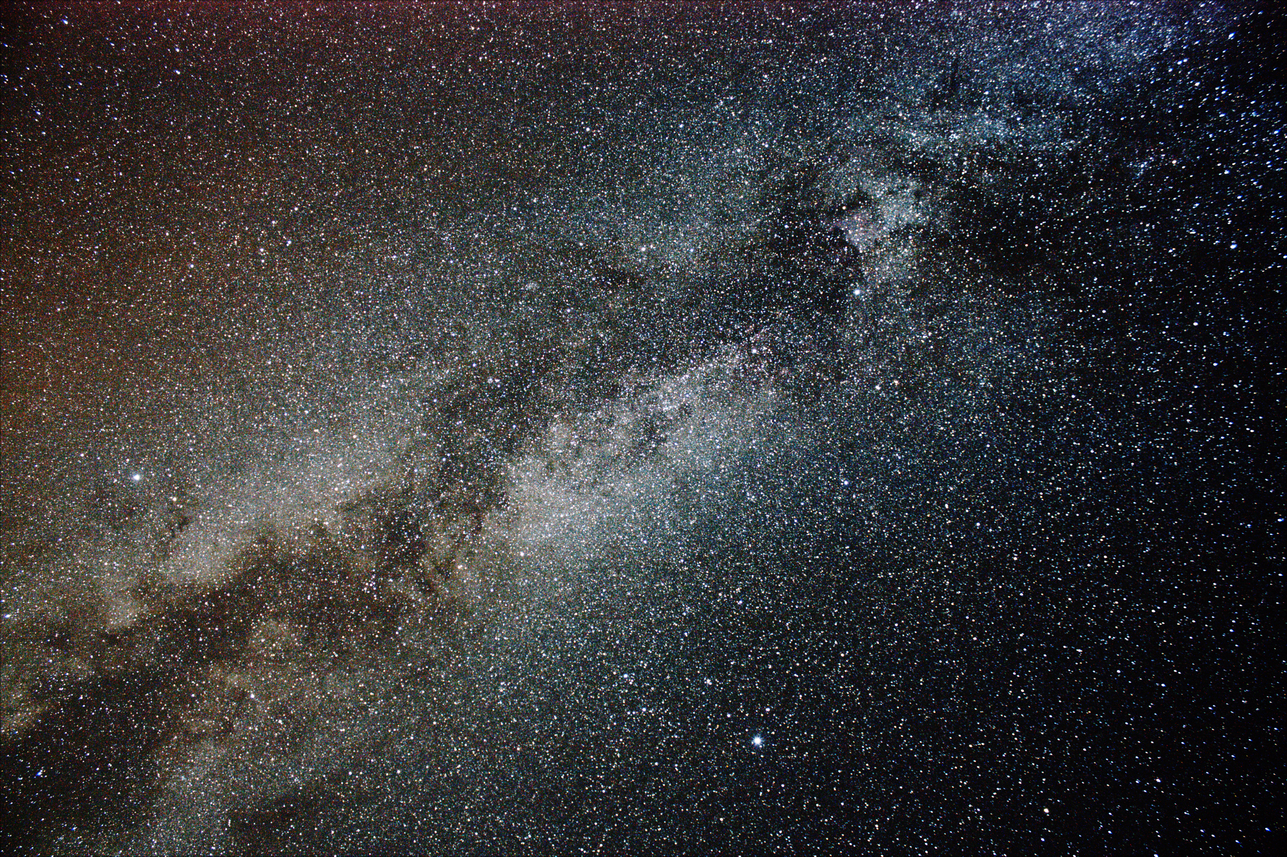
The evening after my previous attempt the sky looked better so I set up again mostly with the same kit (EQ3-2, 450D, 18-55mm lens at 18mm & f/4.5, but this time I used APT to control the camera from the laptop. This made focusing and capture so much easier that I was able to experiment a bit more, tidy up the framing and so on.

This time I took sixty 45 second exposures with ten darks, again stacking them in DSS and tweaking levels and curves in photoshop — another first as I’ve never used Photoshop before.

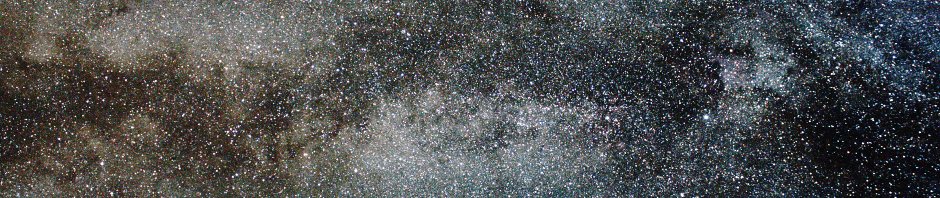
I’m much happier with this result. There is perhaps a little amp glow showing at the top edge of the image and the stars towards the corners are stretched somewhat because the lens isn’t perfect, but it has so much more impact thanks to the depth of colour and the sheer number of stars visible. I’m pleased enough with it that I’ve resized a version to use as my workstation desktop background 🙂 Here it is:

Posted in Astroimaging, Astronomy | Tagged , , | Leave a comment

My First Widefield Shot

Quite a few “firsts” this week. Makes such a change to have so many nights of clear sky. This night the sky clarity wasn’t great, but I wanted to try a widefield shot and wasn’t too worried about the outcome as long as I got a feel for what was required. I mounted up my unmodified 450D DSLR directly on the EQ3-2 and pointed it towards the constellation of Cygnus. I set up the remote shutter control on the camera to take thirty exposures of 45 seconds each with the kit 18-55mm lens at 18mm and opened as wide as possible at f/4.5.

The thirty exposures together with ten darks were fed into Deep Sky Stacker and I did no further processing. Here’s the result:

I’m not particularly happy with the outcome on this one. I have nicely captured Cygnus, Lyra, Sagitta and Delphinus, but the image really lacks dynamic range. I think the seeing was perhaps actually worse than I realised and that thin high cloud spoilt the image.

Posted in Astroimaging, Astronomy | Tagged , , | Leave a comment

My First SPC900 DSO Images

We’ve just had a full eight days of clear skies and I finally managed to get around to testing my LX-modded SPC900. For the test I used my ST120 on the motorised EQ3-2. This is my first ever attempt at such a thing, so I wasn’t expecting stunning results and I wasn’t disappointed 🙂

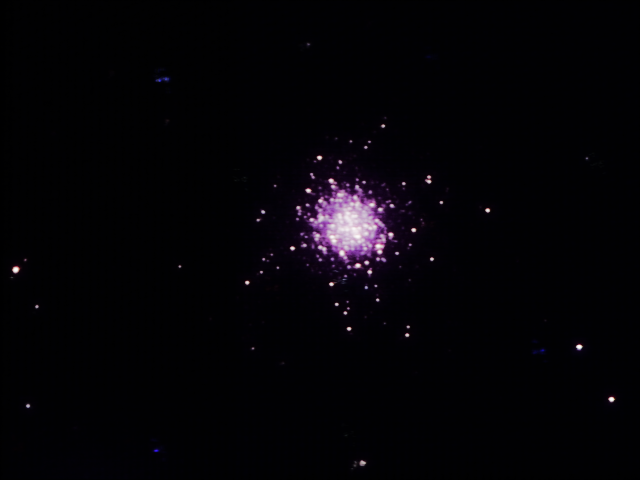
First, M13. This first image is 33 exposures of 16 seconds, no darks, captured with SharpCap and stacked in Deep Sky Stacker. There’s no other processing.

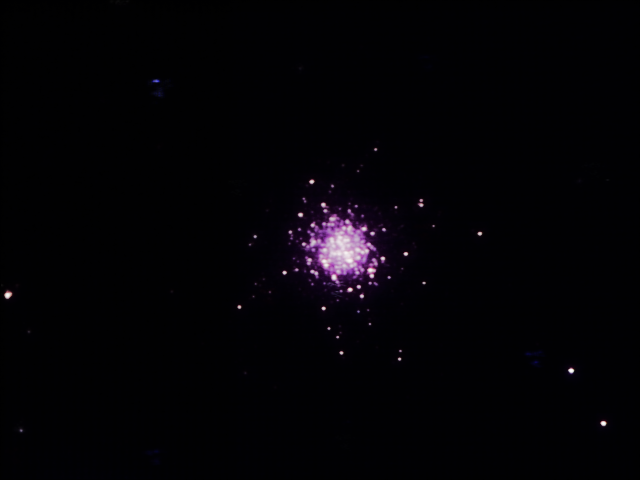
And this one is the same, but 55 exposures of 10 seconds.

I can’t really decide which I prefer. The second looks perhaps a little sharper to me. I should perhaps re-stack and do some processing in photoshop, but I’ll come back to that another time.

I also tried capturing M27, the Dumbell, but whilst I ended up with stars close to being over-exposed, the nebula itself was hardly visible. An attempt on M31 similarly in failure and an image massively over-exposed in the core and no data elsewhere. I think more practice is required.

Posted in Astroimaging, Astronomy | Tagged , , | Leave a comment

Paper Planet Models

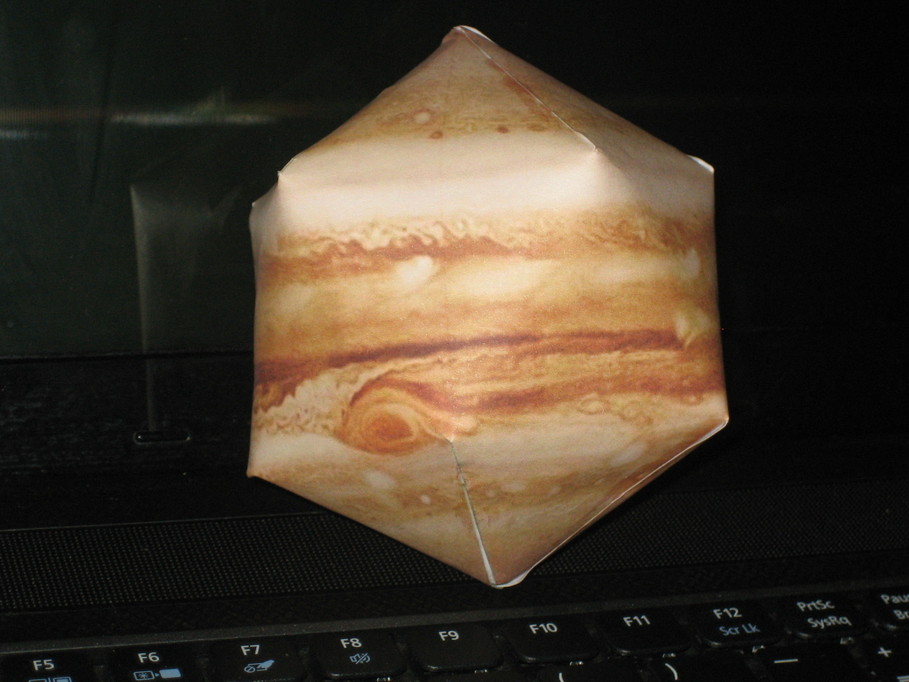
I found a set of “nets” for icosahedron models of planets and moons recently and made one each of Jupiter with my daughter. They’re quite tricky to make the final joins on — you really need delicate slim fingers, not short dumpy ones such as I am gifted with. Anyhow, here’s how mine turned out:

I downloaded the net as a PDF file from here, but found other paper models here and here. As yet we’ve not tried the last two.

Posted in Astronomy | Tagged , , , | Leave a comment

A Very Late Swarm

Yesterday (22nd July) morning I received a phone call about a bee swarm in a local garden. The swarm was in a holly bush right next to the path to the front door of the house and the owners have young children so not collecting it wasn’t really an option, but I’m now left with a debate over what to do with it. It seems very late to allow them to try to consolidate a new colony in time for the winter, so perhaps I should just dispose of the queen and combine them with another colony, though it was quite a large swarm.

I’m genuinely surprised to see one this late in the year. I imagine they’ve been waiting for some time for an opportunity to leave the parent colony, unable to do so because of the poor weather.

I think I’ll give them a couple of weeks to see if the queen starts laying and then make a judgement about how to combine them.

Posted in Bee-keeping | Tagged , | Leave a comment

Observation Report, 22 July 2012

Having had an excellent night two nights ago I had six Messier objects left to find and set myself the goal of finding M7 this week on the basis that whatever happens in August, between the Moon and the turning of the seasons it will be lost to me until next summer. According to Stellarium it was going to be a really tricky object to find anyhow as it wasn’t going to get much more than four degrees above the horizon at any point.

I had the ST120 out cooling early and took it up to my usual observing site at about 11pm. The sky was clear of cloud, but the seeing was very poor with light pollution from the local town particularly being scattered as much as fifteen degrees up from the horizon. Nonetheless I was on a mission. Clearly the trees have grown an awful lot or the configuration of Stellarium is not quite perfect as its idea of where M7 should be was clearly higher than it could actually be judging from the position Kaus Australis which was the initial point for my star hop and pretty much the same altitude. Kaus Australis was actually below the maximum height of the tree line though I could see it through a gap, so I was feeling fairly negative about my chances of finding M7, but as I panned westwards across the treetops it suddenly popped out in a small gap. I had to wait for the trees as they moved to be able to see it and I’m not actually sure I could see the entire cluster at any one point, but there was nothing else in Stellarium that it could be and based on the few stars and its alignment with the “tail” of Scorpius I’m certain I found it. I still feel somewhat cheated though. Short of taking a scope much further south or finding a hill with a completely clear southern horizon I don’t think there’s much else I can do though.

My “backup plan” for the evening was to find M30, but it was too early and Capriconus was lost in the haze of light to the east anyhow, so I left the scope out and returned to the house to grab some binoculars and spent an hour sitting on the patio watching the sky, looking for meteors and satellites (I saw at least half a dozen of each including what I believe was an Iridium flare, but it disappeared over the house before I could catch up with it). I’ve never had a “good” summer for observing, so I took some time to try to familiarise myself with the orientation of summer constellations and to revisit old friends such as M13. Away from the light pollution around the horizon the sky was much clearer and far more enjoyable to look around.

Around midnight the sky seemed to suddenly get much darker. I wouldn’t be entirely surprised if the local towns have some sort of “switch off” policy at midnight. There certainly seemed to be a marked and immediate change in the darkness of the sky. It was also getting a fair bit colder and when I returned to the scope it was running with dew. Capricornus was visible by this stage though still affected by the haze on the horizon. I found the semi-circle of stars around ζ Capricorni and just swung the scope around a little to the north to find M30 quite easily. In the haze it appeared very dense, somewhat like an unfocused star and no detail was visible, but I have at least found it and Capricornus will be higher in the sky later in the year for me to look at it again.

Although the evening had started off disappointing, spending time with the bins and finding M30 in a clearer sky more than made up for it so I decided to call it a night and returned to the house to dry off the scope. This takes my total of Messier objects found up to 106., leaving just M74, M77, M79 and M83 to find.

As it turned out, I wasn’t done there. I woke up at 3:30am and went to get a drink, passing a window facing north-east. As I looked out of the window I could see Venus chasing Jupiter away from the oncoming dawn. If I’d been a little more aware of what was going on I could also have seen the Pleiades and an ISS pass, but even so I don’t think I have reason to be too unhappy with my nights viewing.

Posted in Astronomy | Tagged , , , | Leave a comment

Observation Report, 20 July 2012

With almost horizon-to-horizon blue skies yesterday evening I gambled on putting out both the 127 Mak on the EQ3-2 so I could polar align it for any solar imaging that I can find time for, and the ST120 with its new-to-me dual-speed Crayford. As twilight fell the occasional cloud popped up, but nothing that bothered me too much. Things were still looking good. Sadly the story was not the same by 11pm as a fair bit of cloud had built up and was speeding its way across the sky, greatly enlarging the light dome of Taunton and blotting out much from the north round to the south-east. Nonetheless, my last night out was 19th June, and 15th May before that. I’d probably sit outside under a blanket with holes poked it in by now, so I was determined to make the best of it.

M72 and M73 were my first two targets, but Capricornus was completely covered by cloud so I went back to look for M24. I just couldn’t find M24 last time I was out, but I’ve since seen photographic images showing it quite clearly which gave me a much better idea of what I was looking for. Having spent a little time on a detour to M22 and the Omega and Eagle nebulae I found what is clearly a much more dense area of blue-white stars in the right place for M24. Now i’ve seen it and understand what it is I’m not in the least surprised I couldn’t find it last time. My expectations were all wrong and I probably looked straight at it without realising what I was looking at.

The main Sagittarius asterism was scooting along the tree tops, so I decided to try to find the three Messier objects along the bottom edge. All three were fairly simple star hops from Kaus Australis, but being so low on the horizon they were also fairly unrewarding to view. More aperture and a more southerly latitude is required for these one day I think. M54 was a landmark for me though, being my 100th Messier object.

Around half past midnight I looked up at Ursa Minor to get an estimate of NELM for the night (getting up towards 5.5) and as I was counting stars a beautiful meteor shot southwards straight through both Ursa Minor and Major leaving a trail of sparkling debris behind it covering about thirty to forty degrees of sky (measured using my hands) before winking out. It must be the prettiest meteor I’ve ever seen. Such a shame it lasted no more than a heartbeat.

By this time the cloud over Capricornus was clearing and I could see the “tail” stars, so I moved on to find M75. Another that needs more aperture, I think, but hopefully it should benefit from being a little higher in the sky later in the year. I’m not at all sure the remaining cloud wasn’t washing out the view a little too, as M72 and M73 were very much the same. I fancy I did at one point glimpse the Saturn Nebula using averted vision, but I really can’t be sure.

My final “new” Messier for the night was M55, still low on the horizon and not the most straightforward of hops from τ Sagittarii as few stars were visible at such low altitude. I identified where I thought it ought to be and was greeted with a mushy grey view of, well, nothing, really. For just a fleeting few seconds the sky cleared and I saw what might well be a fairly impressive globular cluster under better conditions, but obviously last night was not to be the night. Another for the “more aperture, less latitude” list.

As I packed up I spent a bit of time just looking at the sky as a whole. Much of the cloud had cleared and the view of the Milky Way was outstanding, clearly running all the way from Scorpius over to the northern side of Cassiopeia. As I walked down the garden path I was so distracted by the fact that I could see M31 with the naked eye that I almost impaled myself on the washing line.

Clearly this was too good to miss, so I packed up the scope, found the bins and a beer and sat outside just scooting around the sky picking out stars, watching satellites and chasing meteors with the 10x50s. At one point I saw an astonishingly bright flash in the Milky Way near Sagitta which travelled north as it dimmed. I assume it was an Iridium flare, but I’ve not yet checked. Having never seen it before I also found the Coathanger entirely by chance, and whilst looking away and finding it again just to prove I could realised that it is also a naked eye object here.

By 2am I decided that If I didn’t want to be a complete waste of space this morning I’d better call it a night and did so very contentedly.

Posted in Astronomy | Tagged , | Leave a comment

Dovetail Adaptor for Old EQ3-2 Mounts

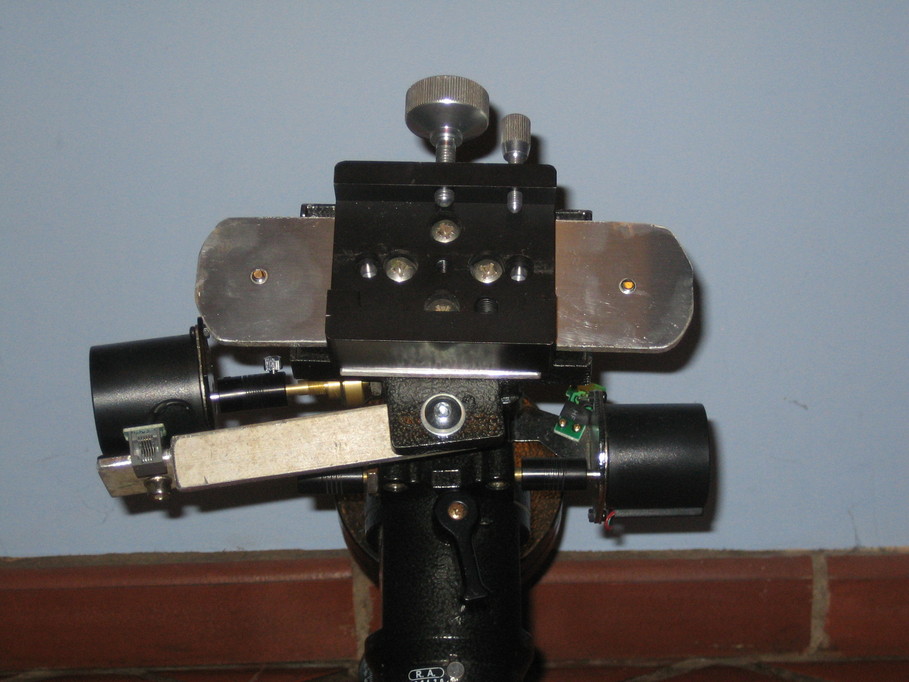
My EQ3-2 is one of the older models that has fittings for scope rings, but doesn’t have any form of dovetail clamp. The new models have both. I prefer to use dovetails as it makes swapping scopes around between mounts easier, so I decided to modify my mount to add a suitable saddle. I’ve seen this done by mounting a saddle on a section of dovetail that is then bolted to the mount using the holes for the rings, but I wanted something with a little more lateral stability.

I bought a new saddle from Sky’s the Limit and after some hunting around discovered that it’s possible to buy small sheets of aluminium on ebay for very little money. I bought some 5mm sheet and cut out a piece that would support the entire base of the saddle as well as resting on the sides of the mount head. The plate extends out far enough to reach the holes for mounting scope rings. I drilled out matching holes in the plate and tapped them to accept an M6 thread. When fitted to the mount the bolts then hold the plate tight to the top of the mount without it being able to rock or twist.

Four more holes tapped to M6 take the screws that hold the saddle to the plate. Tapping M6 holes squarely in 5mm plate is tricky. I discovered the way to do it is to put the tap into the chuck of a pillar drill with the plate clamped to the table and then turn the chuck by hand. This keeps the tap square to the face of the plate. Doubtless there’s some clever way to do this, but it worked for me.

Here’s what it looks like when assembled:

I’ve not had a chance to try it out properly yet as it’s rained for the last three months. Hopefully things will change some time soon. If they don’t change soon though I’ll be making a similar adaptor for my AZ3 to take a dovetail.

Posted in Astro Equipment, Astronomy, Projects | Tagged | Leave a comment

Solar PV Generation Update, July 2012

Unless you have some strange rain fetish, June has been an awful month weather-wise. There’s been hardly a single day here when it didn’t rain and even when rain wasn’t falling the sky has been mostly cloudy. According to the Met Office June was the wettest month on record (for more than 100 years) with rainfall across the UK averaging perhaps 10% more than the previous worst year. There’s little sign of a let-up in July either thanks to the northern polar jet stream just sitting stationary across the UK for the foreseeable future.

So, the numbers. Generation for June was 327kWh, worse than any other month since February. That brings our total generation to 2507kWh since installation, bringing in about £1130 in FIT payments and saving us up to £375 in electricity not purchased from the grid.

Such poor performance has pushed our predicted output for the year even further back to around 3370kWh for the year. Unless the sun goes out I can’t see how July can really be that much worse.

Posted in Environment, Projects | Tagged , , | Leave a comment

50mm Binocular Objective Finder Howto

My second right-angle finder based on a binocular objective is now built (if not yet cosmetically finished) and this time I’ve taken photos so I can now document the construction process.

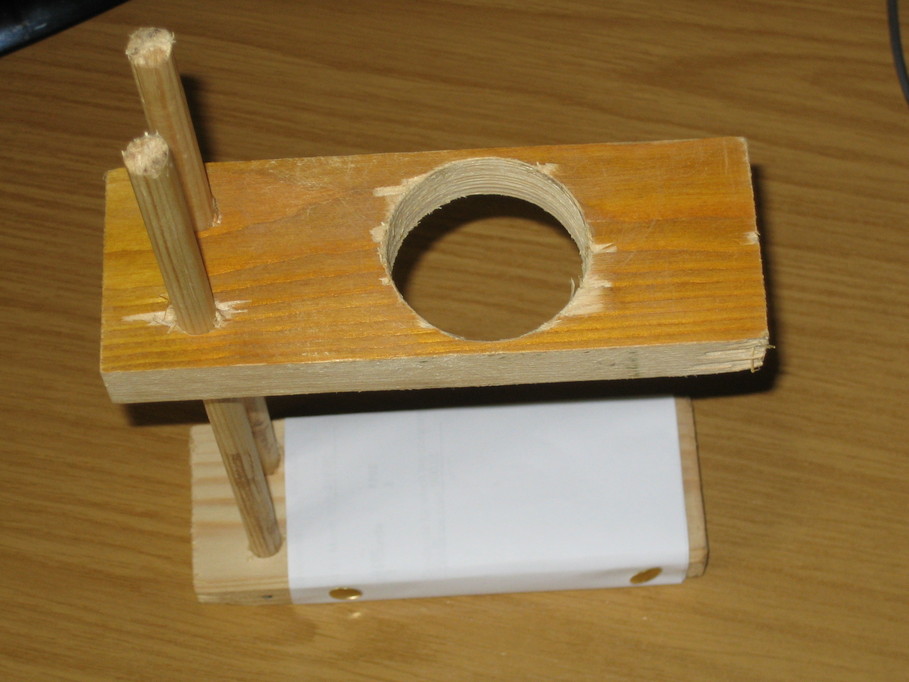
My aim was to make a functioning right-angle finder pretty much as cheaply as possible using whatever I had lying about. To that ends I started with one lens and its housing from a broken pair of binoculars. This doesn’t actually get assembled until the end, but there’s one thing it must be used for first: working out the focal length to enable the size of the rest of the pieces to be calculated. From a few scraps of wood I built this little stand:
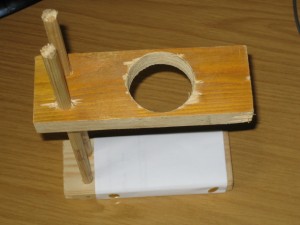
The idea is to rest the lens housing in the hole and the top and adjust that block of wood up or down until an image is focused on the paper at the bottom (or it can be used sideways on). It’s possible to measure off the focal length directly if the image is focused at “infinity”, but I decided it would be easier to get something nearby in focus and use the formula 1/f = 1/a + 1/b, where f is the focal length, a is the distance from the lens to an object and b is the distance from the lens to the focused image. The filament in an incandescent light bulb seemed like a good choice, so I set up on the floor underneath one and brought the filament into focus. I measured the distance from the lens to the filament at 1800mm and lens to image at 200mm, giving a focal length of 180mm. As a check I repeated the test on another object and obtained the same result. I intend to use a Skywatcher kit 25mm eyepiece with this finder, so that would give 7.2x magnification which seems fine to me. If I want a little more magnification I can always drop down a few millimetres on the eyepiece focal length.

The length of the objective housing I measured at 58mm. A bit of research suggested that all mirror-based 1.25″ diagonals have an optical path length of 75mm. The focal plane of the 25mm eyepiece appears to be at about the same place as the chrome barrel starts and so I wanted the focal plane of the finder to be at the top of the diagonal, leaving me 47mm of optical path (180 – 58 – 75) to make up. I decided to knock 4mm off that to give a bit of play in case I’d not measured something correctly, giving a final length of 43mm.

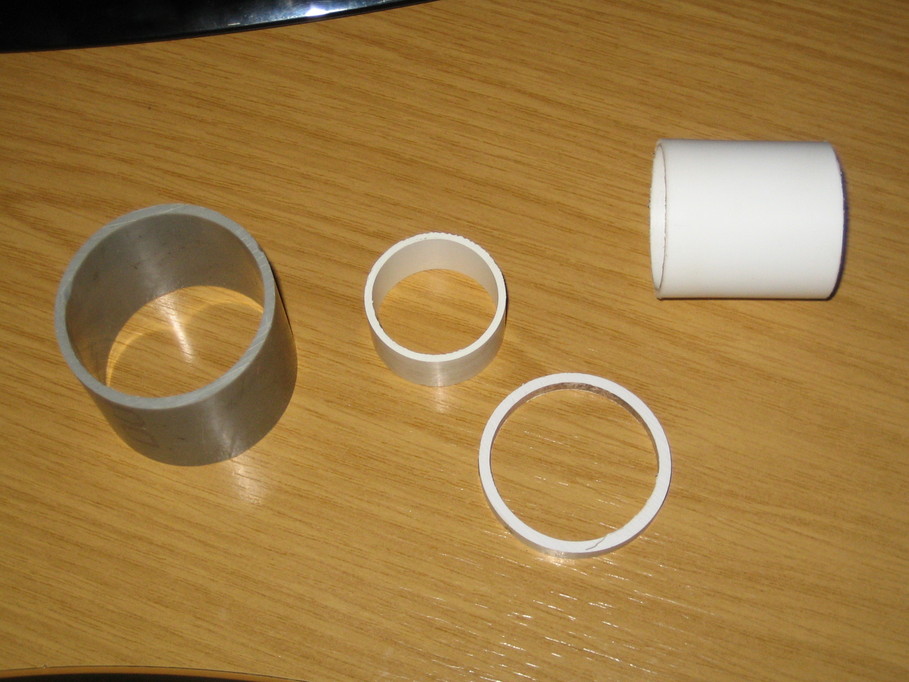
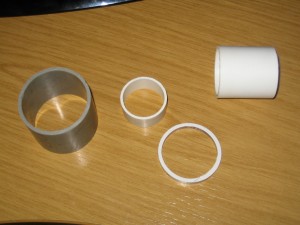
Rummaging around the workshop I came up with a number of sections of upvc piping in various diameters. The smallest was 32.5mm inside diameter and 36.5mm outside diameter. It fitted very snugly over the barrel of the 25mm eyepiece, but was a little slack on my cheap £4.50 diagonal. Close enough though. I cut a 25mm length of this to match the length of the barrel on the diagonal. Next was a piece 37mm internal diameter, 41mm external. That was a neat fit over the first piece and an exceptionally tight fit over the threads on the objective housing. I tested I could make it fit by putting the end of the pipe in boiling water and then inserting the housing, which went in easily and the pipe shrank to fit. I cut a section of this to my required length of 43mm. I think the first may have been 32mm nominal solvent-weld waste water pipe, and the second 40mm nominal push-fit waste water pipe.

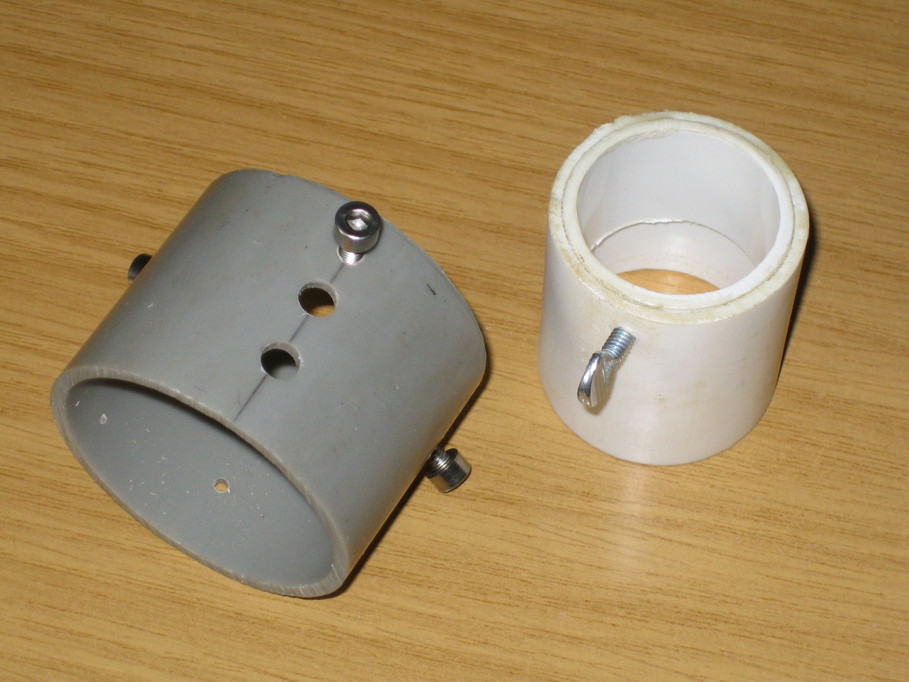
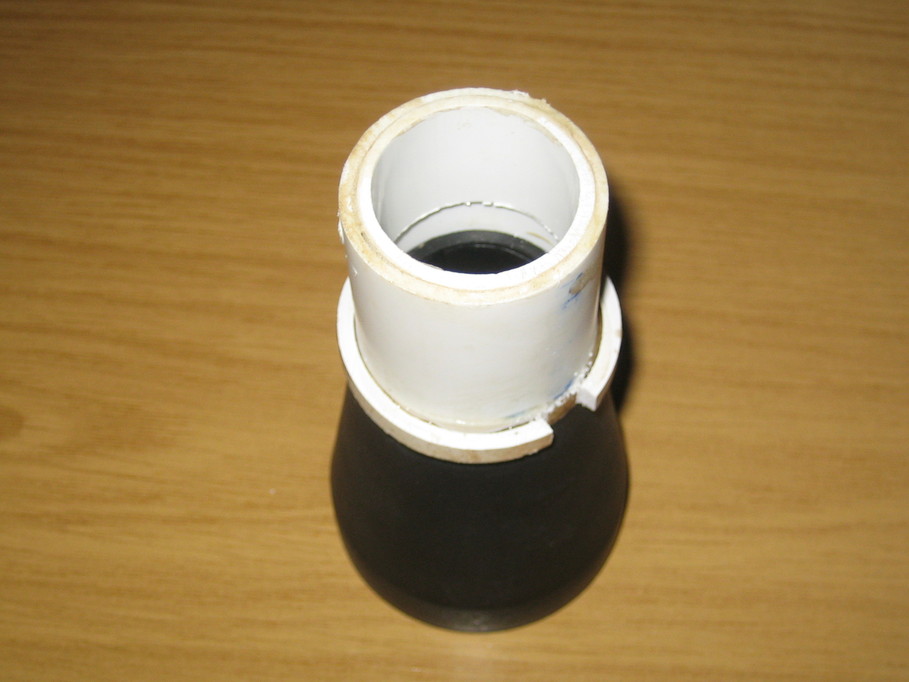
I cut the same length from a pipe of 49mm internal diameter to use as the mounting ring. I think this was left-over ducting supplied by BT for running phone lines. Finally I found one more piece that was pretty much an interference fit inside the 49mm pipe and about 1mm larger internal diameter than my second piece. Glued in place with araldite this would do the same job as the O-ring in the normal Skywatcher finders. An O-ring might have worked better for me, too, but I didn’t have any of the right size. Here are all the pieces:
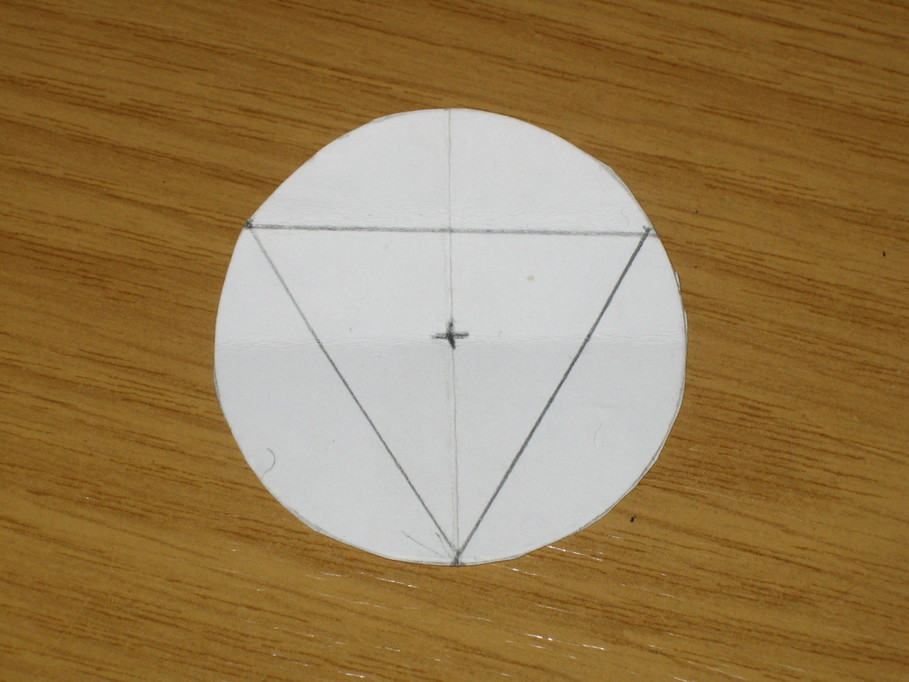
I glued the first section of pipe inside one end of the second to make the body of the finder and once that was dry set to marking and drilling out all the holes for the fittings and adjustment screws. I put a single hole in the body to hold a screw to lock the diagonal in place and tapped it out to 4mm. The (grey) adjustment ring needed much more work. I wanted three equally-spaced adjustment screws and two holes for the screws to fix the ring to the foot. As there was no way to reach those screws inside the adjustment ring, I also had to make two holes for screwdriver access in the top. I started by making a template to mark the positions of all the holes:
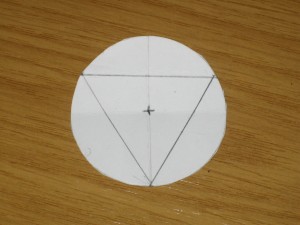
It’s actually quite easy to inscribe an equilateral triangle inside the circle. Start by folding the paper in half. Then open it out and fold in half at right angles to the first fold, so the ends of the first fold meet. Open it out again, and fold one edge up so the end of one of the existing folds meets the centre. The triangle is then the end-points of the last fold and the end of the diagonal opposite it. I used this to mark the positions of all the screws and drilled and tapped them out:
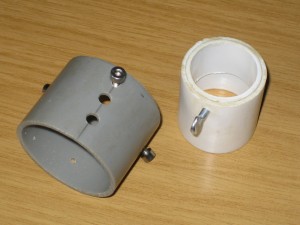
The locking screw for the diagonal is a stainless steel M4 12mm thumbscrew and the adjustment screws are M4 12mm allen bolts, also stainless. I actually decided in the end that I wasn’t happy with this adjustment ring (I was having a few niggles with the pillar drill at the time) and made a second to replace it later.

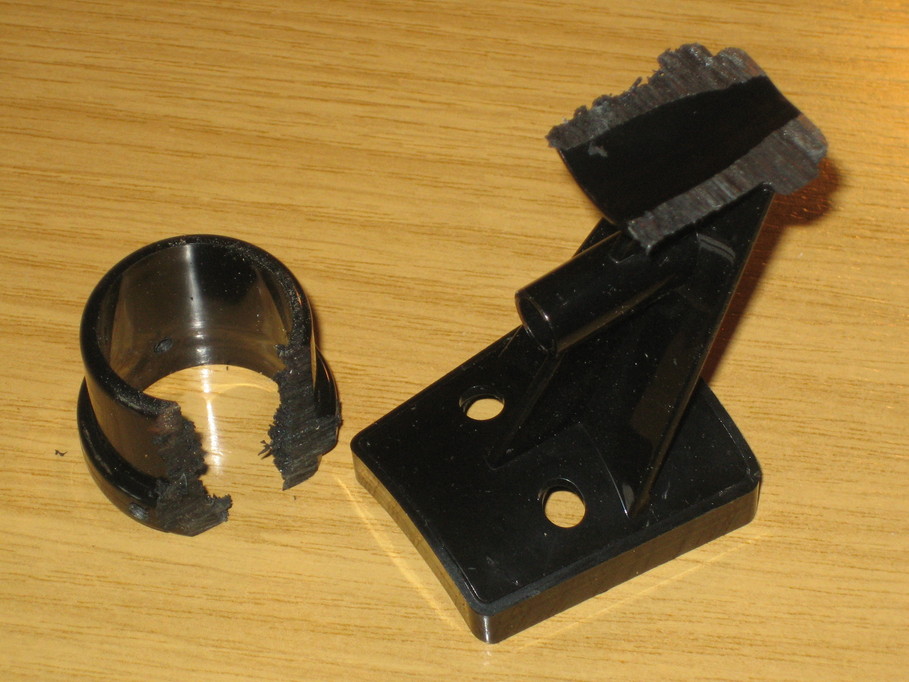
The foot for the finder is actually the mount from an old 8×20 finder with most of the ring sawn off:
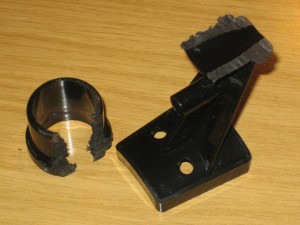
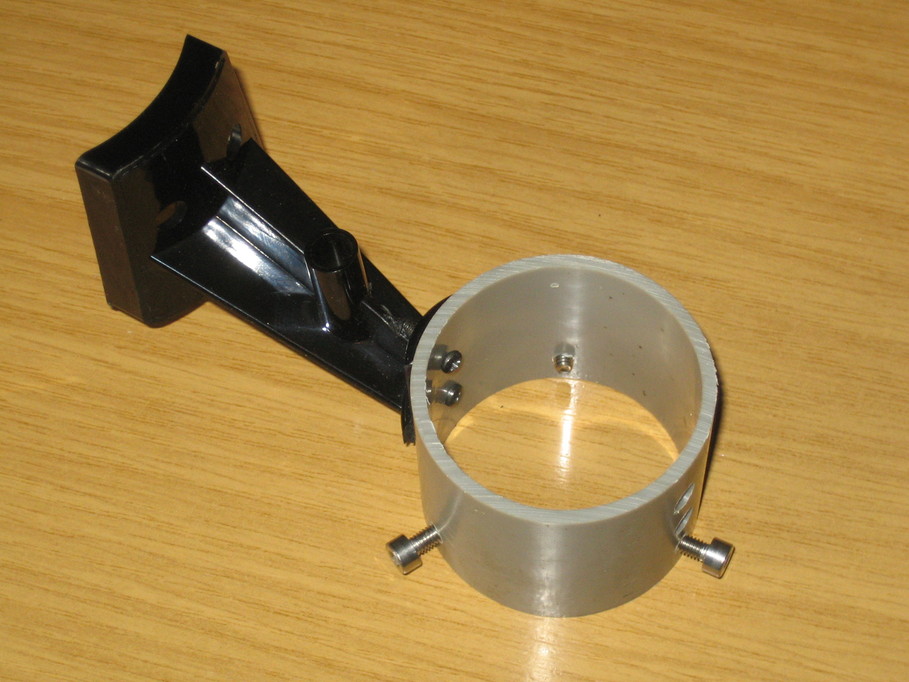
I cleaned this up, drilled two more pilot holes to match those in the adjustment ring and screwed them together with a couple of 2.5mm self-tapping screws:
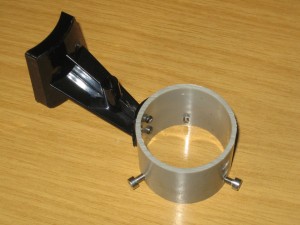
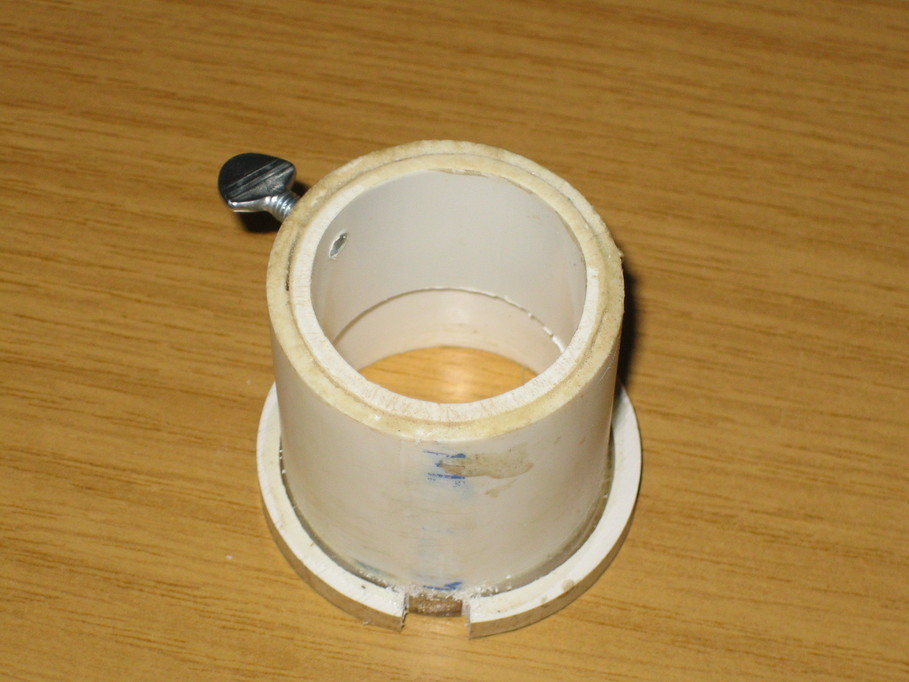
Finally I glued my O-ring substitute to the end of the diagonal body that would take the objective housing and when it was dry, removed a small piece to allow it to pass over the screws inside the adjustment ring:
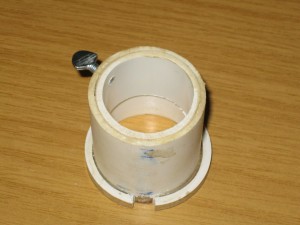
Assembly was then just a case of shrink-fitting the objective:
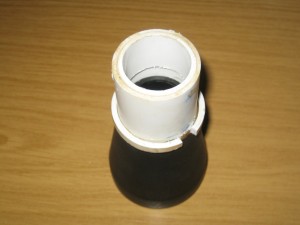
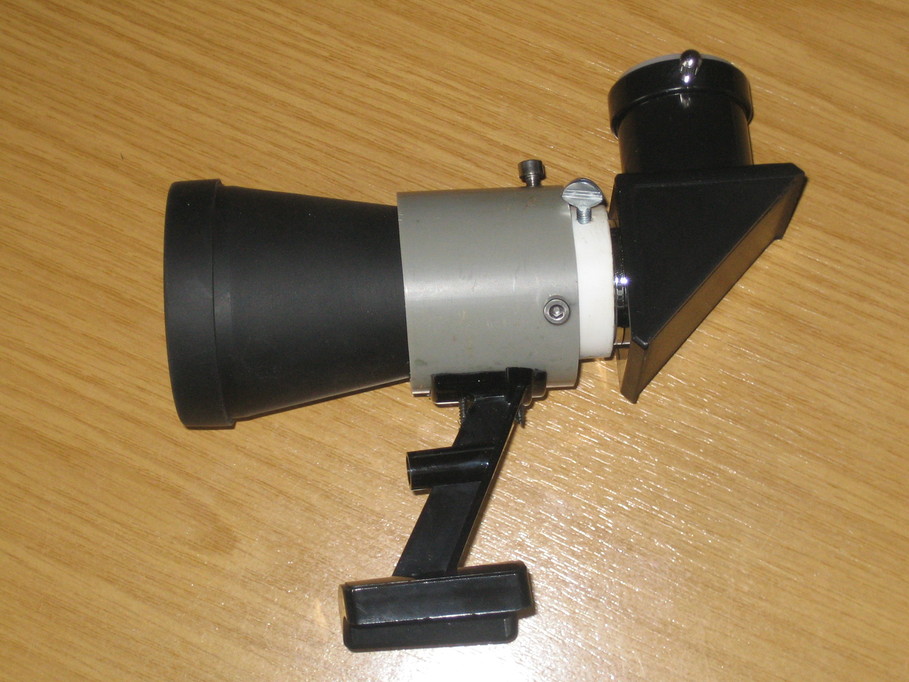
and then sliding the body through the adjustment rings and fitting the diagonal at the other end:
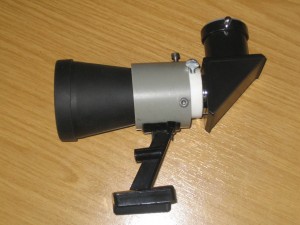
First tests suggest I should have no problem reaching focus by sliding the diagonal in and out a little before locking it in place.

The only jobs remaining are to clean it up a little and give it a splash of paint. I may also use some fuse wire to add cross-hairs to the eyepiece, but it does need to be very fine wire.
Posted in Astro Equipment, Astronomy, Projects | 1 Comment