
Last of the fresh peas for this season 🙁
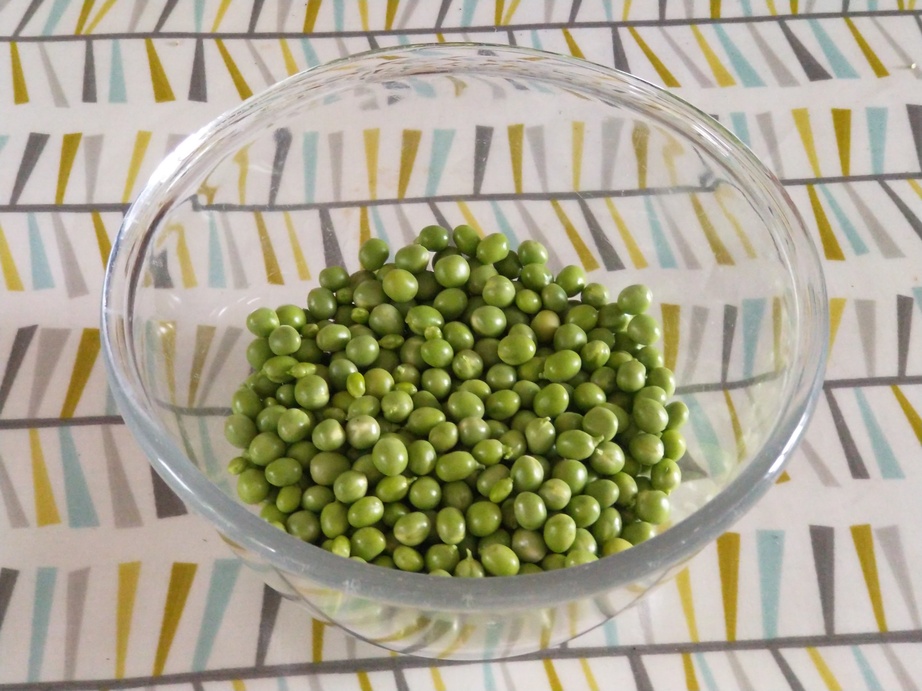
But I have saved pods from a couple of varieties to sow again next year. The mangetout dry quite quickly
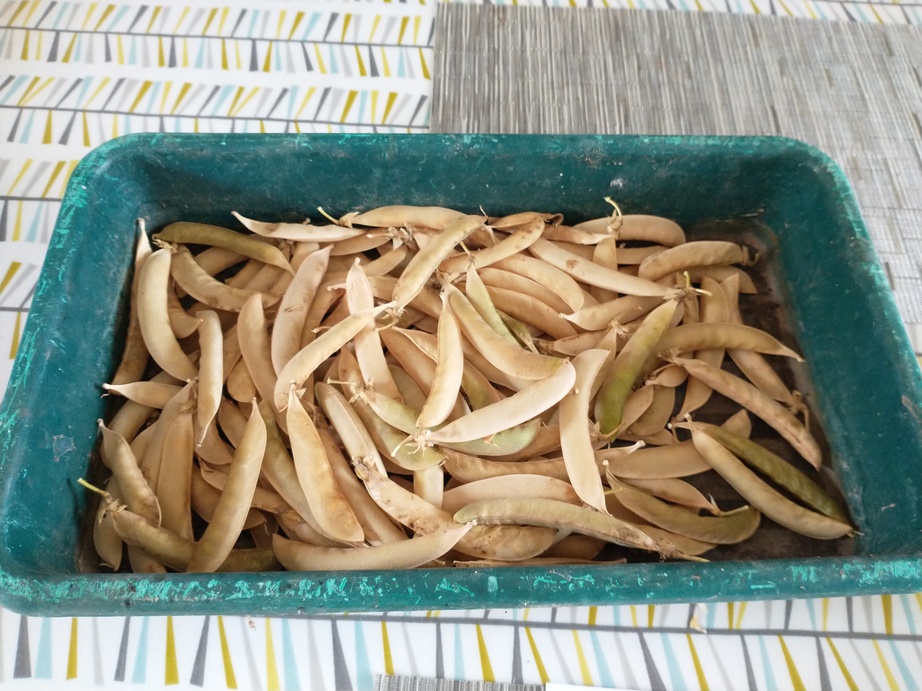
The podding peas, not so much.
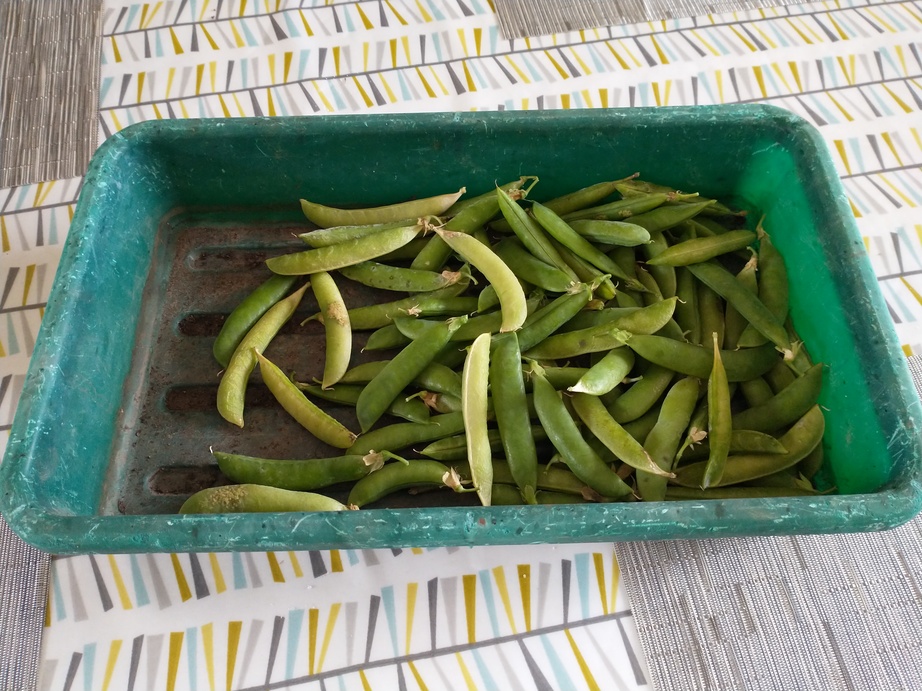
Last of the fresh peas for this season 🙁
But I have saved pods from a couple of varieties to sow again next year. The mangetout dry quite quickly
The podding peas, not so much.
There’s certainly a strange smell in there. I think it could be a mouse. Or possibly a squirrel.
What definitely has died are two of the LED striplights that I bought a couple of years ago. They’re quite common on that south American river shopping place: 40W 4′-ish LED batten lights that run on 240V without an external transformer. They’re very bright and quite low-profile, so handy in a workshop. In that respect they’re much better than the fluorescent tubes I had previously. Unfortunately they don’t seem very reliable.
I’ve replaced three so far that started flickering and eventually died after I’d ignored them for long enough and a fourth flickers very badly when I start up my table saw, though appears to be fine the rest of the time. Fortunately I’ve had a few replacements from the vendor, but it’s still a pain.
After replacing one this morning I decided to open it up to see what was inside. Not very much is the answer.
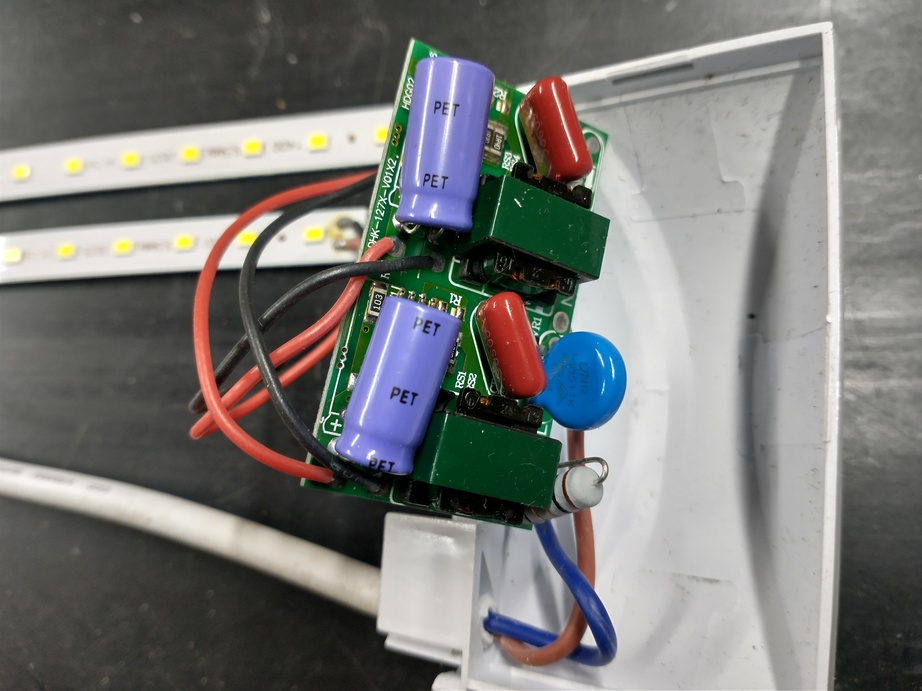
I’m guessing that what we have there is a low power transformer and rectification circuit. Actually, two of them, one for each strip of LEDs that make up the light. There’s no sign of component failure that I can see and it’s a bit of a mystery still that both strips of LEDs can fail in the same way at the same time, but I suspect the electrolytic capacitors (the purple components) are most likely to blame.
I bent them upwards so I could see the spec.
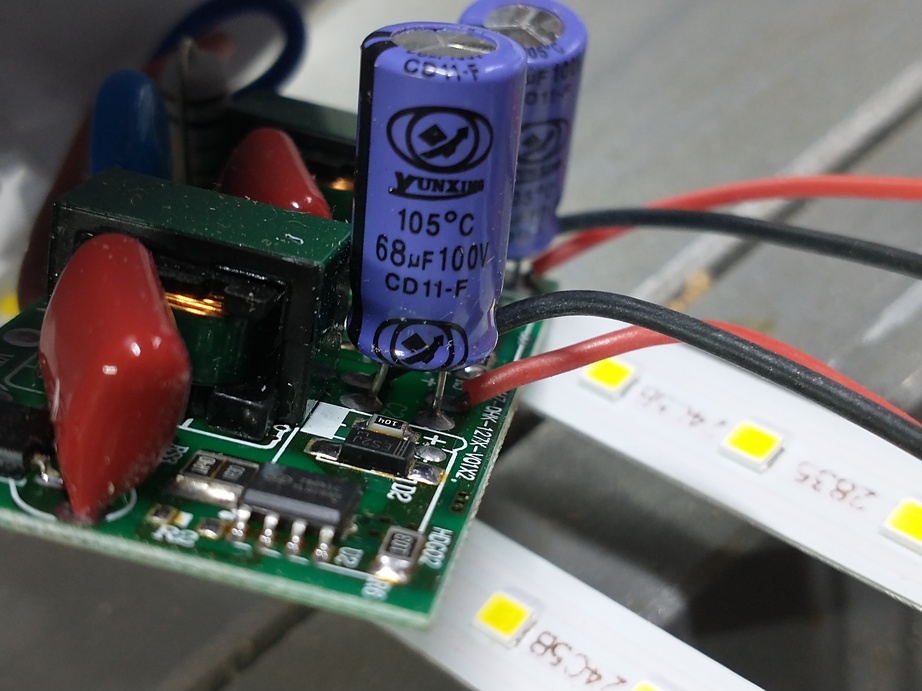
100V 68µF. I can order a few of those and swap them to see what happens. Shouldn’t be expensive.
Moving them also revealed what I think is likely to be a surface-mount bridge rectifier, but I’m unable to make out the part number because the printing is quite faint.
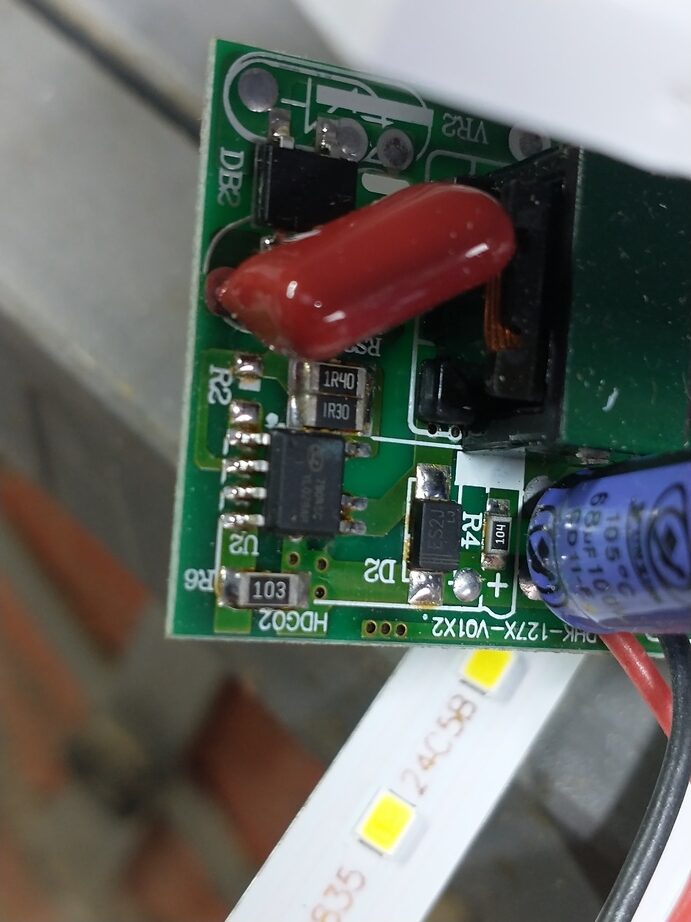
More on this when I get hold of the capacitors.
We’ve had really quite cold north-easterly winds for the last few days, and fairly strong with it as there’s absolutely nothing at all to provide shelter from that direction. I noticed the anemometer for my weather station was looking a bit lop-sided yesterday, but it was still spinning too fast to be able to see what was going on. Today the wind has subsided somewhat, which is much more pleasant and allowed me to get out and get some pictures.
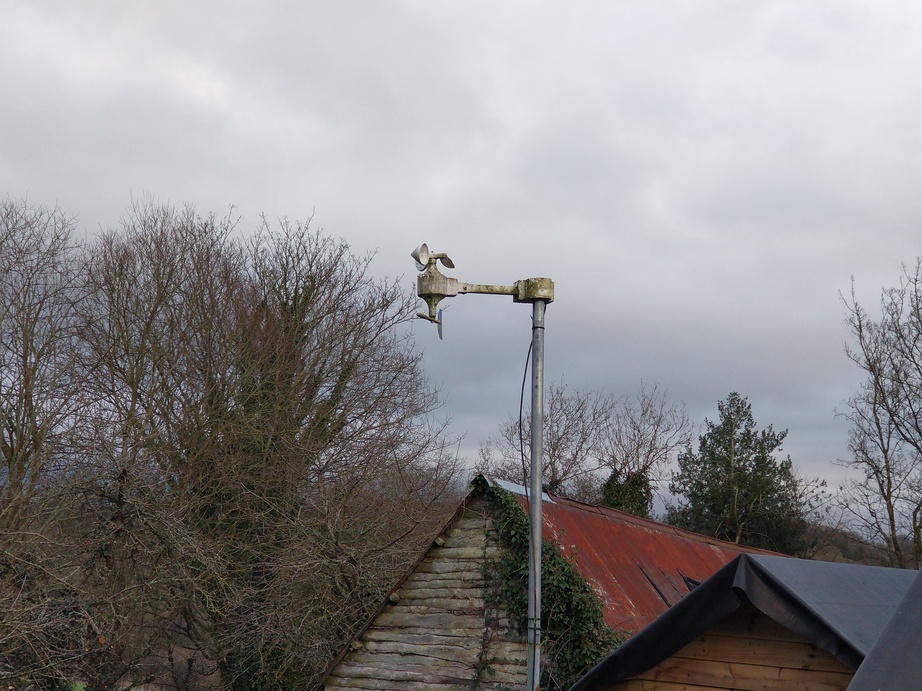
Enlarged, if it’s not clear from that:
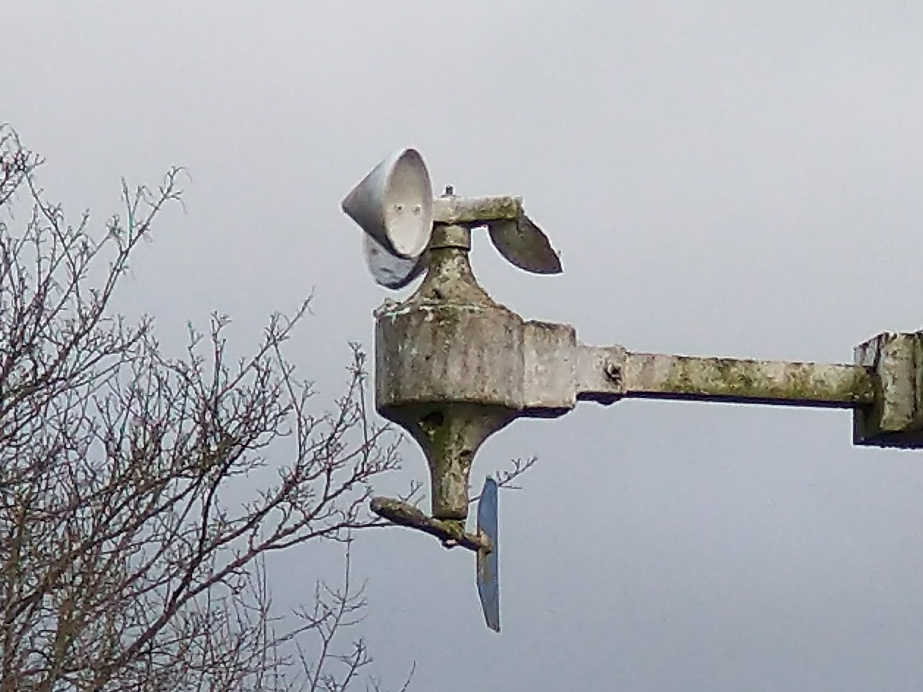
I’ve always fancied building a solid state anemometer, so perhaps now is the time. Or perhaps I’ll just rebuild a new spinny one. 3d-printing replacement parts surely shouldn’t be that hard?
Towards the end of 2021 I planted garlic cloves out in the main vegetable plot as well as in the polytunnel beds so I could compare how they did.
Not very well was the answer in the case of the outdoor ones. They ended up being very heavily affected by rust, despite me clipping off the diseased leaves when I saw them. Now I’ve harvested both lots, this is how they look.
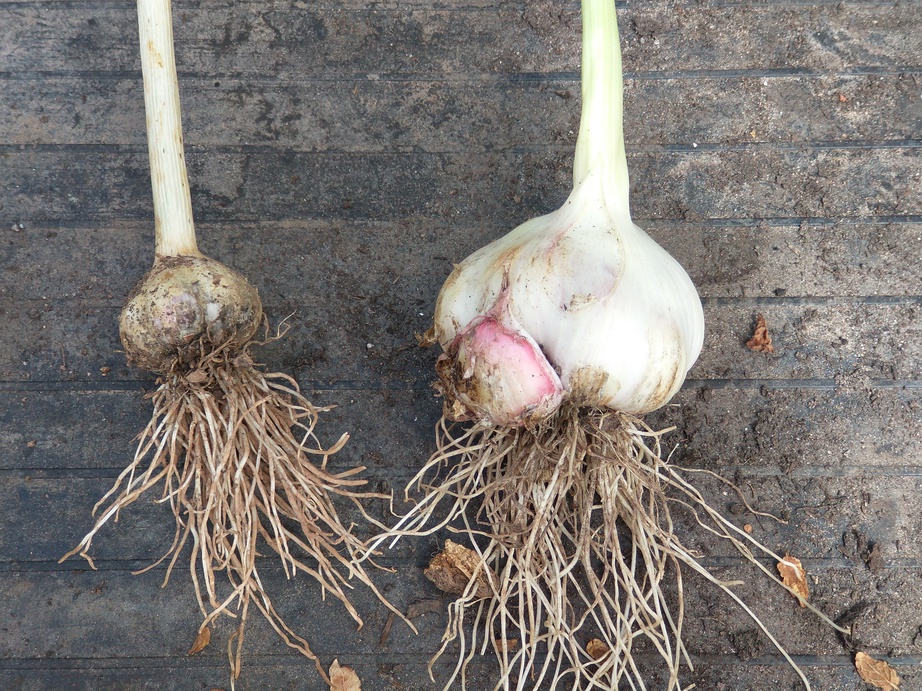
Outdoor garlic on the left, polytunnel garlic on the right. There really is no comparison. I suspect the reduced foliage didn’t help the outdoor ones in addition to whatever damage the rust did. I don’t know why it happened so badly this year. It’s not a problem I’ve ever had before. In the future it’s going to be polytunnel/greenhouse only. I reckon I can get away with planting the cloves near the edge of the beds so they can be removed without too much disturbance to any of the other plants.
Thanks to the new lathe that is occupying space in the workshop I have been trying to shift things around a bit to make some more space to work, including moving some to the centre of the room to allow easier access to the storage around the walls. That meant moving this beastie out of the centre.
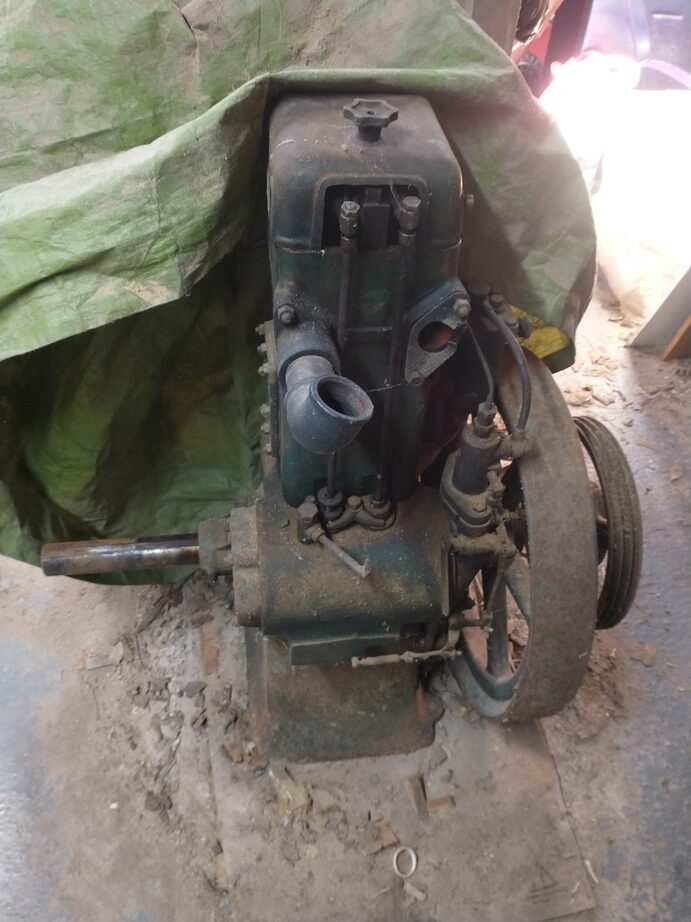
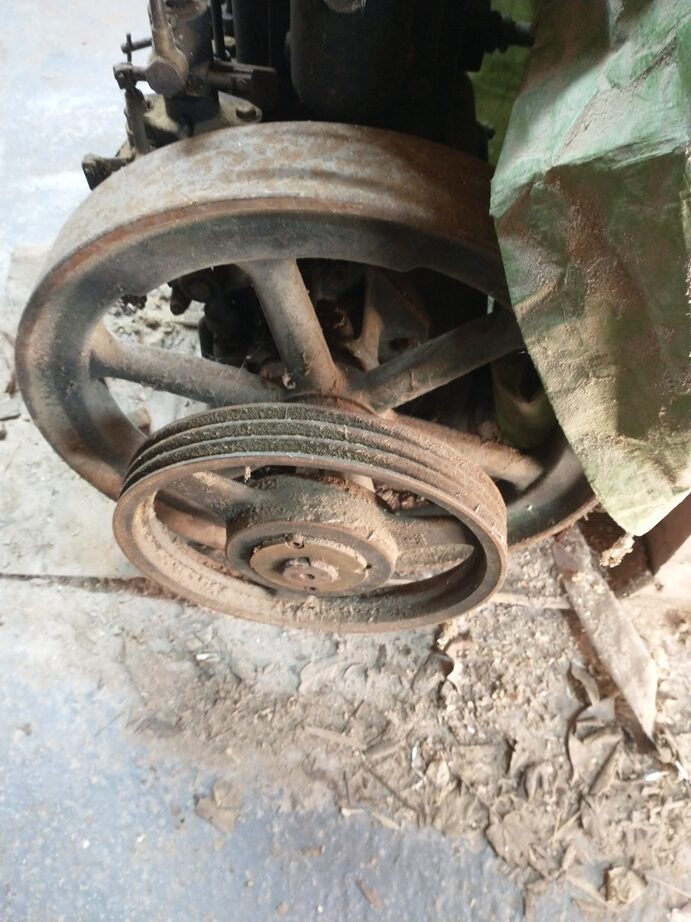
It’s a Lister CS5/1 that I’ve had hiding in plain sight for a few years now. I originally got it for a project I had planned that ended up going in a different direction, but it’s such a lovely little engine that I couldn’t part with it. I do have both the flywheels, but this photo was taken after I’d removed one of them as the engine is almost impossible for one person to move otherwise. I’d not be surprised if each of the wheels weighed around 45kg so it’s quite hard to “walk” across the floor when they’re both installed.
I noticed there was a date of manufacture on the casing. It had it’s eightieth birthday two and a half weeks ago.
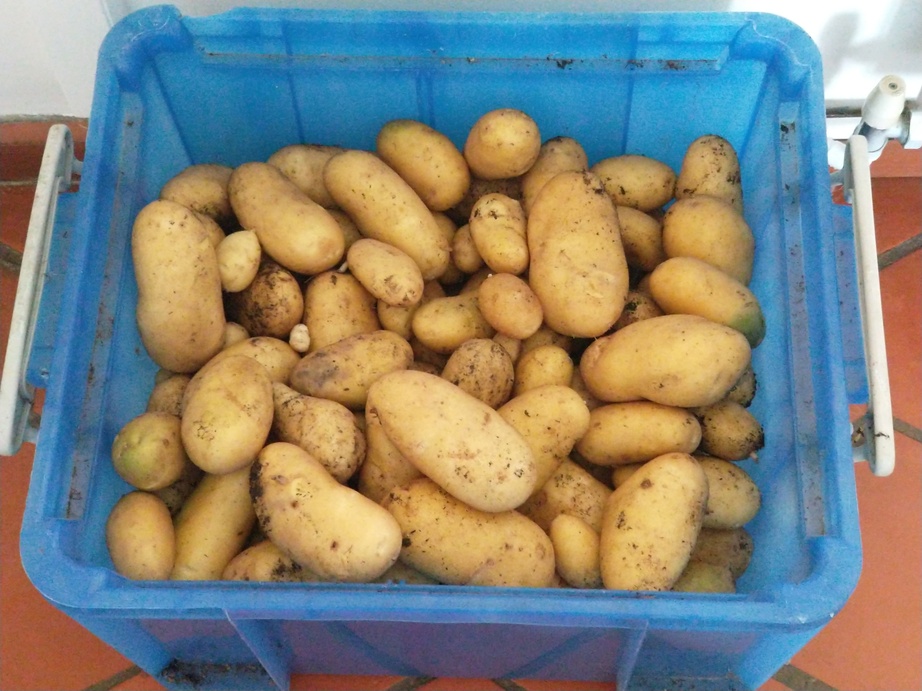
Early harvests from this season:
New potatoes ready to go.
Red onions, spread out to dry in the Sun.
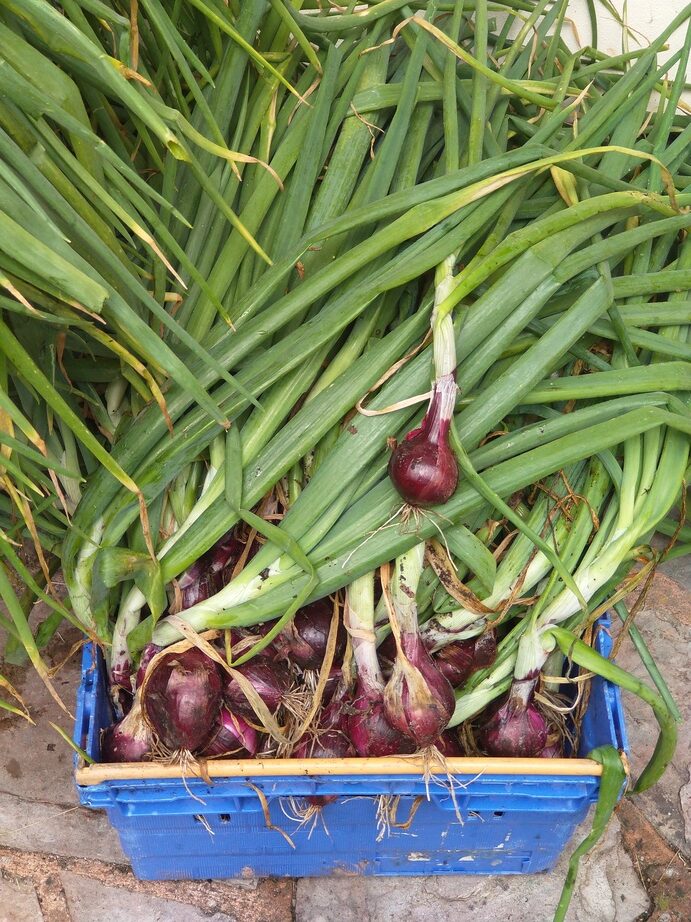
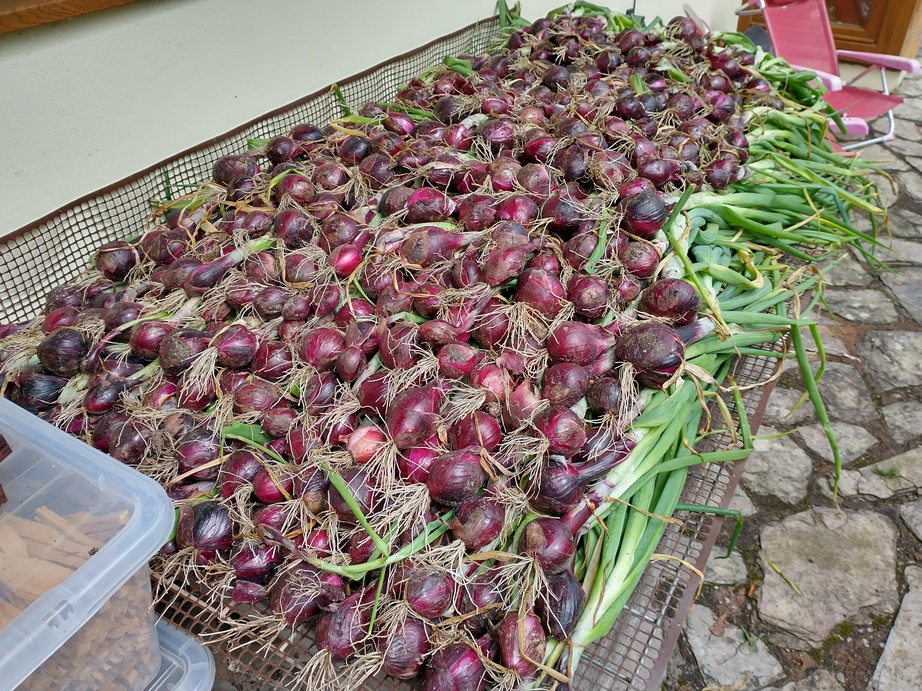
I know that looks like a lot of onions, but they won’t last us the year. I shall plant more next year.
Yesterday…
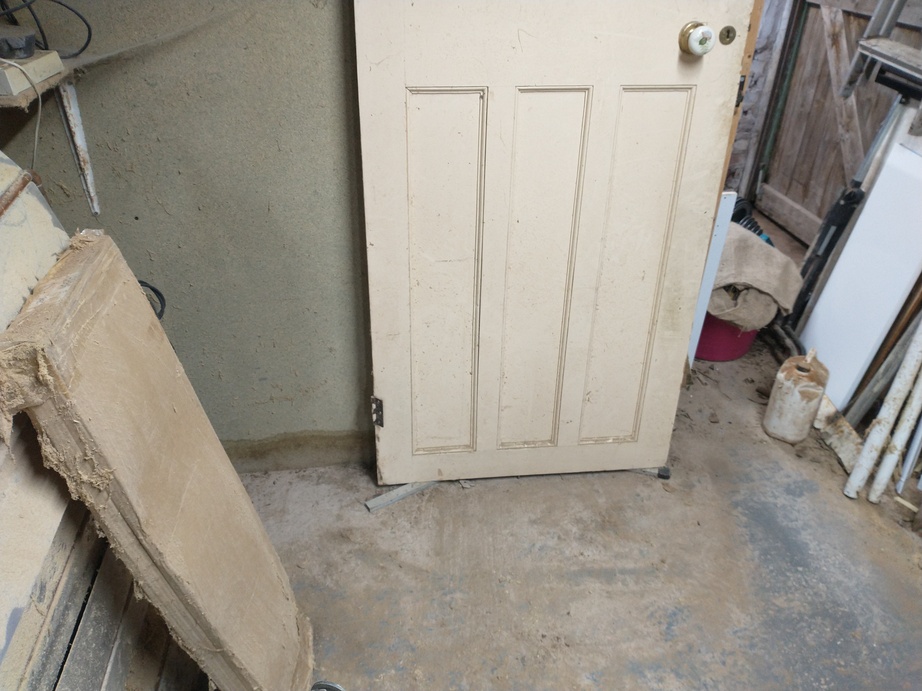
Today…
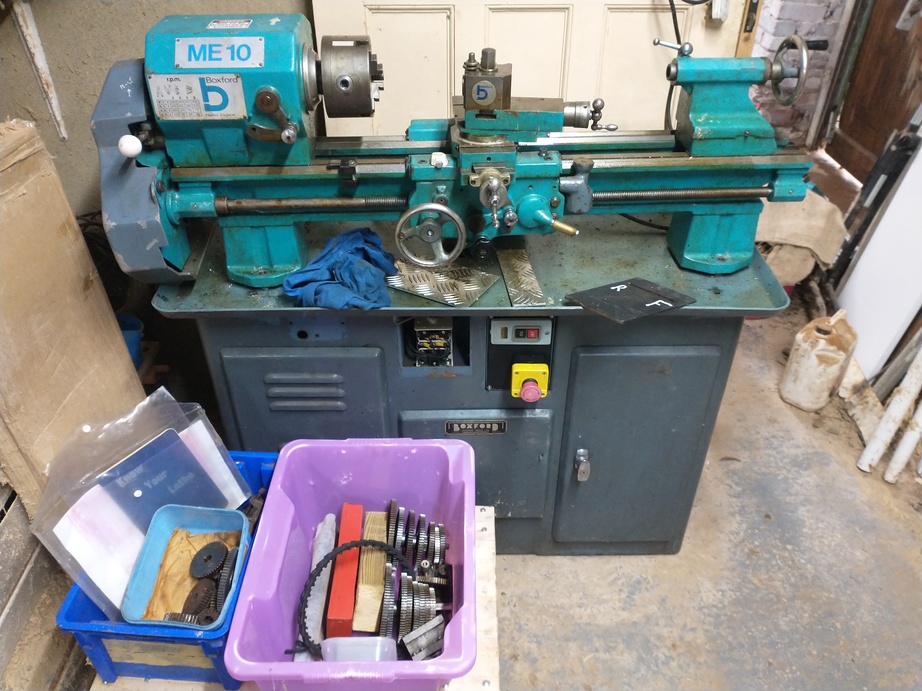
Still to do is the installation of the motor and bolting everything down. After that I think we’re good. I might have to have a glance through the 1969 copy of “Know Your Lathe” that came with it, too. Odd that, given that the lathe itself was only manufactured from something like 1978 to 1986 (I may be a year or two out with the dates there).
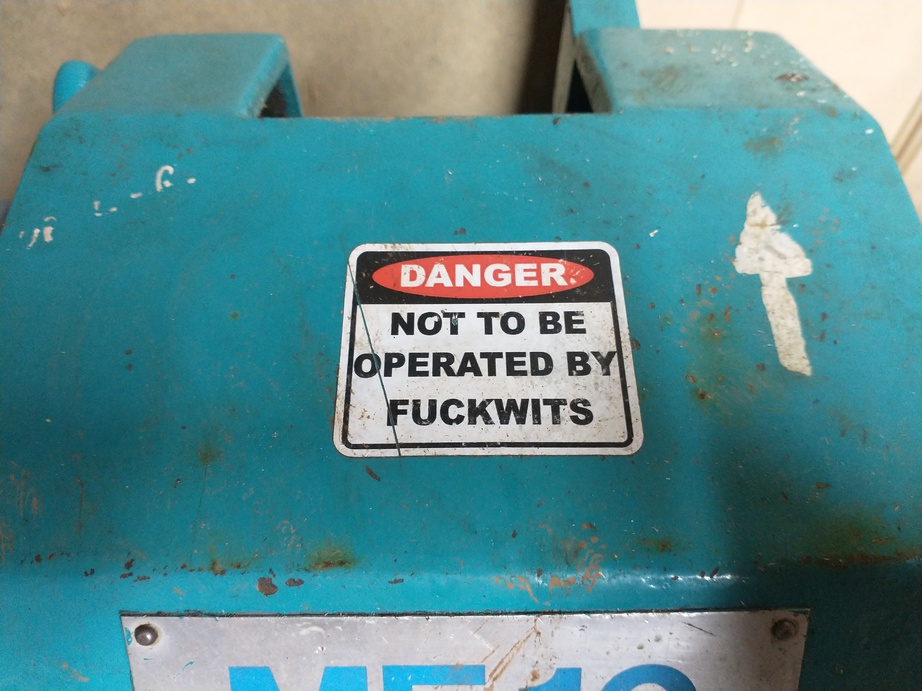
Health & Safety have clearly given it their attention at some point in its life.
My wife gave me a packet of petunia seeds that she’d like me to sow for her today. I was a little confused because there was clearly something lumpy and hard inside the packet. When I opened it I found this:
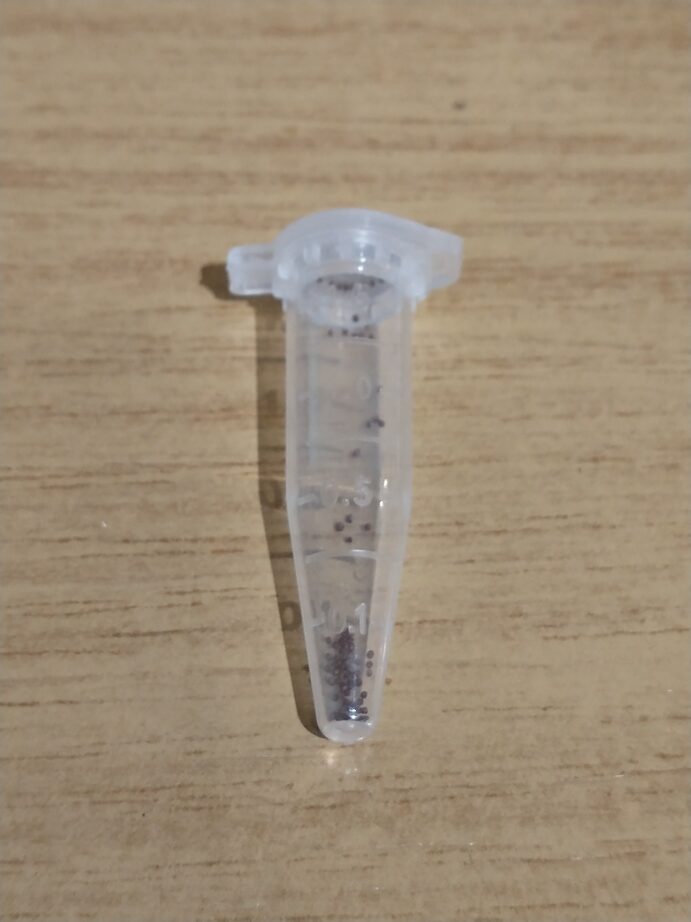
Do we really need such a container for seeds? Of course there’s no indication of whether or not it is recyclable nor any explanation on the packet to explain the change from traditional paper packets.
Even worse, stuck to the back of the packet is a pre-printed plastic plant label, so that’s effectively single use as well.
I’d kind of hope that companies that do business selling plants and seeds might be a little bit more sensitive to the environment 🙁
My next little tablesaw/woodworking project: clear, insulated crownboards for beehives. More box joints for these, to make up a box about 60mm deep. Then a sheet of clear polycarbonate on the bottom, held in place around the sides by a 10mm wooden strip, giving a bee-space over the tops of the frames below.
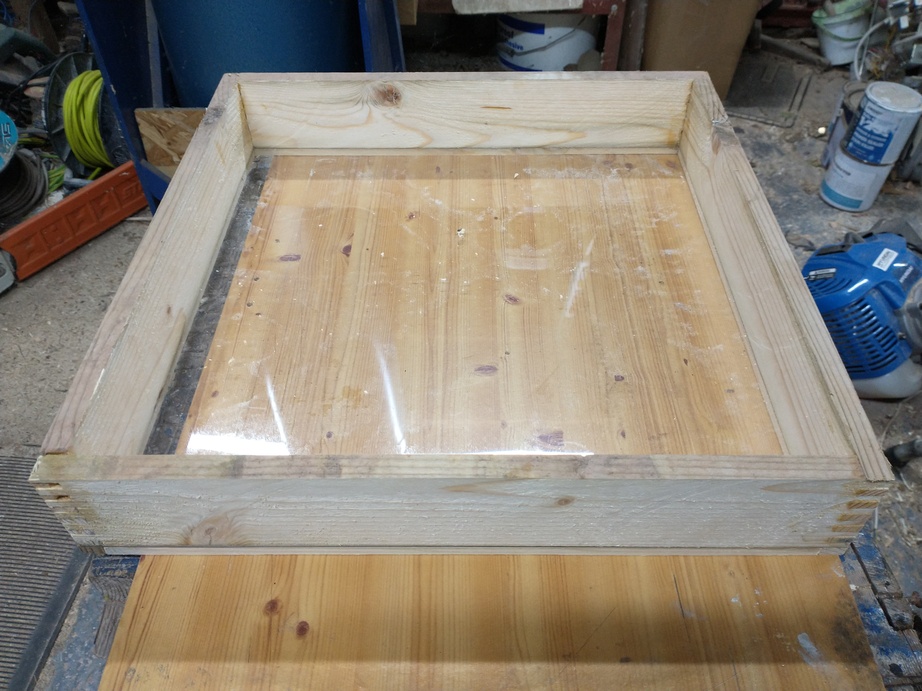
Into that goes a piece of 50mm thick PIR insulation board (commonly found in skips apparently, though I had some left over from a building project), with a little handle glued on.
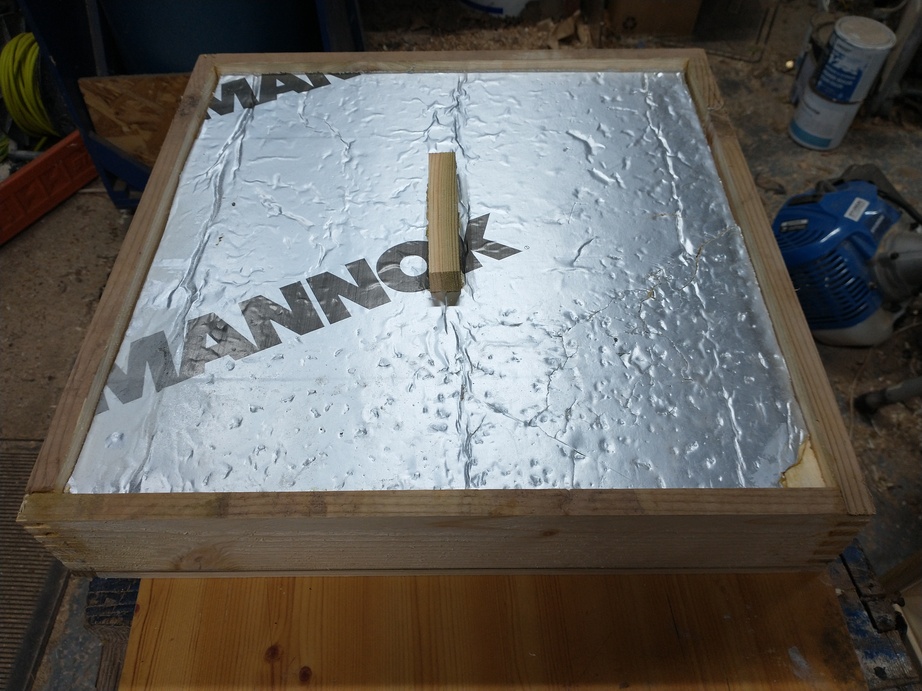
And the roof will go over the top completely.
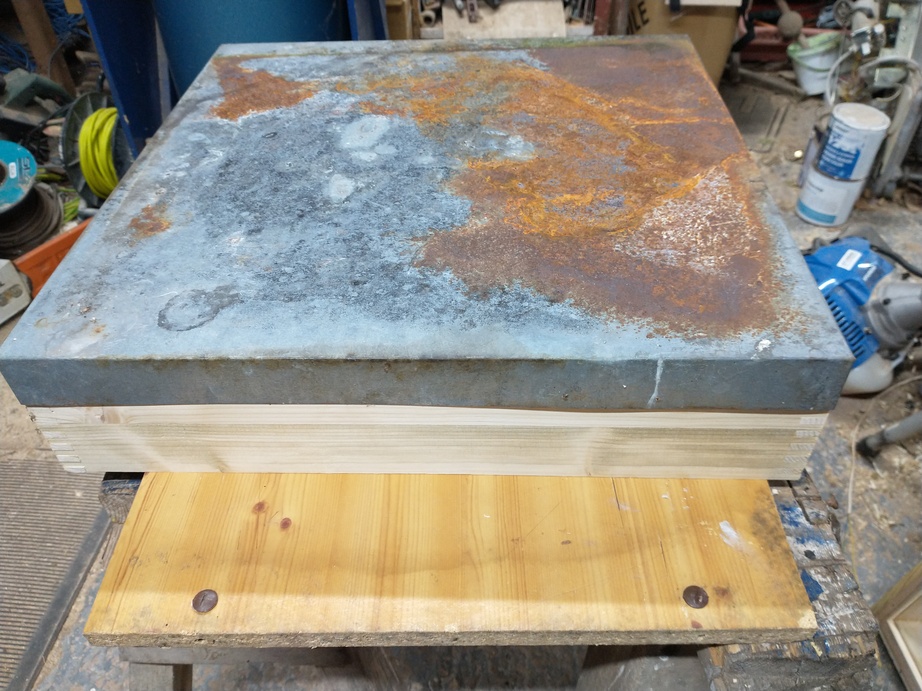
The insulation stops condensation forming on the underside of the crownboard where it can drip down onto the bees, meaning there’s no top ventilation required to remove it. Any condensation on the hive walls can be re-used by the bees for diluting honey. It also helps the bees keep the humidity up inside the hive, which allegedly helps with varroa.
In retrospect, I may start making the clear crownboards with a 10mm rim on both sides and then fitting the insulation into the roofs when I build them. That may be slightly more efficient and use less materials.
A few weeks back I picked up a new (to me) lathe: a Boxford ME10 (which is not even remotely new; more likely an antique) converted to single-phase. Fitting it into the workshop in its final place is going to require quite a bit of shifting things around, so today I started on that; moving the bandsaw that I’m going to need to find a new space for and dragging the chopsaw out of the way to leave more space to manoeuvre. I also swept up two large sacks of sawdust from under each of the saws 😀
I’m hoping that tomorrow I can at least get the cabinet into place and the lathe mounted on top of it. Then I’ll start re-arranging everything else.