
Or sting, more accurately.
This is the end of one of the syphons in a bottle filler. It’s not uncommon for people to start them off by sucking juice through the syphon via this hole. Note to self: check the syphon is clear beforehand.
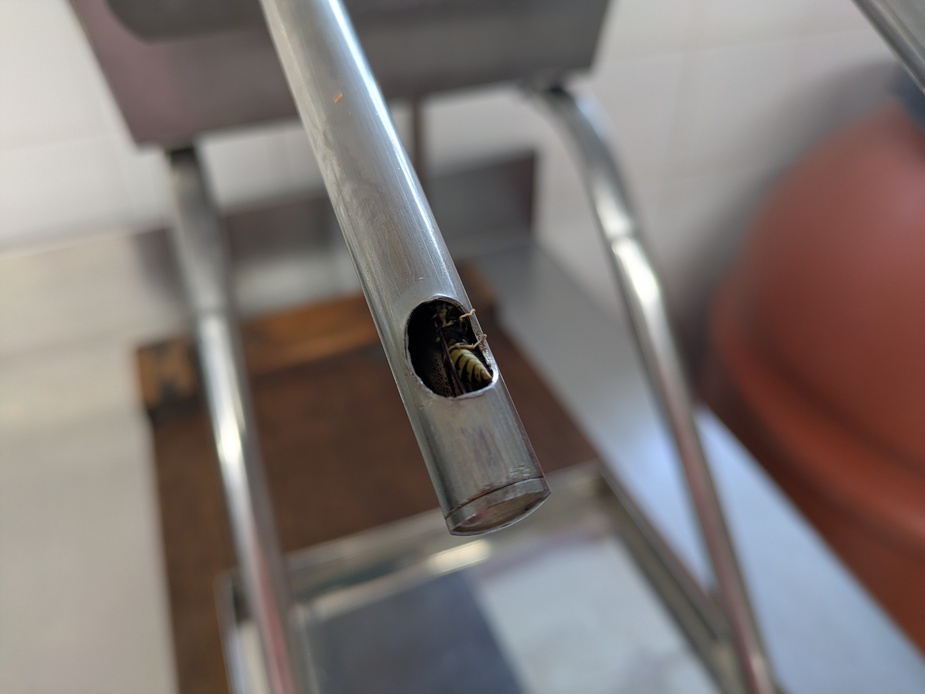
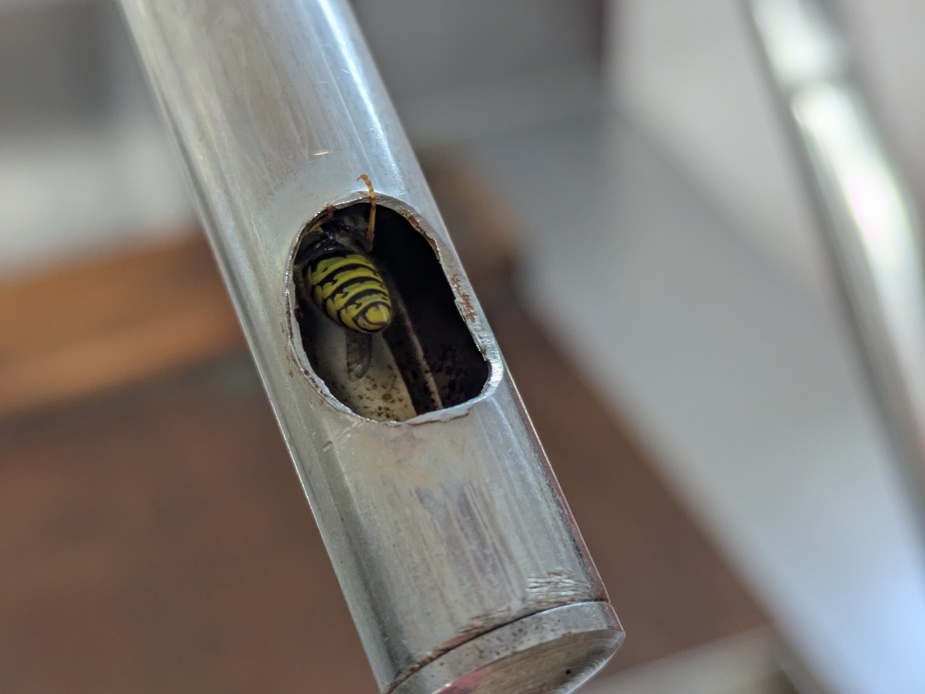
Or sting, more accurately.
This is the end of one of the syphons in a bottle filler. It’s not uncommon for people to start them off by sucking juice through the syphon via this hole. Note to self: check the syphon is clear beforehand.
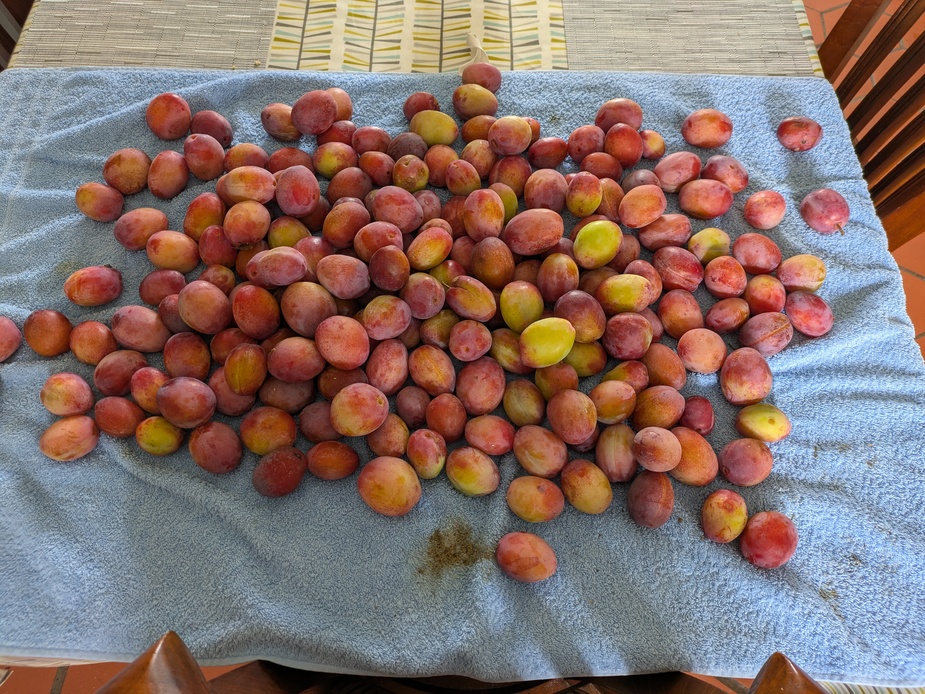
Victoria plums, that is. I’ve never had so many before. We can’t eat them all right now, so most will be destoned and frozen.
In the past I’ve mostly mixed up all my apples to press, but there were so many in 2025 that varietal pressings became viable. This is the first batch, of Blenheim Orange.
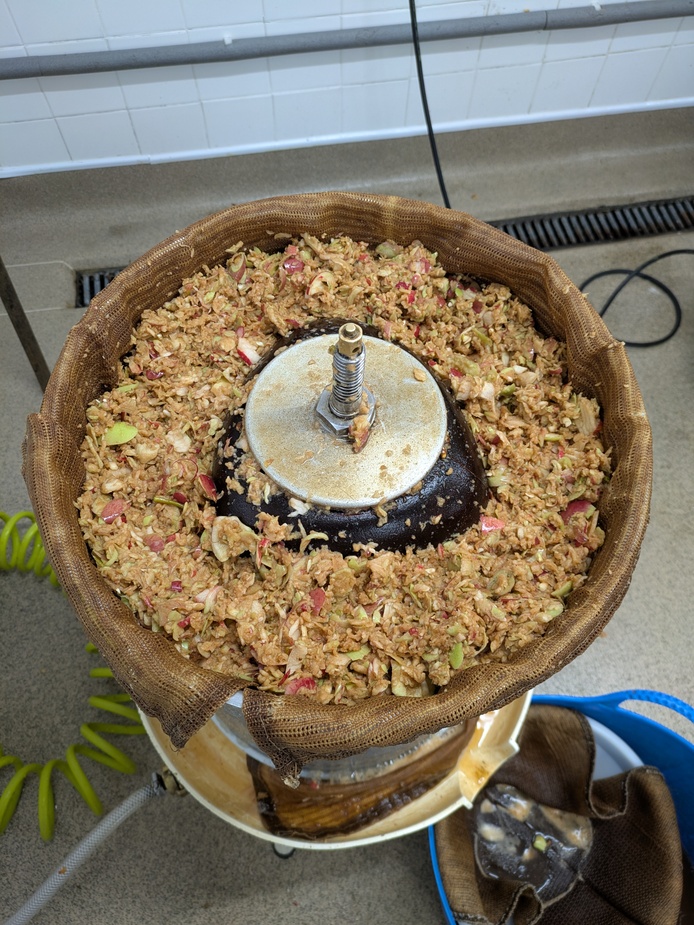
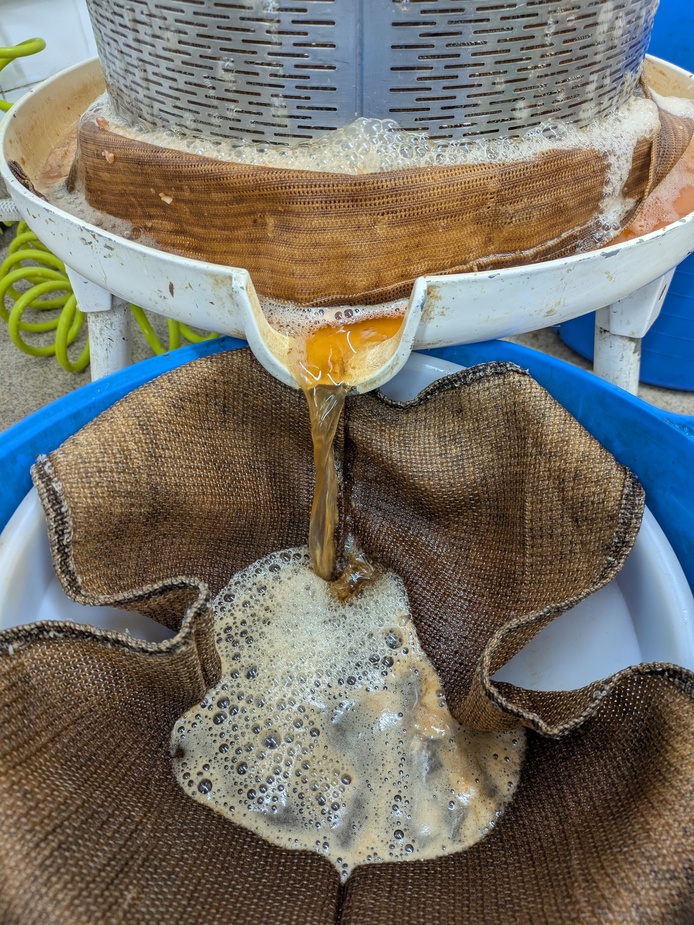
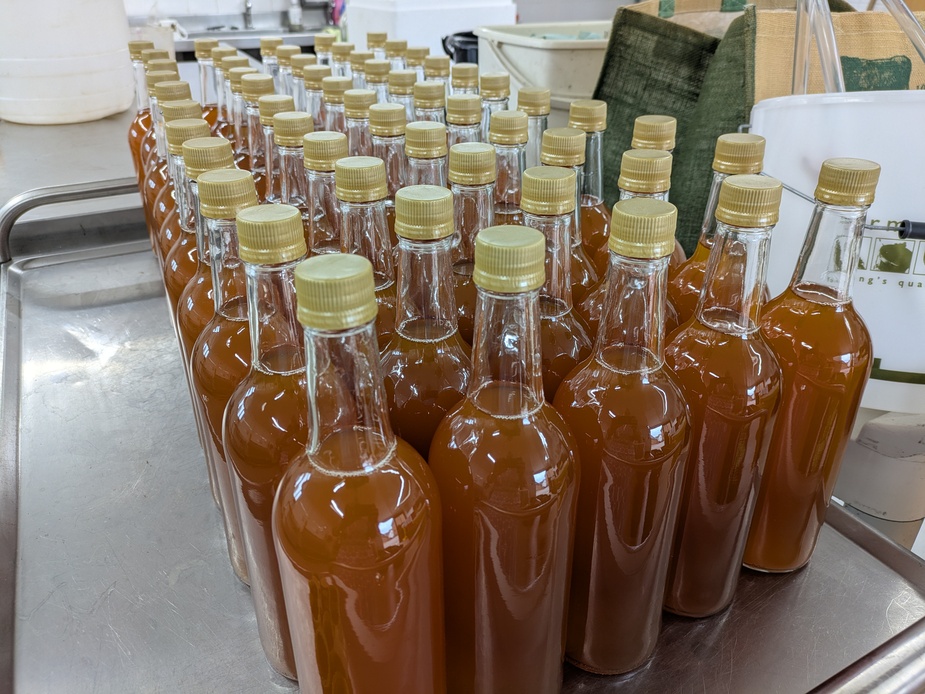
After the Blenheim Orange I had some Ashmeads Kernel.
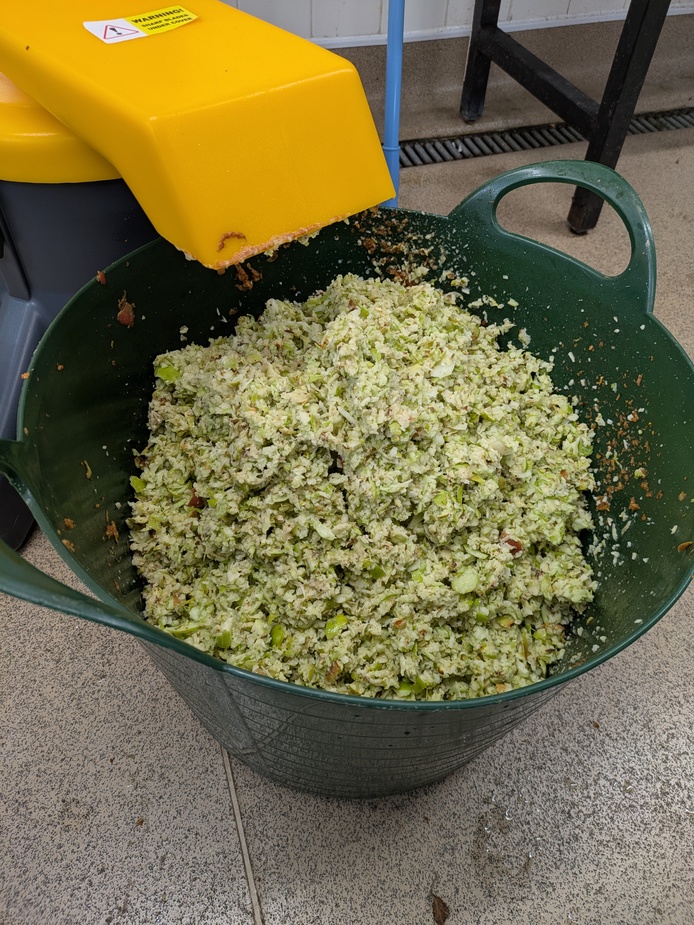
Very much looking forward to tasting them both.
Everything became so incredibly dry this Summer. Our grass had gone way beyond crispy. And then one day I noticed this out of the window.

I believe the farmer was harvesting the straw from this field and presumably something caused a spark that started the unbaled straw on the ground burning, at which point it spread frighteningly fast. Quite possibly the entire field was gone in about thirty minutes and the hedges had started to burn as well.
A friend’s house is less than one hundred metres from the rightmost plume of smoke. Fortunately the fire was brought under control before it could get any closer.
For the second time in three years, wasps invaded around the edge of one of our Velux windows. They’re getting in through the gaps in the aluminium flashing where it fits around the slates in this photo. In fact you can probably see some of them. They then have a nest just above the window.
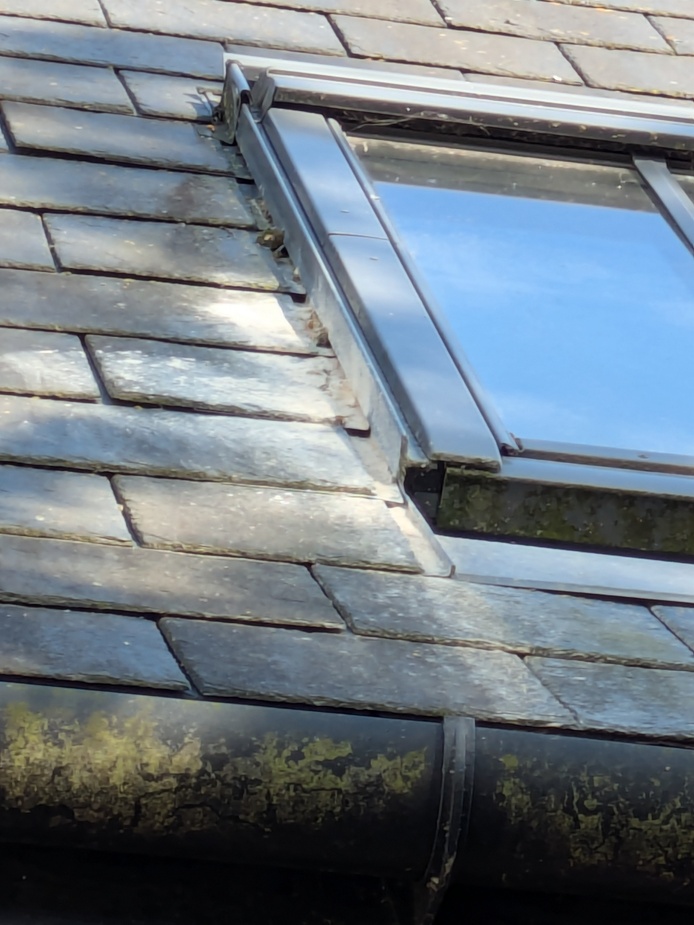
Unfortunately they’re then digging their way through into the room.
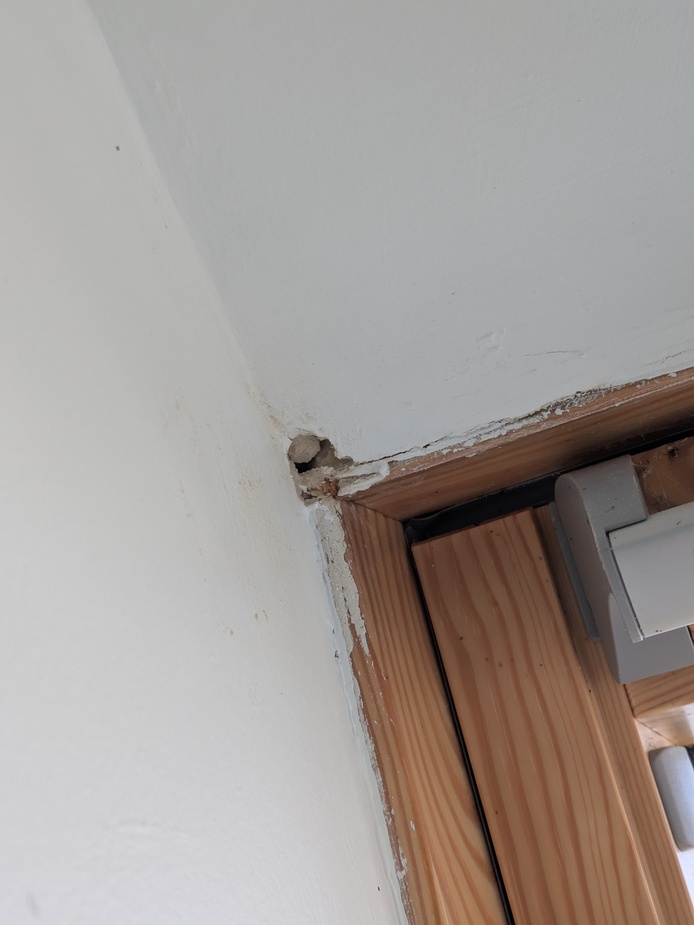
Not sure what the correct fix is for this. I assume that ideally those gaps shouldn’t exist. I may try cutting some slate shims, smearing them with something very sticky and pushing them up into the gaps.
I was delivered a Speidel fruit mill, already heavily disassembled, beacuse it had stopped working. I assume the person who had opened it up thought there might be an electrical fault. I wasn’t 100% convinced though, and the fact that there was absolutely no rotational play in the cutters backed that up, I felt. It seemed much more likely that it had seized to me and there really aren’t that many ways such a simple device can seized, so I started taking the rest of it apart to see what was what.
I split the motor in two and removed the rotor to make life easier. This is actually the bearing from the bottom end of the motor, but sitting on the the top face of the motor housing. There’s a bit of corrosion on the top edge of the bearing there, but nothing that looks terminal.
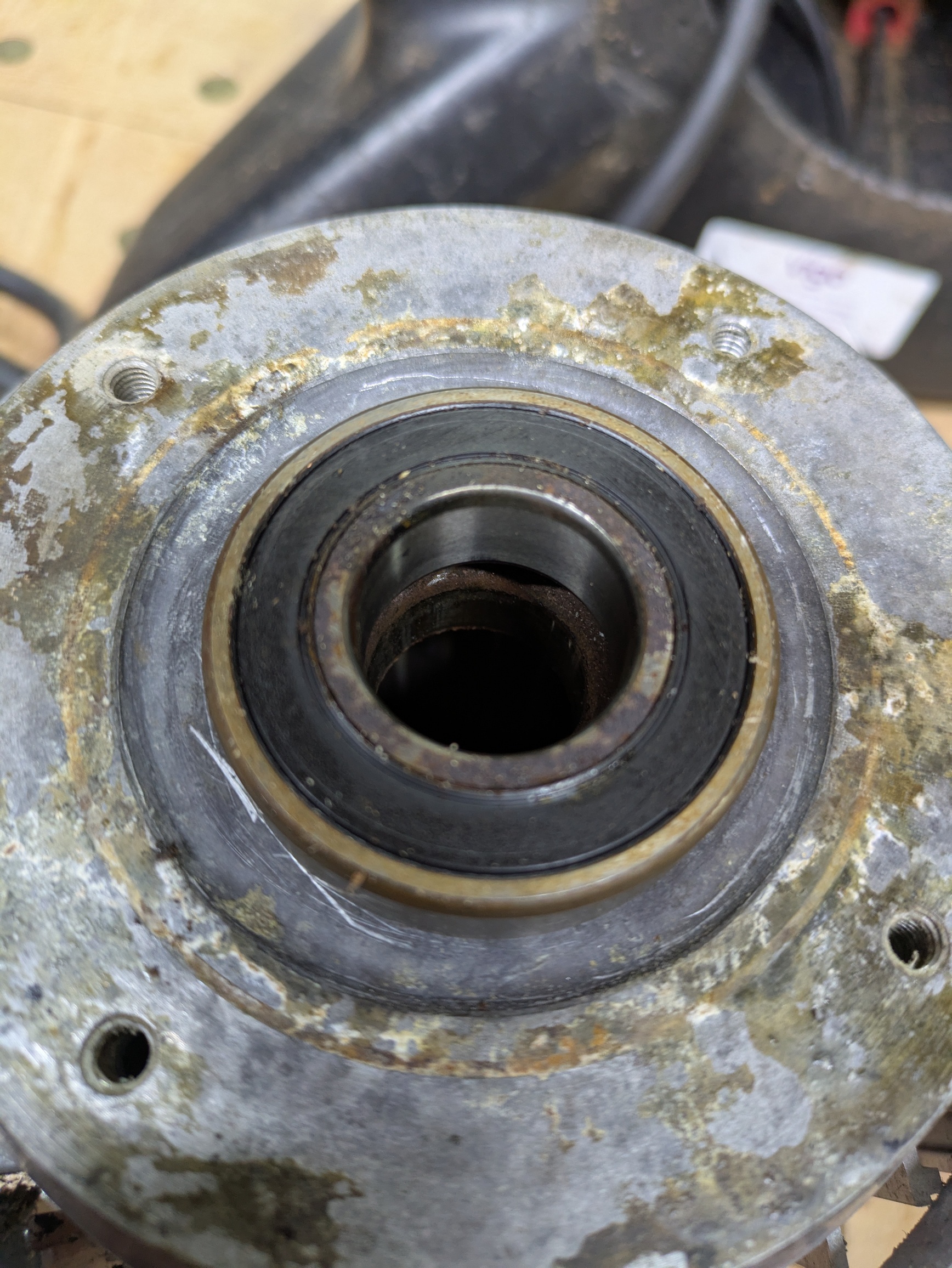
Aside from the filth, this, the top end bearing, looks somewhat more concerning. And in fact I couldn’t spin the inner part of the race at all. It was stuck solid. Clearly at least one part of the problem. Replacement was clearly going to be necessary so I needed to remove that too.
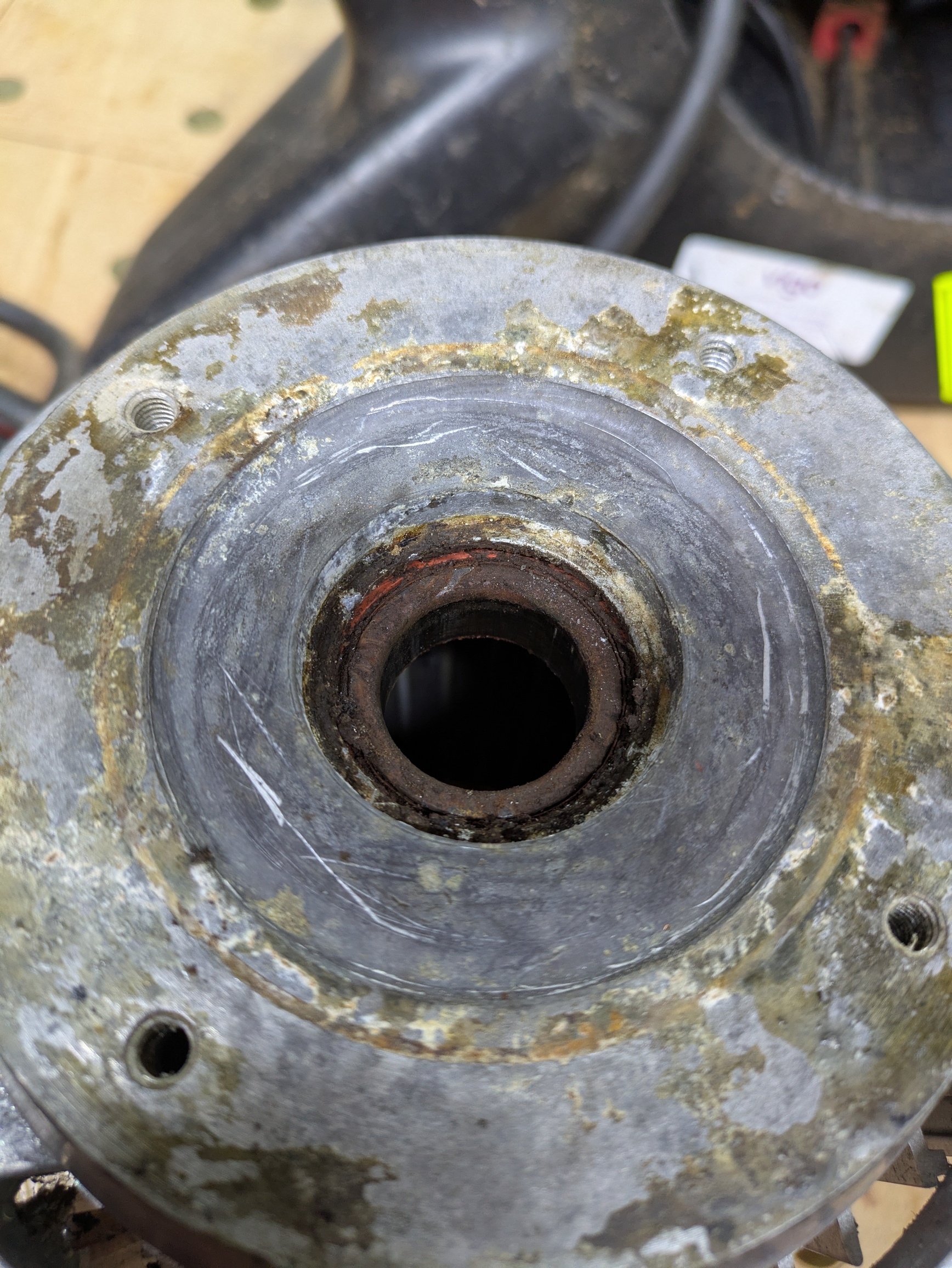
This is the other side. The circlip needs removing to release the bearing at which point it can just be tapped out from the top.

And here it is. Ick.
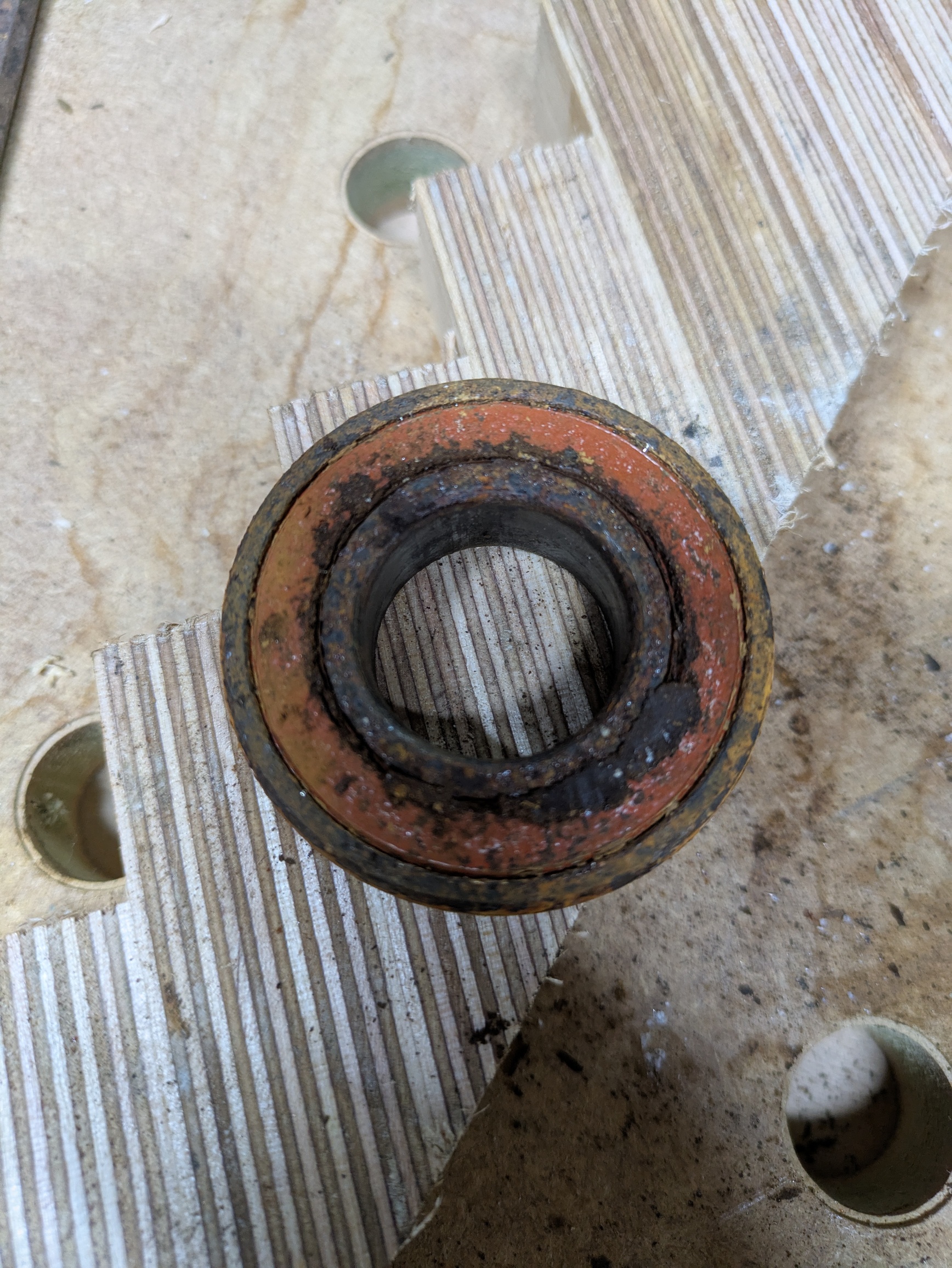
According to the stamp on the body the mill appeared to be about fifteen years old, so as well as replacing both of the bearings (good practice in any case), I bought new seals too. The old ones were quite hard and probably contributed to the bearing failure by allowing apple juice to leak through.
The items I bought in the end were:
I think they came from Simply Bearings, but other bearing vendors are available. With postage it came to about £30, perhaps £35. Far cheaper than paying almost £900 for a new mill.
I cleaned parts up as I reassembled the motor, put the motor back into the mill body (which is pig-awkward and resulted in me leaving some skin behind) and reassembled the blade carrier and blades. A quick check that the motor now spun freely and we were good to go so I plugged it in for a final test before it went back out on hire.
If I have to do this again, I’ll document the entire process including photos. Since it was half-disassembled when it came to me I didn’t feel that it would be that useful this time around.
Oh no!
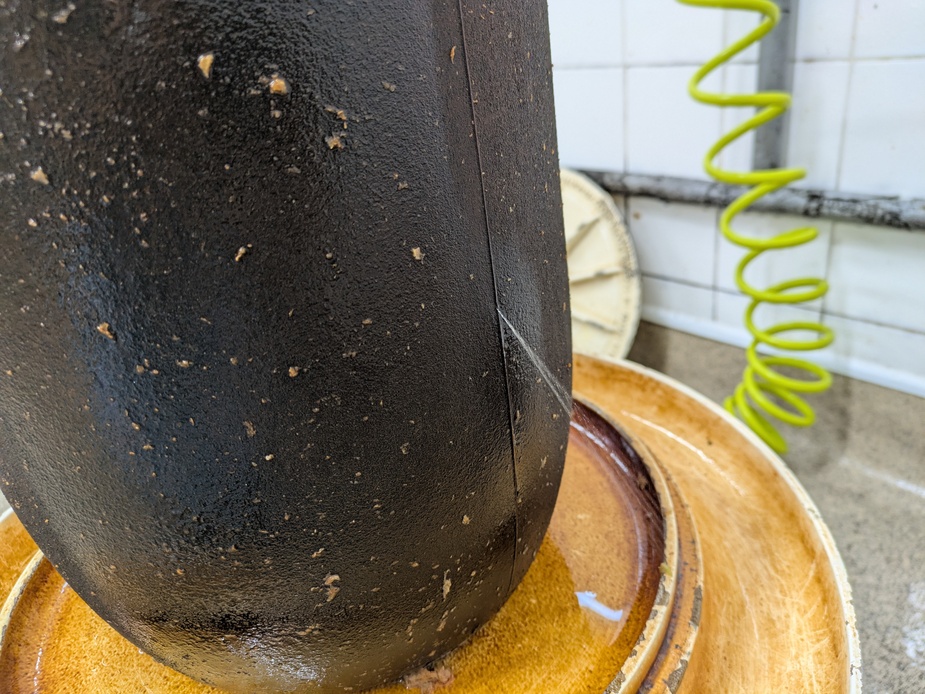
Fortunately it is possible to buy replacement bladders. Unfortunately, removing the old bladder can be something of a pain. It would appear that from the factory, the pipework for the hose connections and pressure release valve is put together with some very heavy duty sealer/threadlock, I assume so that the pipework can be fitted with all the joins at the correct angle and will then stay there without leaking.
I discovered however that by removing all the fittings at the top end of the mill so the bladder is free to come off, just loosening the nut holding the pipework to the press base (which is not threadlocked) gives sufficient play to allow the bottom end of the bladder to be released at which point the entire thing can be removed.
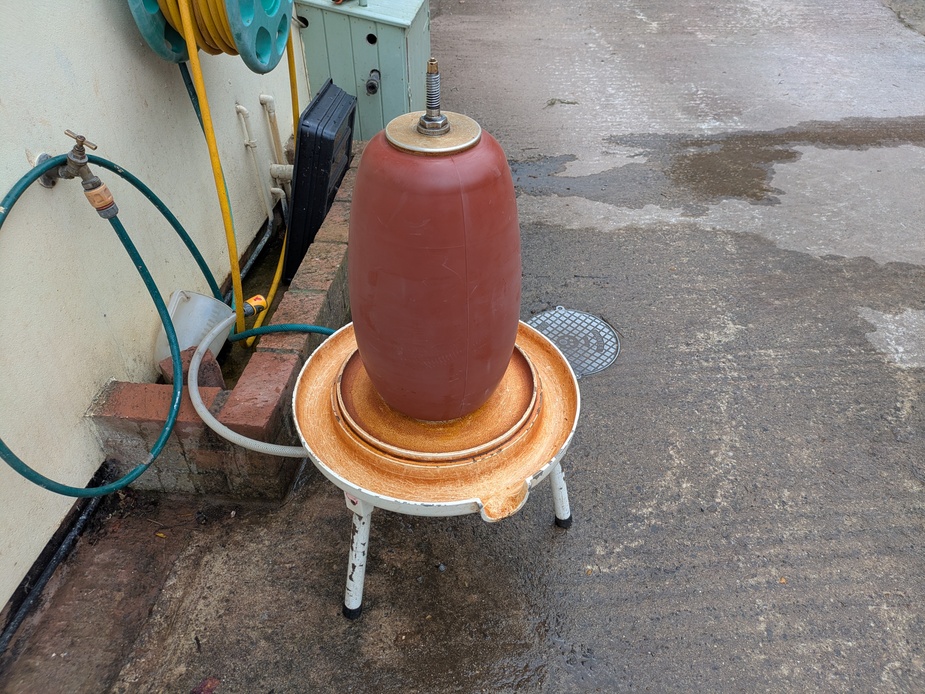
Fitting the new bladder is the reverse of disassembly as they say in all the good manuals. And the proof of the pudding is in the testing.
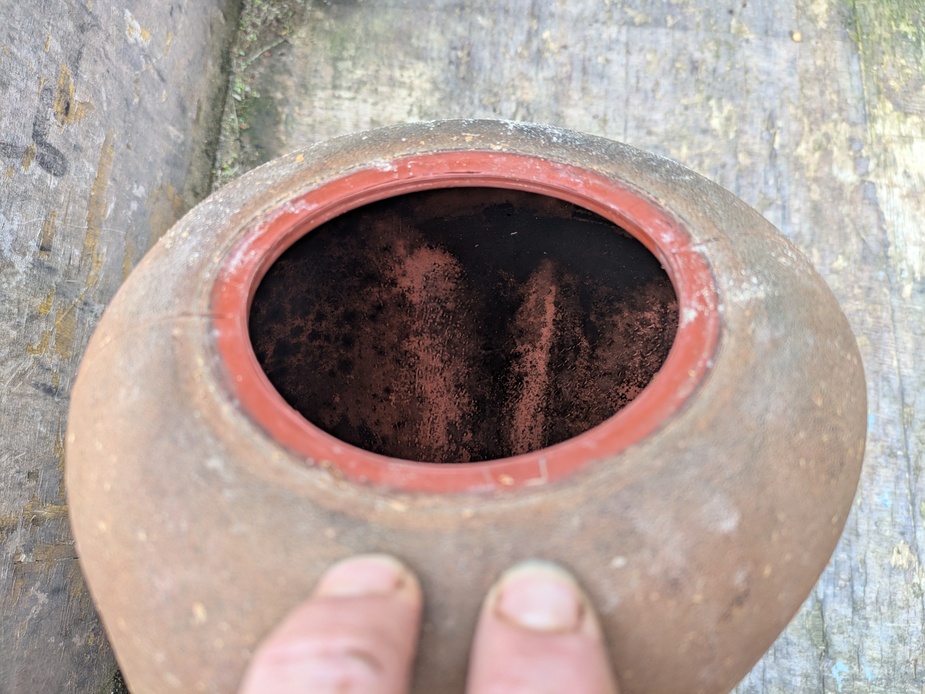
And if you’d like proof that you really don’t want even such a small leak in the bladder allowing the water inside to escape into your apple juice, look at the inside of the old one.
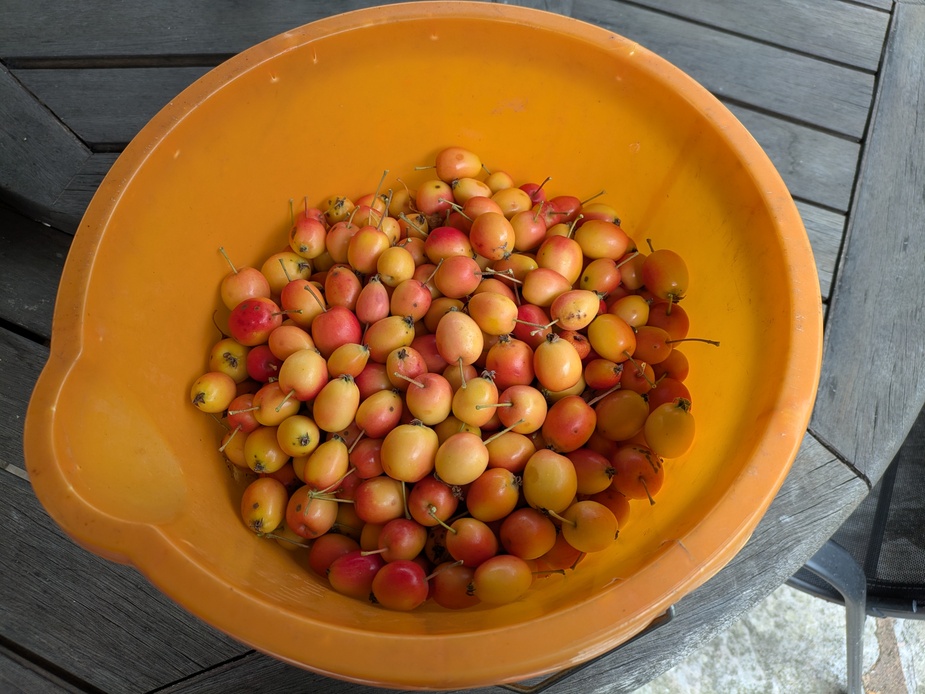
These are from a tree at the end of our drive. In the twenty years we’ve lived here I’ve never managed to pick them. They seem to be ripe one day and fall off the tree the next. But in so, so many ways, this year is radically different.
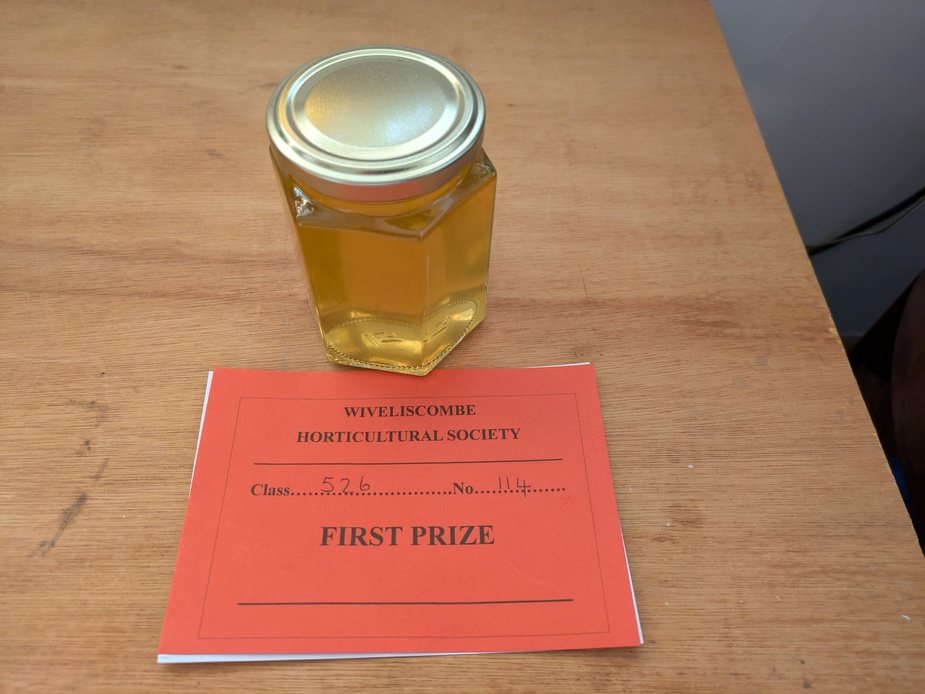
My honey, my local show 😀
I went to collect some stuff for my daughter from a property in a nearby village. Outside the front of the house was this. Such a stunning piece of work that I had to take a photo of it.
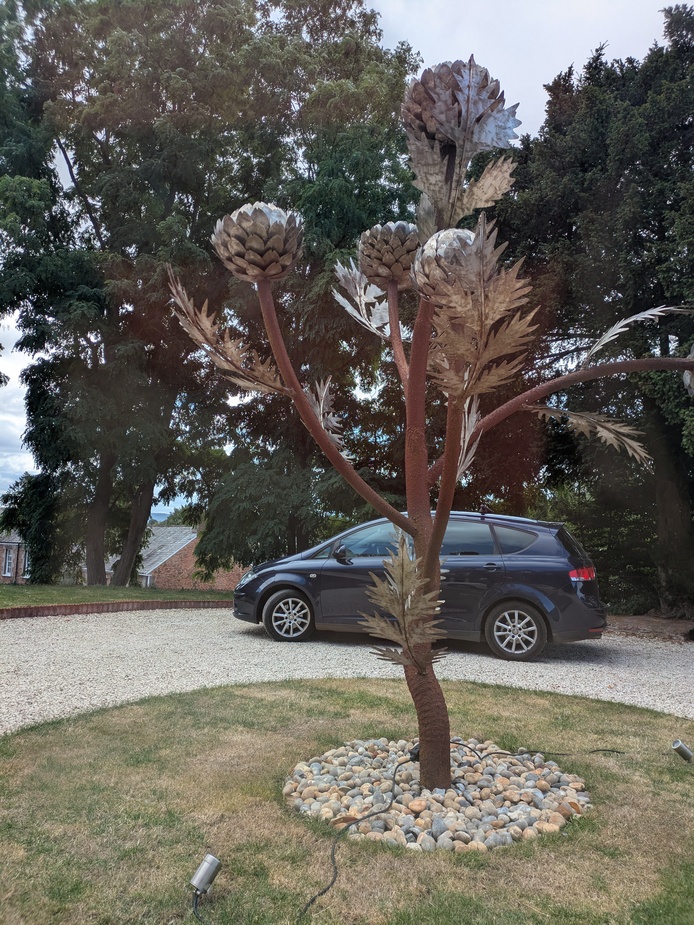
Art for artichoke’s sake?