Mostly sycamore. Happiness is a sharp chainsaw 😀


Mostly sycamore. Happiness is a sharp chainsaw 😀


Same hive, same location, just harvested a few weeks apart…

When the floor underneath one’s tablesaw looks like this:


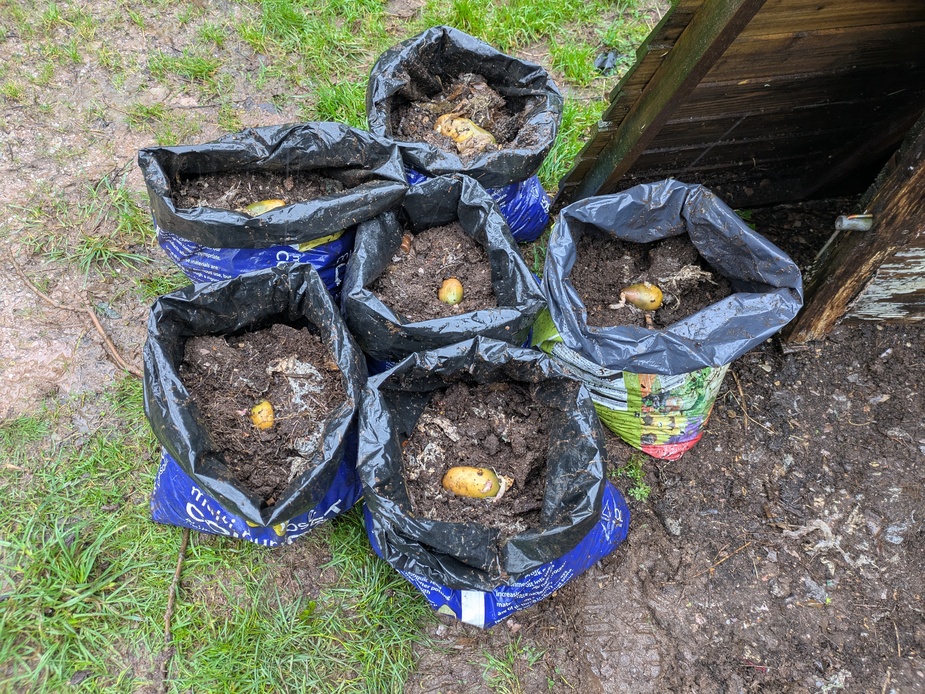
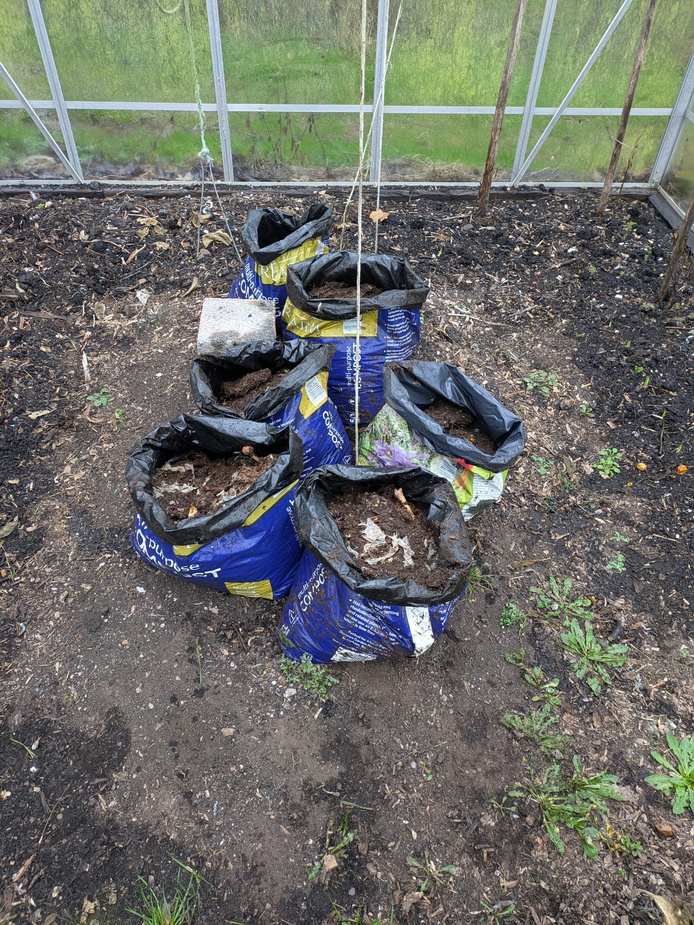
It doesn’t take that long to get a collection of bags together like this:

Hopefully that should keep me going (as it were) for a while.
I have plenty of recovered beeswax sitting around, but conversion rates to exchange it for foundation seem pretty poor. I’m also given to understand that much of the foundation sold in the UK is produced from imported wax, so who knows what might be in it?
I’ve therefore bought a cheap silicone foundation mould and made a tray for it to sit on from some scrap laminated ply. Now I just need to get myself organised and give it a whirl.

The “throne” is finally finished and in use thanks to some scrap phenolic ply and a cheap fake wooden seat.

Very simple this, but Demaree is a method of swarm control that I’d like to try more of in the future.
The underside of the board has a rim to allow for a beespace and a 100mm-ish hole in the middle.

The top has QX material covering the entire hole so that only workers can move between top and bottom, and an entrance to allow (particularly) drones to escape

A somewhat unexpected turn of events has led to me being asked if I’d like to look after some (wine) grape vines in a local garden in exchange for the fruit produced. About 550 of them in fact, a mix of Solaris, Bacchus and Blauer Spätburgunder (which is apparently Pinot Noir). I’m quite tempted. I’m just trying to work out how much time it’s actually likely to take.
Assuming I do take up the opportunity then I’ll also have to work out what to do with them and how, but that’s a problem for another day 😀


I’ve been wanting to do this for a while, but for quite some time didn’t have a clear plan. Recently however it occurred to me that it would be possible to make a pair of five-frame nucs from PIR insulation board that could sit side-by-side under a single national roof.
I made two PIR boxes from 25mm PIR (for the sides) and 50mm PIR (for the ends), gluing them together with foaming PU adhesive reinforced by bamboo skewers. The external length of the sides was 460mm — the full length of a National brood, and the ends were 230mm, giving internal dimensions of 360mm by 180mm. Five Hoffman frames should be 175mm wide (35mm each), so allowing for a bit of propolis they should be a neat fit.

Obviously PIR isn’t going to stand up to the rigours of being poked with a hive tool, so the tops and bottoms of the box are made from timber with a rebate for the frames to rest on. To stop bees “exploring” the PIR, all the bare ends are wrapped in aluminium tape.
I’m into insulated crown boards, so they’re made from some scrap weather-resistant ply with a 50mm PIR insert.


The floor is an “underfloor entrance”


Finally, to protect everything from the elements I found some offcuts of car wrap material online and wrapped the boxes in a selection of colours.

And here they are, six nucs sitting under three roofs (with a couple more spare roofs on top).

I’ve never been able to get on with them, much preferring a twin-lever capper that I’ve had for years. Sure, it’s not quite as simple to use, but it does seem to do a better job of putting on the caps than my benchtop version. Here they are:


A cap put on by the benchtop model looks like this:

Compared with the twin-lever model:

It’s clear that in the latter case the cap is crimped around the “skirt” much more effectively. And this is confirmed when the caps are removed. The benchtop capper has done such a poor job that the cap is barely distorted when removed, whereas the twin-lever machine means the cap is clearly bent when removed:

I’d love to know how to get the benchtop one to work as well as the twin-lever system. It would actually make bottling quicker.
I have no idea what variety of mushroom these are. I should really find out.