Hot Shoe Red Dot Finder

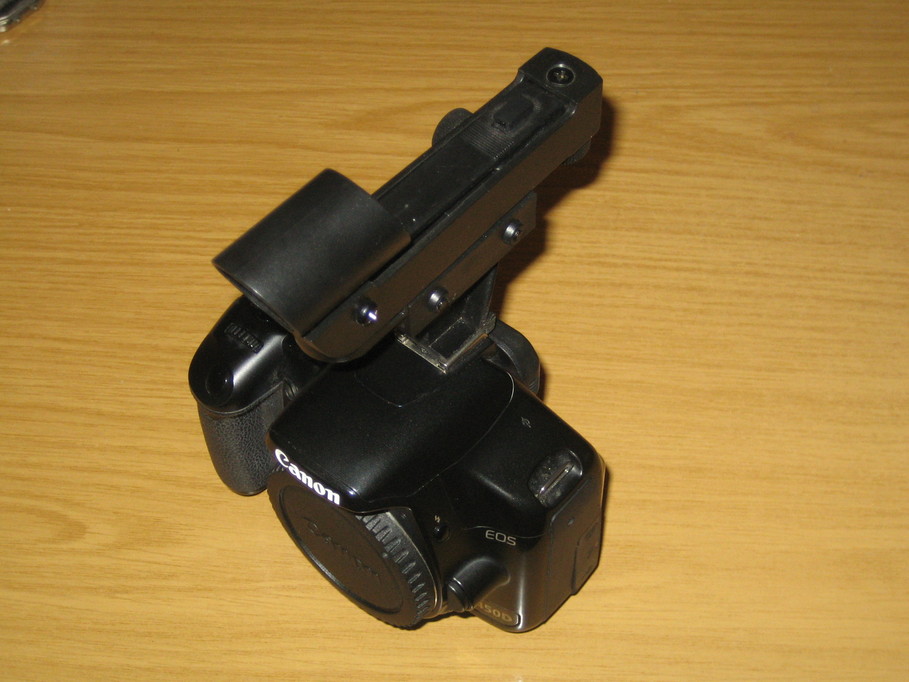
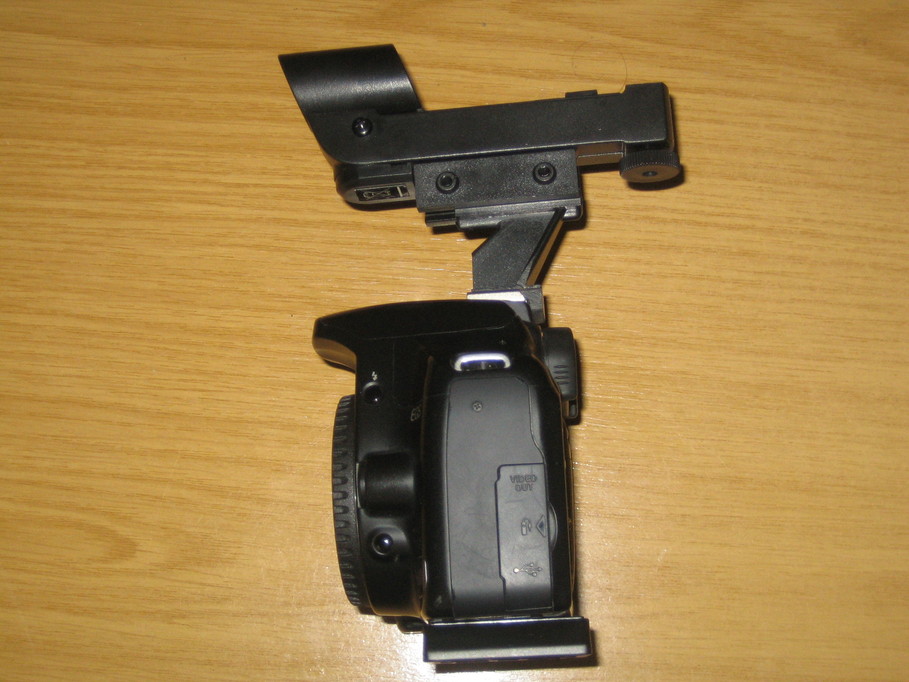
Having taken a few wide field images with my DSLR on the EQ3-2 now, I’ve realised what a pain it is getting the target area in the field of view when much of it is too faint to see, let alone getting the framing right. So I decided to modify a spare red dot finder to fit on the hot shoe and allow me to get the target in the frame more easily.

I started off by removing the base from the finder so I could work on it easily:
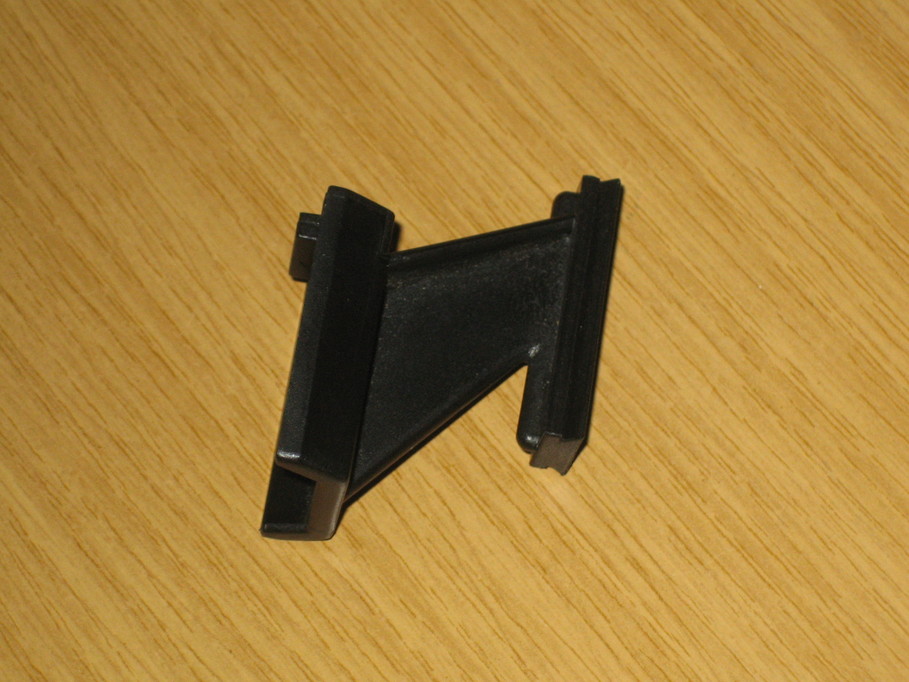
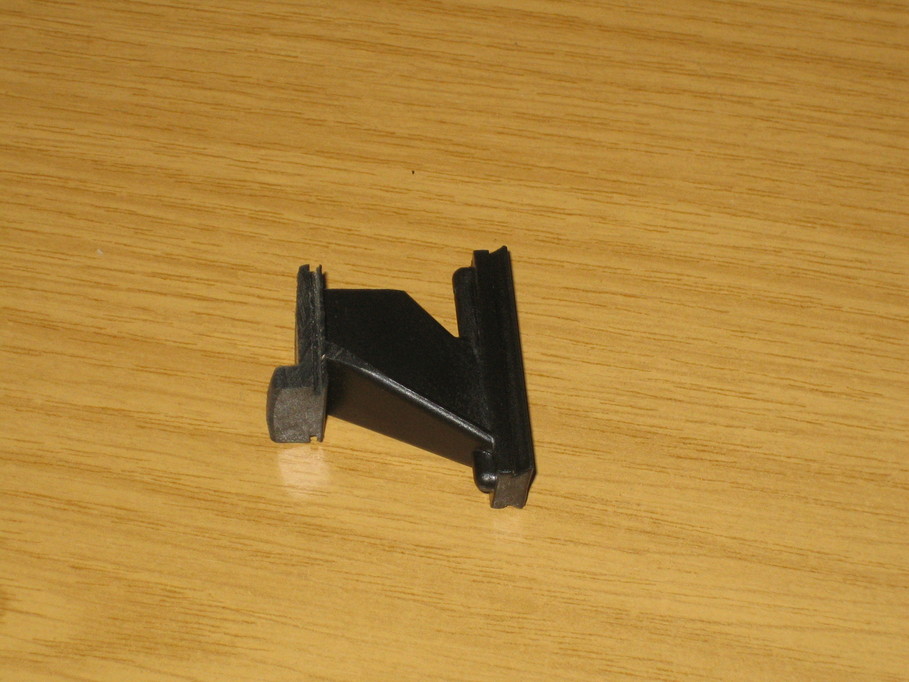
To get it to fit the hot shoe I trimmed off quite a section of the front, including some of the support, leaving the remainder short enough to push right into the finder. The sides were trimmed off similarly as was the small stop on the back edge, which fouls the camera otherwise. The final modification required was to cut slots in the edges of the foot with a hacksaw into which the edges of the hot shoe can slide:
That done it’s just a case of reassembling the finder and putting it on the camera:
Posted in Astro Equipment, Astronomy | Tagged , | Leave a comment

Perseus wide field

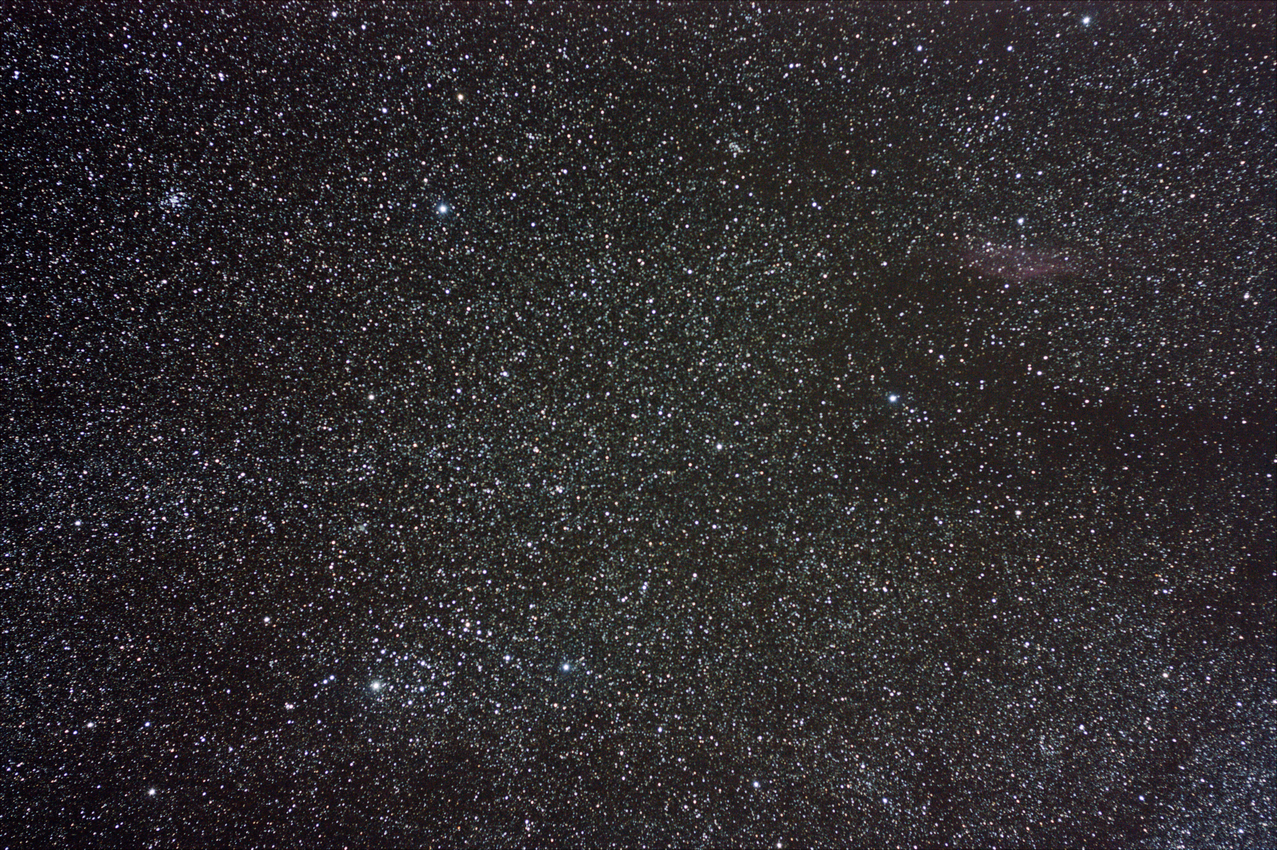
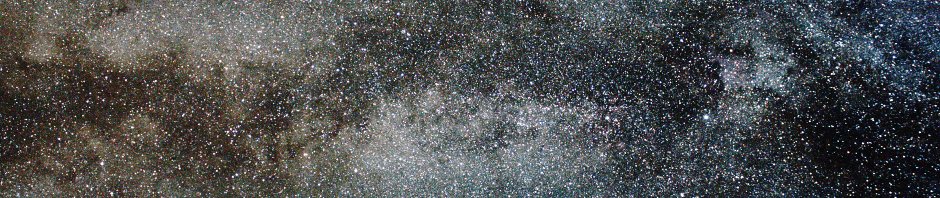
Taken the on the same night as my earlier image of Cassiopeia, here’s Perseus. In the top right corner it’s just possible to see the California Nebula starting to emerge.

Posted in Astroimaging, Astronomy | Tagged , | Leave a comment

Cassiopeia wide field

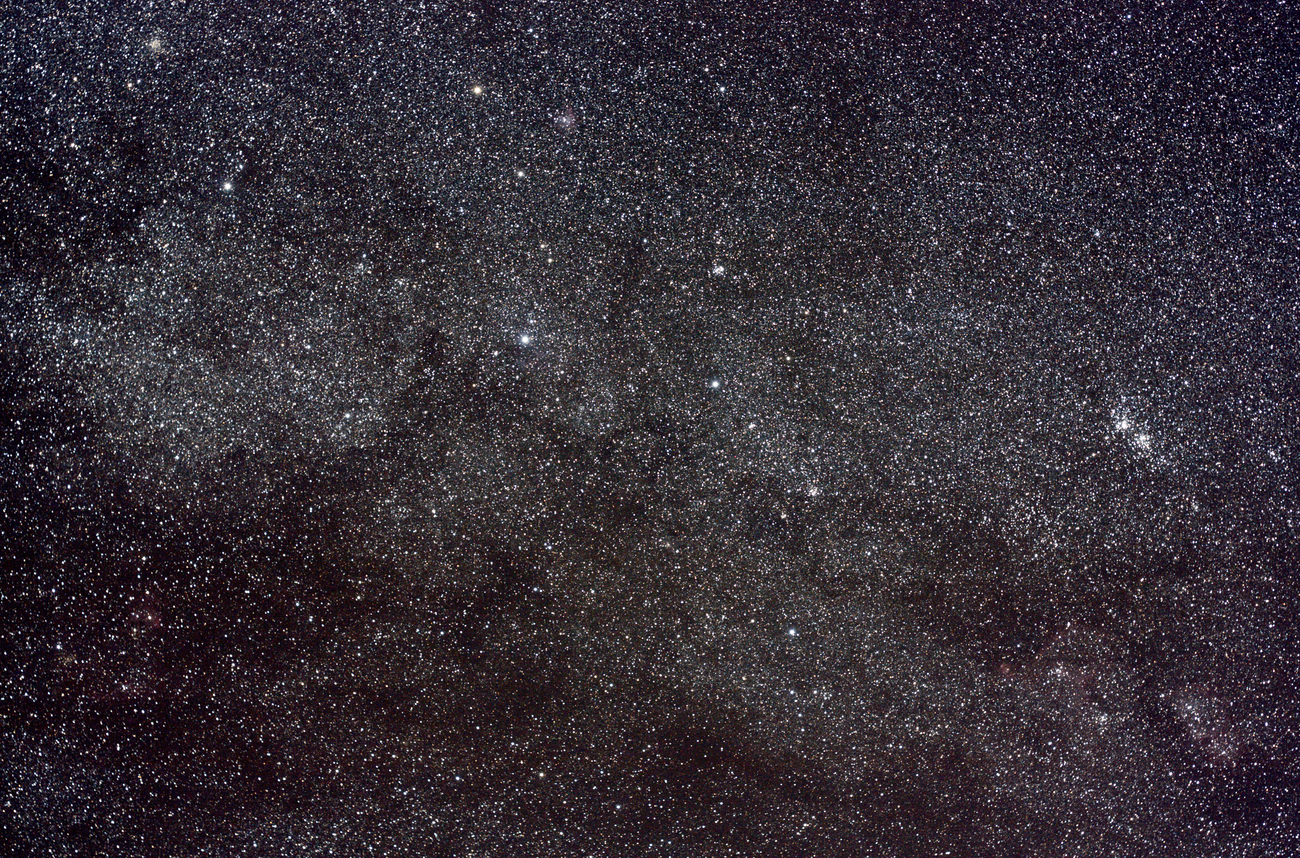
I spent an evening playing with my new Canon 50mm f/1.8 “nifty fifty” lens and taking some long exposures of constellations near the zenith. This is Cassiopeia. The keen-eyed will spot the double cluster at the centre of the right hand edge and the Heart and Soul Nebula at the bottom right. There’s also another nebula in the bottom left corner and a few other clusters dotted about.

Focus wasn’t perfect and I think I need to stop the lens down a little to control the distortion at the edges of the field of view (some of which I cropped off), but for a first attempt at imaging with the lens I’m not unhappy.

Posted in Astroimaging, Astronomy | Tagged , | Leave a comment

Another Sunspot Image

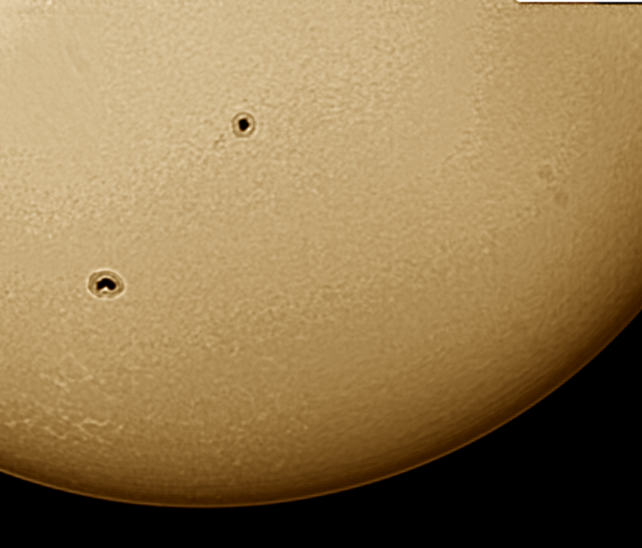
This is a full-size crop of my solar image for 4th October. Very pleased with the detail I’m getting here.

The image was a “white light” full solar disk taken using a Canon 450D and 127 Mak using Baader solar film, shooting 120 frames and then stacking about half of them.

Posted in Astroimaging, Astronomy | Tagged | Leave a comment

Sunspot Imaging with the Lifecam Cinema

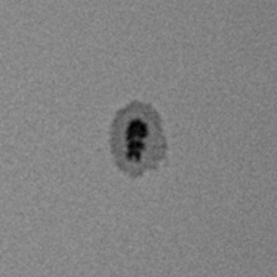
I was out doing some solar imaging recently and tried to get my son a bit more interested in the world that exists outside various electronic games devices by getting him to get some sunspot images using my modded Lifecam Cinema and his ST102. I’ve had problems with the Lifecam for planetary imaging because I think I just can’t get enough light onto it with my 127 Mak, but I was hoping that wouldn’t be an issue with the Sun. It wasn’t entirely successful largely owing to a deficit of patience on his part, but eventually we came away with this:

It’s not short of stacking artefacts (I had real problems stacking the images at all) and there’s a clear lack of dynamic range, but I think there’s enough data there to suggest that given a bit more time tweaking camera settings and experimenting with the processing the Lifecam could be quite an acceptable camera for solar imaging.

Posted in Astroimaging, Astronomy | Tagged | Leave a comment

August 2012 FIT payment

At the end of August our latest FIT payment arrived covering the late Spring/early Summer period. Obviously given the weather this wasn’t as high a figure as we’d been hoping for, but means that 8.6% of the installation cost is now covered. The next payment should take us up to our first full year and we can review how we’re doing at that point.

Posted in Environment, Projects | Tagged , | Leave a comment

Solar PV Generation Update October 2012

And so the abnormal weather continues…

Generation for September this year totalled 333kWh, up 7.5% from the previous September and a somewhat astounding 32% more than would normally be expected for September. That increase completely covers the failure to meet the expected generation figures for April, July and August. It’s also more than was generated in June! Total generation since installation now stands at 3603kWh.

As the FITs year runs from April to March I’m going to work out our figures based on that because it saves having to switch prices halfway through the year. This brings our total generation for April on to 2213kWh worth about £1040 in FITs payments and saving up to £330 in electricity that we haven’t had to purchase from the grid and total income since installation to around £1670 with up to £540 worth of electricity that we haven’t had to purchase from the grid.

Posted in Environment, Projects | Tagged , , | Leave a comment

Observation Report 8 September 2012

Another moonlit night washing the less bright objects out, but clear enough to step out with the 10″ dob again…

First up was M39 in Cygnus. I found this one tricky to locate, but eventually got to it starting from ρ Cygni. From there I hopped to g Cygni and noting a straight line of stars ending at that star, moved in the opposite direction. I found M39 to be a small open cluster surrounded by other stars making it hard to pick out. I think it would be possible to overlook it in the surrounding star field very easily.

Next over to the ever popular M31/M32/M110 group in Andromeda. Easy to find and impressively bright despite the moonlight I found I could make out more of the extended area of the galaxy. M32 still appeared some distance from the core of M31 though, so clearly I couldn’t see as much as I know to be there. M32 was still clear and not hard to find even if it was still just a small grey smudge in the prevailing conditions. M110 on the opposite side of the main galaxy was on the other hand much more tricky to find and only just discernable as a faint grey blob.

I moved over to Cassiopeia next for M52 which I found to be quite well-defined though faint. It was very easy to find and filled the field of view of my 9mm BGO nicely with the stars being easy to resolve.

Also in Cassiopeia I found M103, an open cluster which sadly wasn’t too impressive with the Moon now being quite bright in the sky. Another to return to when the viewing conditions are more favourable.

Posted in Astronomy | Tagged , | Leave a comment

Observation Report 6 September 2012

Very poor seeing on this particular night. I couldn’t even be sure I could make out the four stars in the “body” of Usra Minor, so the conditions were clearly not at all good. Nonetheless I got out for a while with the 10″ dob to see what was visible.

I first found M2 in Aquarius. A very impressive dense, large cluster. In the conditions it was hard to resolve individual stars, but was well worth finding.

Despite the conditions I also found M15. It appeared a similar size to M2, but perhaps not as dense overall, having a clearer core area with more stars being resolved around the edges especially with averted vision.

These two are clearly well worth another visit on a better night.

Posted in Astronomy | Tagged , | Leave a comment

EQ3-2 motor gearbox reduction ratio

I’ve decided there’s nothing more I can do with my EQ3-2 mechanics to improve the backlash that’s painfully obvious in the DEC axis. What backlash there is left (about twelve seconds at the 8x speed when changing direction) appears to be in the motor gearbox. So I’m thinking about replacing the gearbox assuming I can find something to do so at a reasonable price.

The first step was to establish the reduction ratio of the existing gearbox. To that ends I took my spare one apart and photographed all the gears so I could load the images onto the PC and count the teeth. These are the numbers I ended up with:

  • Motor out: 12
  • Gear 1 in: 30, out: 14
  • Gear 2 in: 42, out: 14
  • Gear 3 in: 28, out: 14
  • Gear 4 in: 28, out 10
  • Final drive in: 40

I make that to be reduction ratios of 30/12, 42/14, 28/14, 28/14 and 40/10, or 5/2, 3, 2, 2 and 4, giving a total reduction ratio of 120:1.

So, the search is now on for alternative mechanisms of achieving a 120:1 reduction ratio with the minimum of backlash.

Posted in Astro Equipment, Astronomy | Tagged | Leave a comment