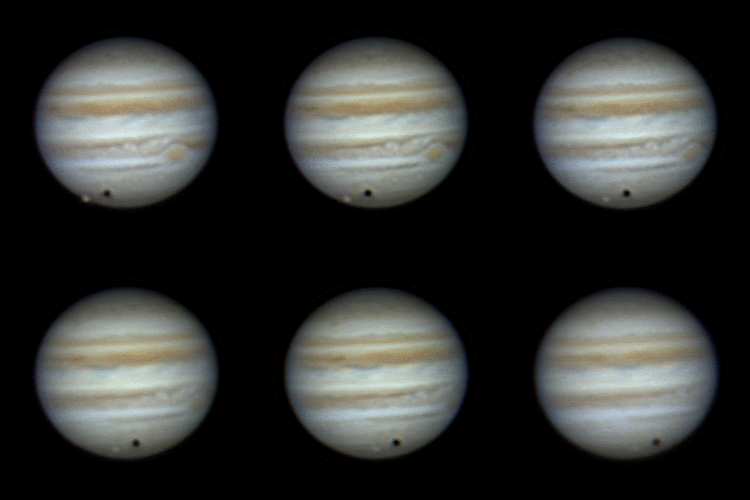
From the same night (just a little later) as my previous Io transit images, watch the GRS as Jupiter rotates:
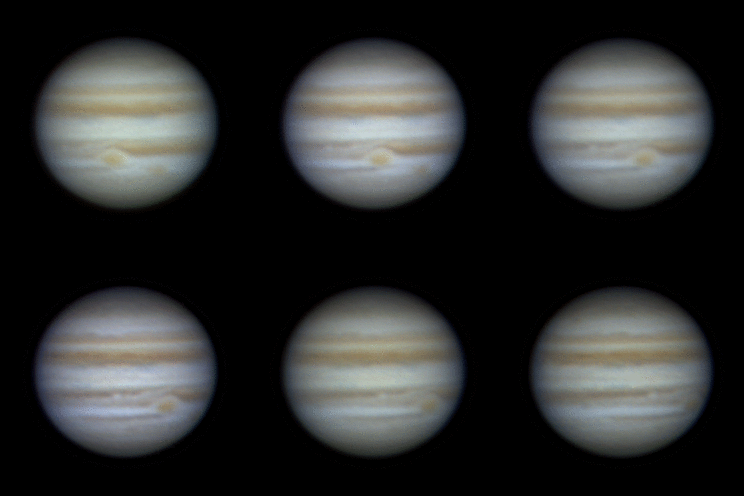
From the same night (just a little later) as my previous Io transit images, watch the GRS as Jupiter rotates:
Ganymede and Europa are “in the bag”. Catching Io here means there’s only Callisto left. Of course I didn’t catch the whole transit for the first two so I shall be revisiting that next apparition.
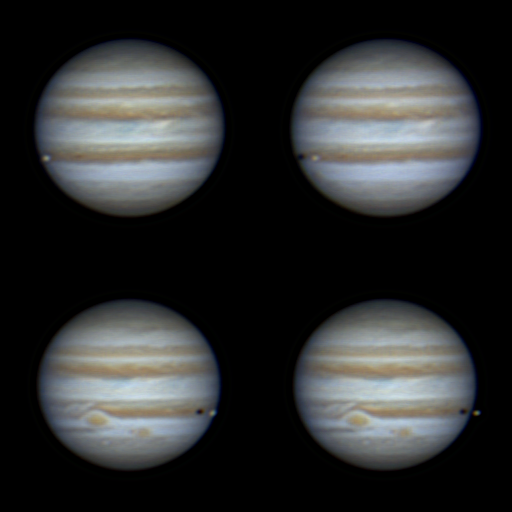
And an animation of the entire event. Spot the jump in the middle when I had to do a meridian flip because I was running out of clearance on the EQ3-2:
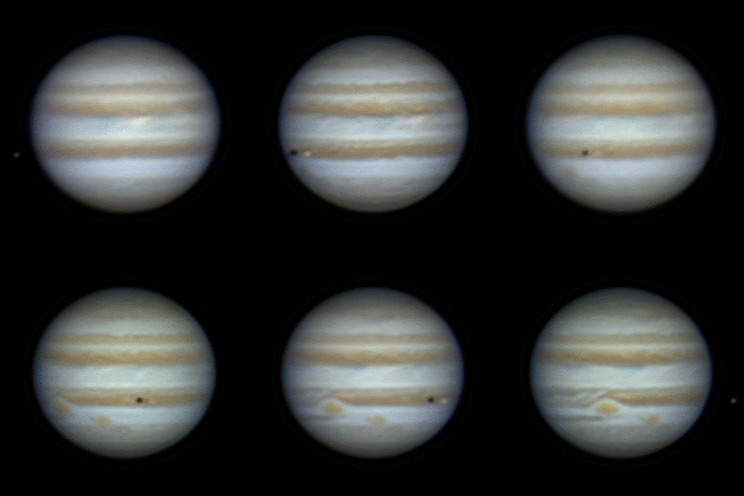
Having managed to catch some of Ganymede’s transit the previous day, it was then Europa’s moment of fame, though again I didn’t manage the entire transit:
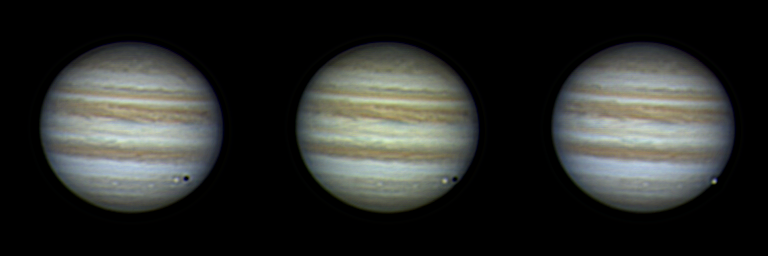
And an animation of the end of the transit:
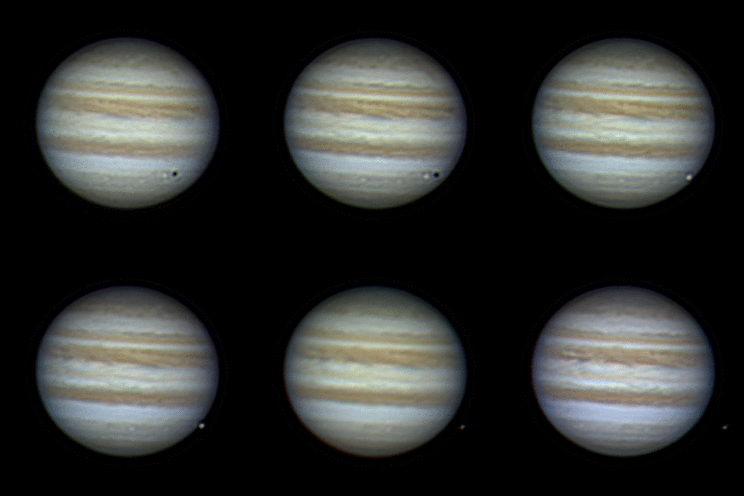
On the 28th November I (pretty much accidentally) caught the transit of Jupiter by Ganymede. Here’s one of the better stills from that night:
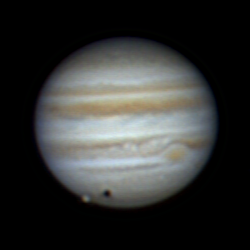
And an animated sequence of first half of the transit:
It seems to have rained here for almost all of December and the Met Office says that it’s already been the wettest year in England since records began in 1910 and stands a good chance of being the wettest year for the UK as well. So, stuck indoors because most of the things I want to do are outside and I don’t fancy getting soaked and being up to my elbows in mud, I grabbed some of the Met Office rainfall statistics for the UK since 1910. Here are a few interesting/depressing items I pulled out:
Three of the ten wettest years occurred this century (2000 to 2011)
Six of the twenty wettest years occurred this century
Eight of the thirty wettest years occurred this century
So two thirds of the this century thus far is represented in less than the top third of the rainfall figures. It doesn’t look that much better if you increase the window to the last twenty years either:
Half of the top ten wettest years occurred in the last twenty years
Half of the top twenty wettest years occurred in the last twenty years
Thirteen of the top thirty wettest years occurred in the last twenty years
To find any earlier over-representation you have to go back to the 1920s, and this century so far beats the 1920s into a cocked hat (only four years in that decade in the top thirty).
And on the assumption that 2012 turns out to be a chart-topper it looks even worse, as then fully three quarters of this century so far will be in less than the top third of the data.
Regrettably I’m rather clueless when it comes to statistics so I can’t work out how likely these outcomes would be if rainfall patterns were truly random, but intuitively (and intuition is often no better than chance) it doesn’t look good. There are times when I’m tempted to start gathering together pairs of animals and drawing up plans for an ark…
When I posted images from the Xbox, Lifecam and SPC900 for comparison, someone asked about the PS2 Eye camera (not the Eye Toy). Last night whilst I was imaging Jupiter and Europa I had a go with it. Control is very awkward compared with the other cameras and whilst I found it to be quite sensitive it also appeared to be astonishingly noisy which meant I had to wind back the gain and exposure times to try to keep it under control. Even then I struggled and it has resulted in artefacts around the edge of the planet as well as washed out colours. Here are some examples of processed images:
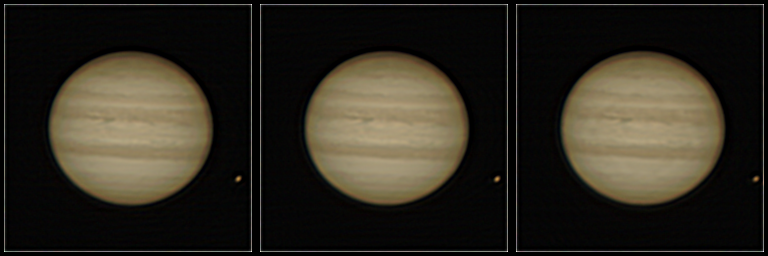
There’s good detail there, certainly, and in terms of sensitivity I think it’s done as well the SPC900 at picking out Europa but the noise just ruins it all.
For comparison, here are three from the SPC900 that I took just prior to the above:
In my opinion, the PS2 camera just doesn’t have what it takes. I shan’t be using it again.
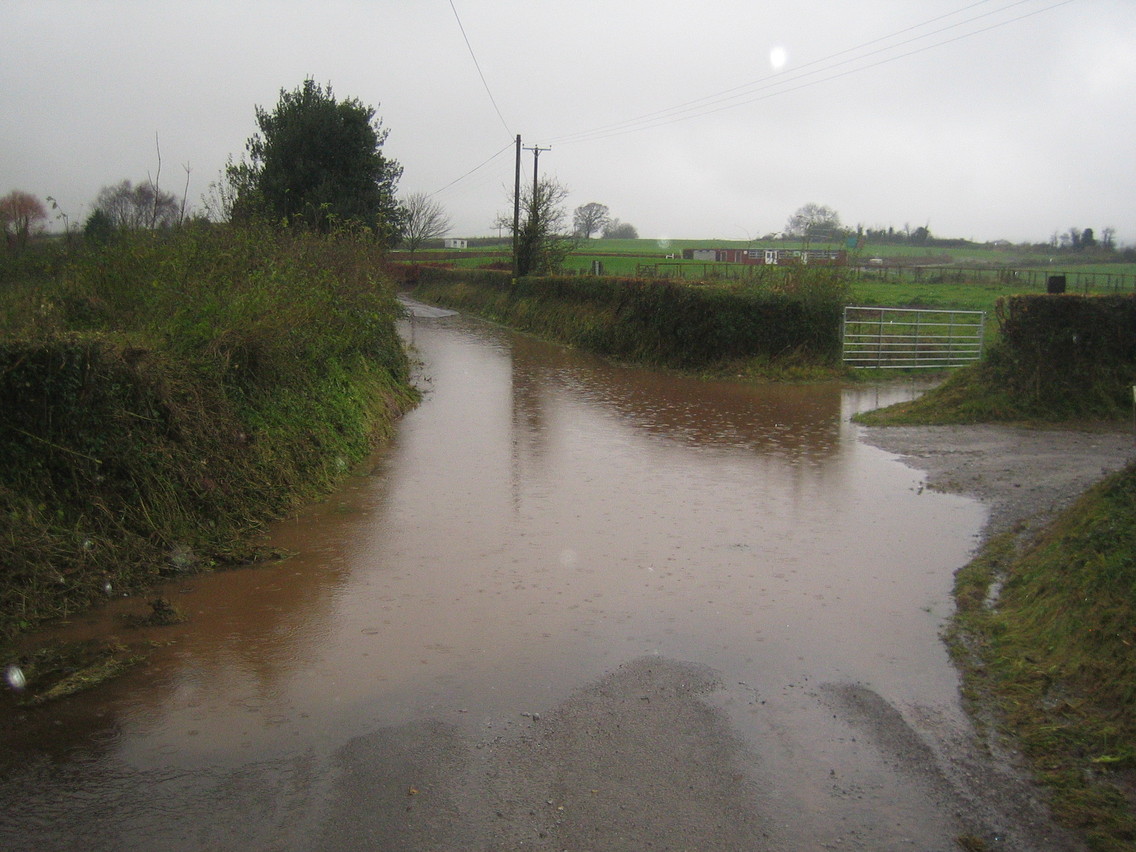
I feel desperately sorry for those people in the south west and Wales caught in the recent flooding. The pictures from the news are shocking. We didn’t suffer quite so badly, merely having the road past the end of our drive flood to the point where it was too deep to drive through. A number of car drivers found this out the hard way and both I and the neighbouring farmer towed several cars out using tractors.
This is what it looked like on the morning of Saturday 24th November, when it had been raining pretty much non-stop for a couple of days. Our drive is the first right in the first image.
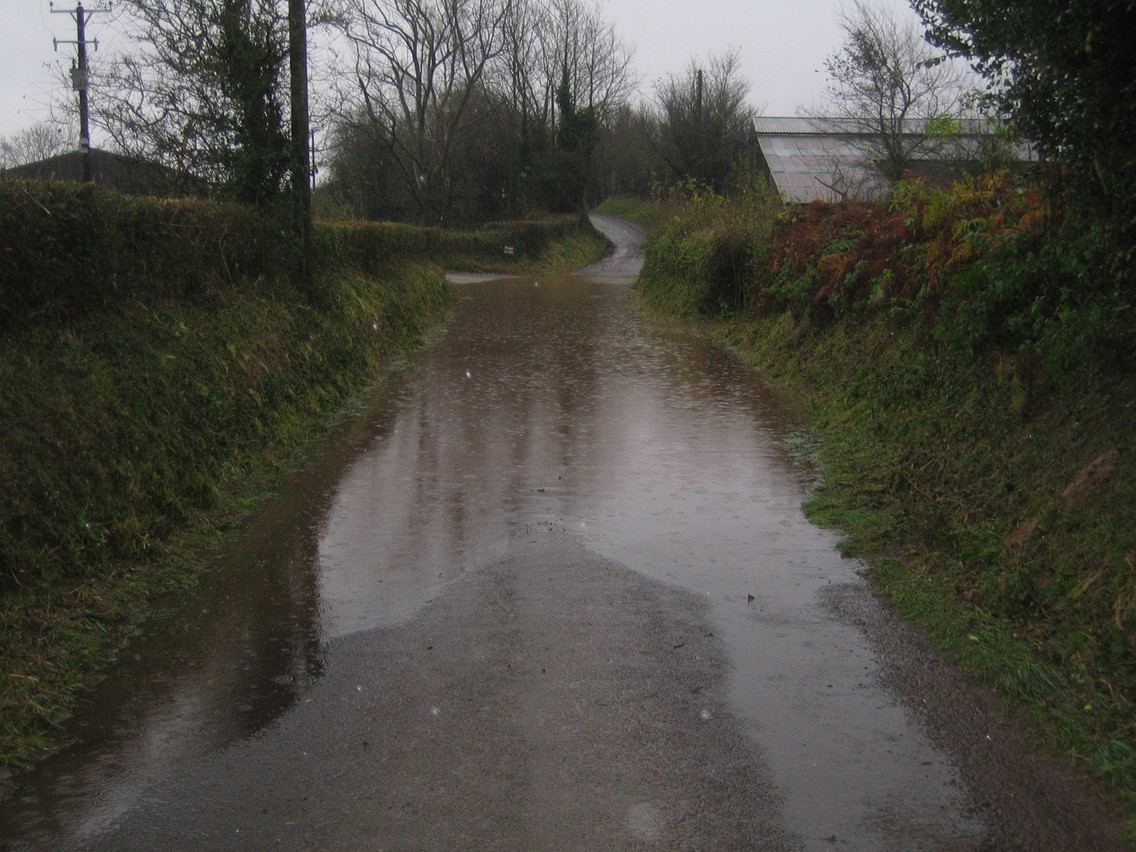
And the following morning, when it was far too deep to wade down to the far end to take a photo from there…
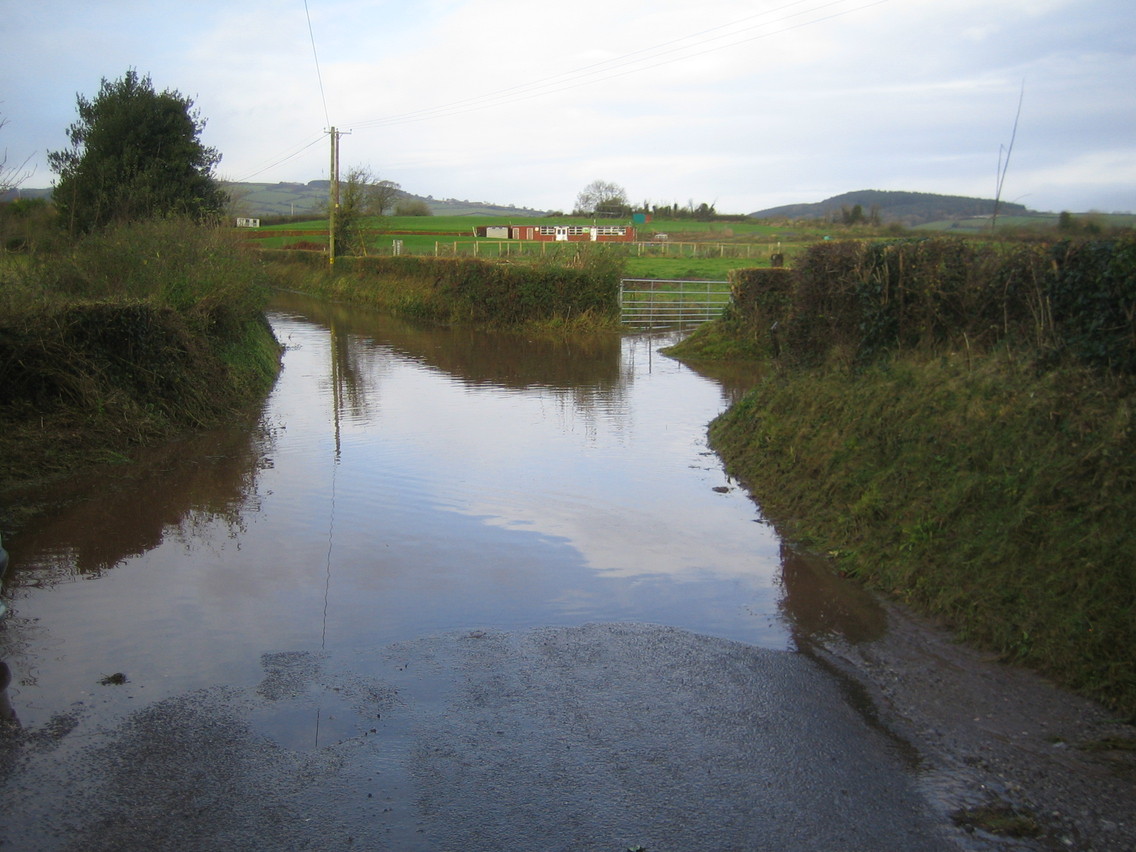
By the Monday and Tuesday it had risen even further, mostly I think from rainwater running off the surrounding fields.
I’ve had some discussion with a few people about using Autostakkert!2 instead of Registax for stacking planetary images, and potentially using AS!2’s drizzle function as well so I decided to reprocess some of my recent Jupiter images
So, here are the results for three images from mid-November with three different processing treatments. I’ve processed them entirely within Registax v6, stacked in AS!2 and used wavelets in Registax v6, and stacked with 1.5x drizzle in AS!2, used wavelets in Registax v6 and downscaled to match the size of the originals.
In each of the three sets the last image is the drizzled one and I think it’s rubbish compared to the other two. Where the non-drizzled images are concerned, I think it’s a very close call. I’d go with the first image by a gnat’s whisker in the first two sets after a fairly microscopic examination and I’d go with the second image in the last set.
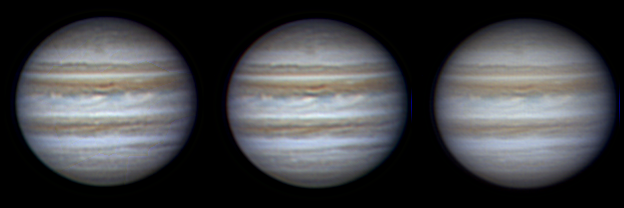
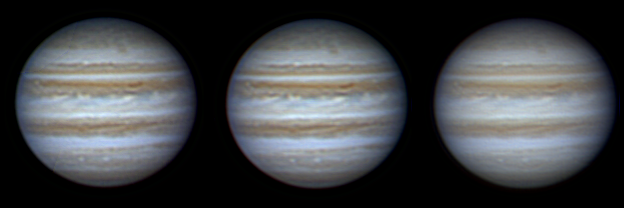
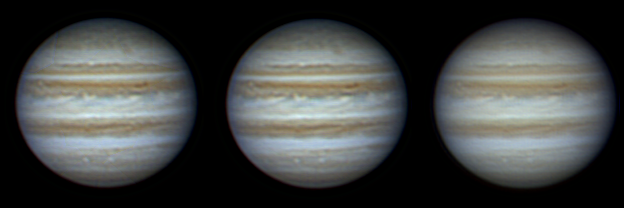
I’ve since had an email from someone who knows rather more about AS!2 than me making some suggestions about the application of drizzle and stacking, so I probably need to go back and have another go.
It has been said that the brightness setting for the SPC900 camera affects only what appears on the screen and not what appears in the capture file. Having read the code for the Linux SPC900 driver I wasn’t at all convinced of this and so created three images from captures from the camera at minimum (0), mid (63) and maximum settings (127) in SharCap. Here are the results:

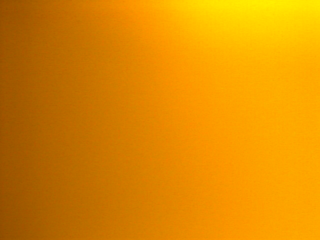

I think it’s quite clear from those that the brightness setting does indeed affect what appears in the capture file. The question that now springs to mind is “What is the best brightness setting?”. I’ve no idea about that, so I leave my brightness control at the mid-point of the range.
“What webcam can I use if I can’t get/afford an SPC900?” seems to be a common question now the SPC900 has become difficult to get hold of, but there doesn’t seem to be much empirical evidence on which to base a comparison of the alternatives, so last night I went out with a view to testing out two other cheap-ish cameras against the SPC900.
It’s not unreasonable to suggest that this is not exactly a fair test. I’ve put, errr, lots of hours into learning to image with the SPC900. I’ve had very little time with the other two and I don’t propose to repeat my efforts. I hope this is useful nonetheless.
All the test images were created using a 127 Mak on an EQ3-2. In the back of the Mak was a GSO/Revelation 2.5x barlow and an extension tube made from a kit Skywatcher barlow with the lenses removed. That gives a focal ratio of somewhere in the region of f/35. I’ve done the best I can in terms of settings and capture for the images rather than used the same for all, with the exception of only using Registax v6 for stacking and only making one attempt with each dataset which means there are some stacking artefacts in some of the images. The Xbox and Lifecam cameras also have sensors that could do with a bit of a clean, but it’s taken me ages to get my SPC900 sensor clear of filth and I didn’t have time to do the others. I used SharpCap for the captures and generally stuck to three minute runs. Seeing was pretty good generally, but not quite milkywaytastic. Before feeding the data into Registax I cropped the capture files down using PIPP, and each single image below is the result of a different capture run.
First the Xbox camera. Dirt cheap, and I’d modded it by cutting down the lens cowl and fitting a nosepiece with an IR filter, picking all the LEDs off the circuit board and fitting a small fan to the back. I had some trouble getting the colour balance anywhere near something that looked good with this camera and it was astonishingly noisy. Despite the fact that it will allow higher frame rates, the fastest I could get it to run and produce a reasonable image was 15fps. The images also came out astonishingly purple. I’m not talking a delicate shade of violet here. I mean quite vibrant in-your-face purple. I have no idea why that should be, but it was quite clear from the histograms in Registax that blue and red were far stronger than the green. On the positive front this camera does have a gain control and I used it to keep the SharpCap histogram around the 80% mark. I captured 1800 frames in each run and stacked the best 50%, adjusting the histogram to give a bit more natural colour. Registax did struggle a bit with the RGB alignment and I ended up having to adjust that by hand. Here are the results:
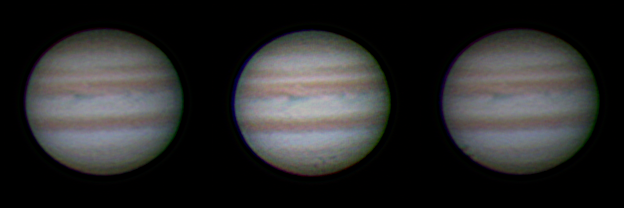
You know what? They’re noisy and showing signs of being over-processed, but for a £4 webcam I think that’s pretty good. When I started out imaging I’d have been very happy to have turned out something like that. The banding is clear and it’s possible to make out the festoons and turbulence around the NEB and if you can do that in the first few times you’ve been out imaging the planets with a webcam I think you’ve made a fair job of it.
And so to the Lifecam Cinema. I modded this one and housed it in a Skywatcher 25mm kit eyepiece barrel with an IR filter on the end. Whilst the camera supports larger images there was no need and I just used 640×480 to try to keep the frame rate up. As it happened I found higher frame rates just made for very poor image quality and I ended up dropping back to 20fps at the most. There’s no separate gain control on this camera and the white balance, brightness and gamma seem to work in a way that isn’t entirely clear to me. Whilst the Xbox camera was plain noisy, this one just seemed really hard to get a decent image out of on the screen and I spent ages fiddling with the controls before getting something I felt was acceptable. I seem to have more stacking artefacts in these than any of the others and the colour balance was difficult to get reasonable. The camera seems exceptionally sensitive in red and I had to wind the red channel down a bit to balance things out. Even now two of the images look far too yellow, but that’s probably fixable given more time. Registax did hideously badly at getting the RGB align right and I had to do that manually. Here they are:
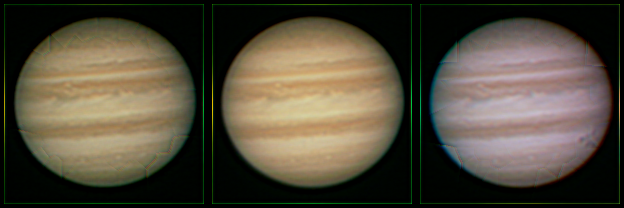
The processing artefacts are a bit of a distraction, but in terms of detail I think these aren’t bad. They’re a definite step up from the Xbox camera, but then the camera itself is perhaps five times as expensive.
And finally, the daddy of them all, the SPC900. Compared to the other two cameras this one is so easy to use, the colours are far more controlled and it’s just far easier to work with. It’s a doddle to modify and the upgrade from SPC880 to SPC900 is easy as long as you have access to a Windows XP box. It won’t do more than 10fps at 640×480 without serious compression of the data, but actually the other two don’t do a whole lot better anyhow. Registax still had trouble stacking some of my files and created artefacts in the final images though less intrusive than those from the Lifecam, but otherwise there were no real problems in creating these:
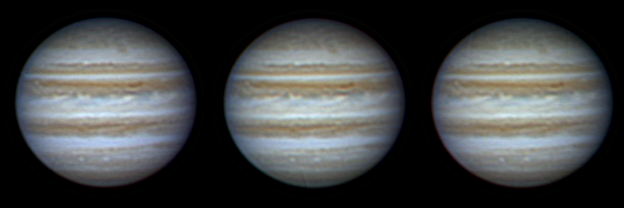
I think it’s quite obvious that the SPC900 leaves the others in the dust. For the £5 I paid for the ones I have it’s brilliant. For the £50 or thereabouts it seems to go for now it’s still a pretty good imaging camera. The detail is sharper, the colours are cleaner, the low-light performance is just better and it’s actually less work.
It is entirely possible that with other scopes these camera may perform differently. I think the more light you can get on the Xbox and Lifecam cameras the better they do. I really wouldn’t want to guess at how they’d perform in, say, a 200P, but hopefully this is a useful datapoint. The Xbox camera particularly seems to struggle a bit in low light, but it clearly still can work.