
I was delivered a Speidel fruit mill, already heavily disassembled, beacuse it had stopped working. I assume the person who had opened it up thought there might be an electrical fault. I wasn’t 100% convinced though, and the fact that there was absolutely no rotational play in the cutters backed that up, I felt. It seemed much more likely that it had seized to me and there really aren’t that many ways such a simple device can seized, so I started taking the rest of it apart to see what was what.
I split the motor in two and removed the rotor to make life easier. This is actually the bearing from the bottom end of the motor, but sitting on the the top face of the motor housing. There’s a bit of corrosion on the top edge of the bearing there, but nothing that looks terminal.
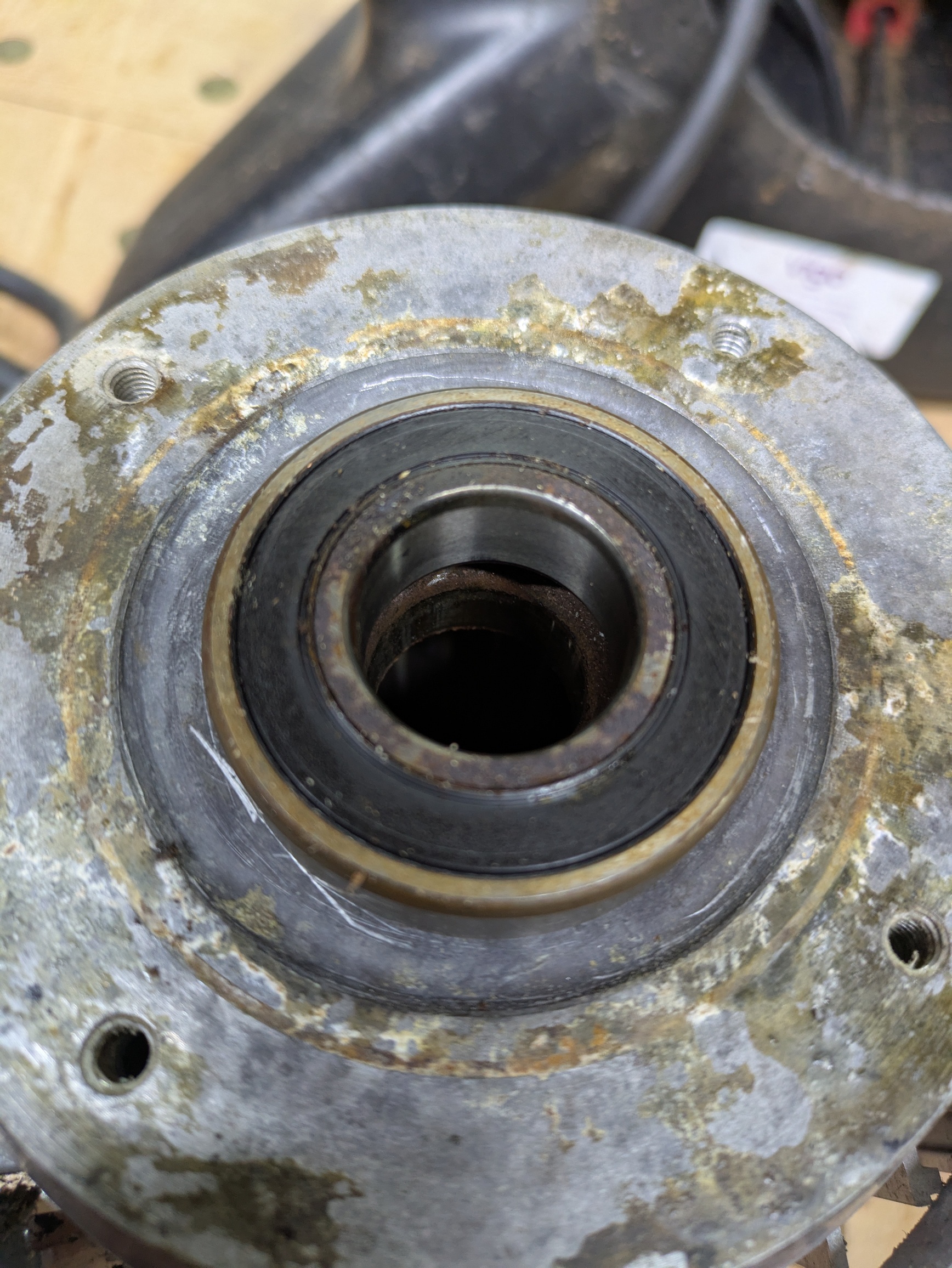
Aside from the filth, this, the top end bearing, looks somewhat more concerning. And in fact I couldn’t spin the inner part of the race at all. It was stuck solid. Clearly at least one part of the problem. Replacement was clearly going to be necessary so I needed to remove that too.
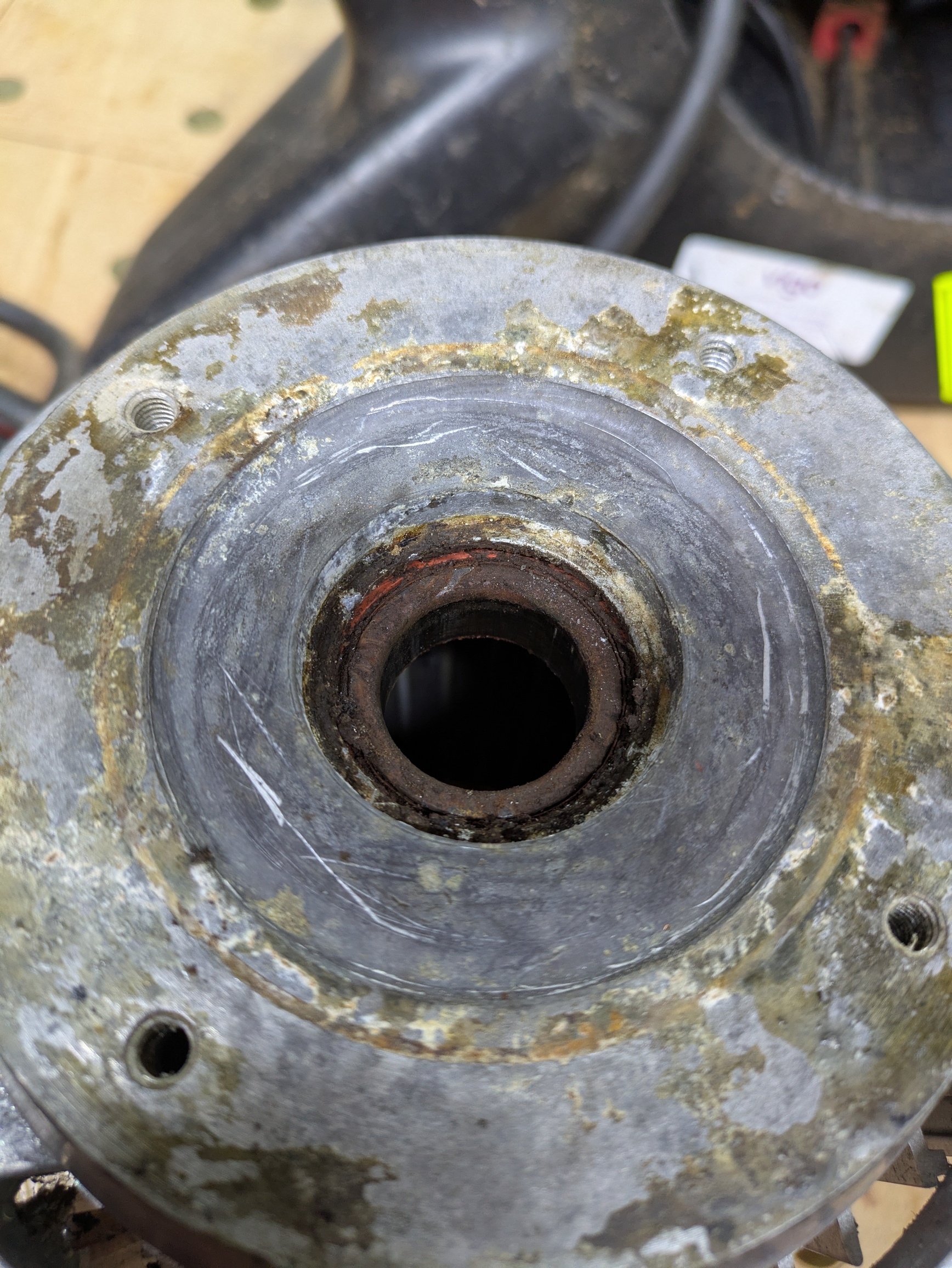
This is the other side. The circlip needs removing to release the bearing at which point it can just be tapped out from the top.

And here it is. Ick.
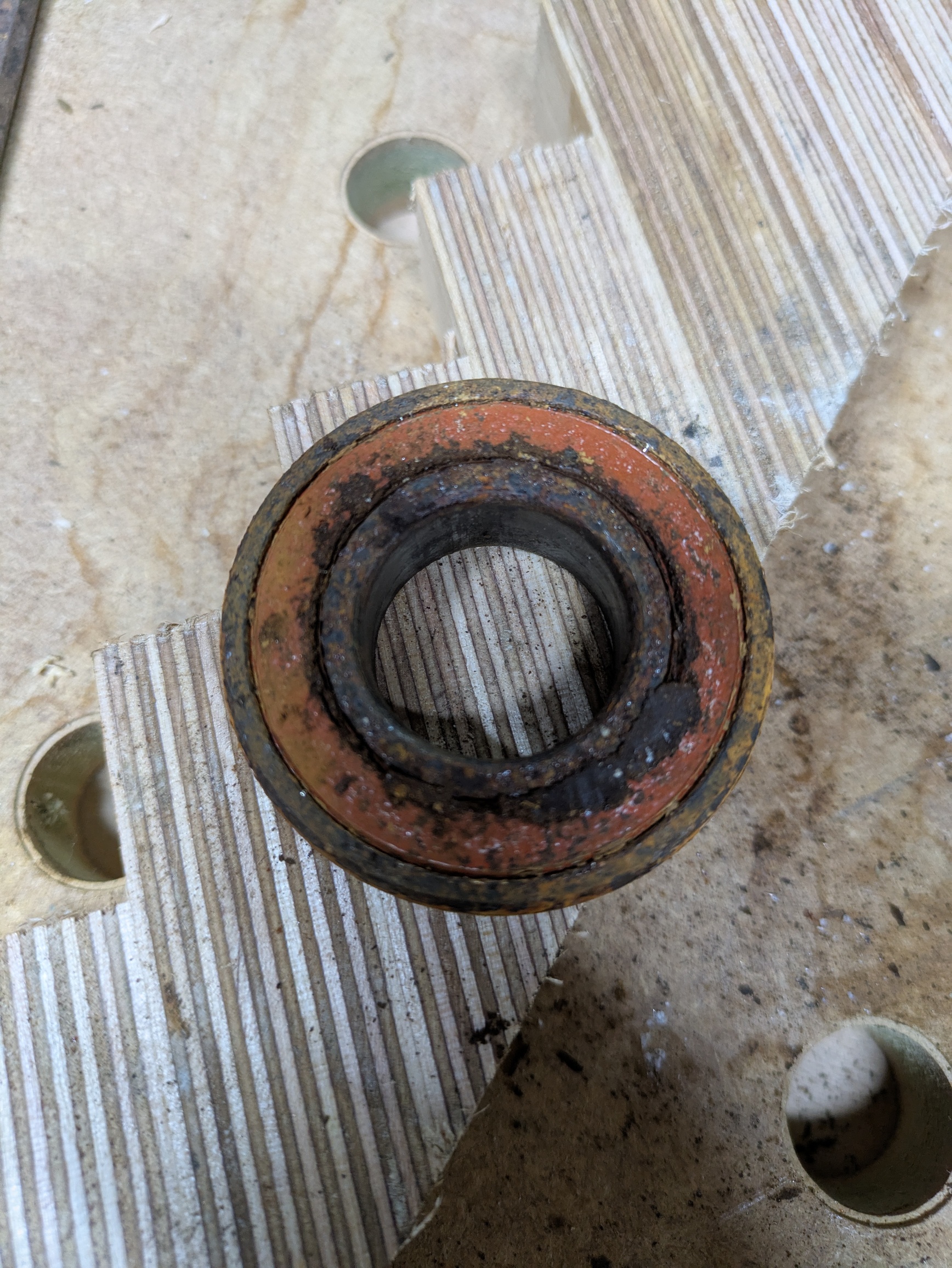
According to the stamp on the body the mill appeared to be about fifteen years old, so as well as replacing both of the bearings (good practice in any case), I bought new seals too. The old ones were quite hard and probably contributed to the bearing failure by allowing apple juice to leak through.
The items I bought in the end were:
- 25x42x7mm Nitrile Rubber Single Lip Rotary Shaft Oil Seal with Garter Spring R21 / SC
- VA25 NITRILE Rubber V-Ring For Shafts 24-27mm (pair)
- Codex 62052RS Rubber Sealed Deep Groove Ball Bearing 25x52x15mm (2 off)
I think they came from Simply Bearings, but other bearing vendors are available. With postage it came to about £30, perhaps £35. Far cheaper than paying almost £900 for a new mill.
I cleaned parts up as I reassembled the motor, put the motor back into the mill body (which is pig-awkward and resulted in me leaving some skin behind) and reassembled the blade carrier and blades. A quick check that the motor now spun freely and we were good to go so I plugged it in for a final test before it went back out on hire.
If I have to do this again, I’ll document the entire process including photos. Since it was half-disassembled when it came to me I didn’t feel that it would be that useful this time around.