
I came across the polycrub concept a few years back. It’s not hard to find examples on the interwebs, but simply put it’s a very robust and better insulated version of a polytunnel, originally developed for use on Shetland as far as I recall. It looks ideally-suited to windy environments, and the insulation should make it warmer than a greenhouse or polytunnel. In fact you’d probably get the area of a polytunnel with more warmth than a greenhouse for a price somewhere between the two.
To test the viability of using it for housing chickens when required by bird ‘flu regulations I bought a cheap, nasty polytunnel from that online river place. I’m sure I’ve written about it before. It turned out to be really quite poor. After the idea had been washing around my brain for a while I decided that I could possibly turn it into my own version of a polycrub.
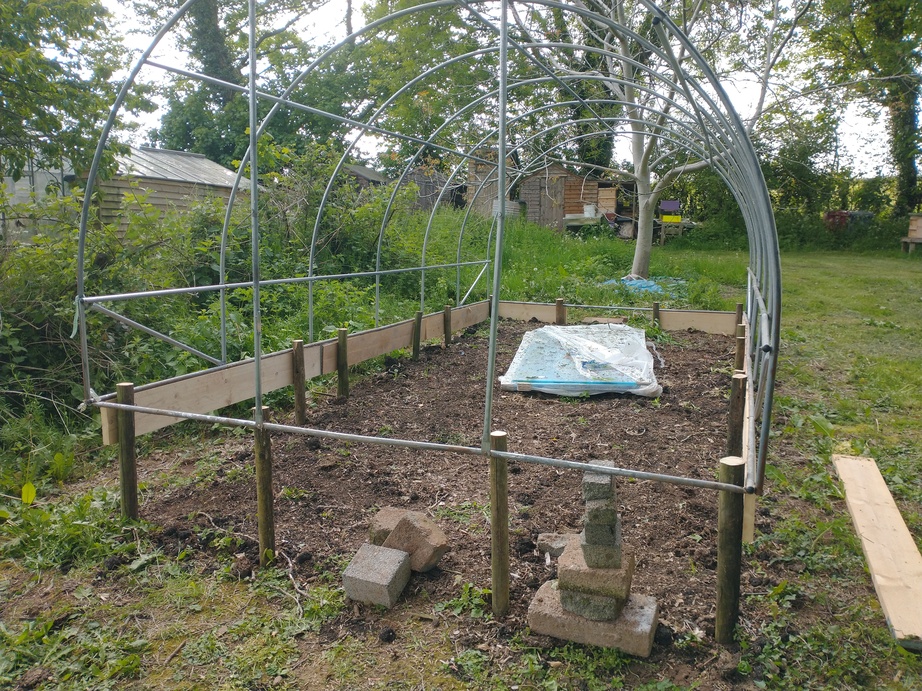
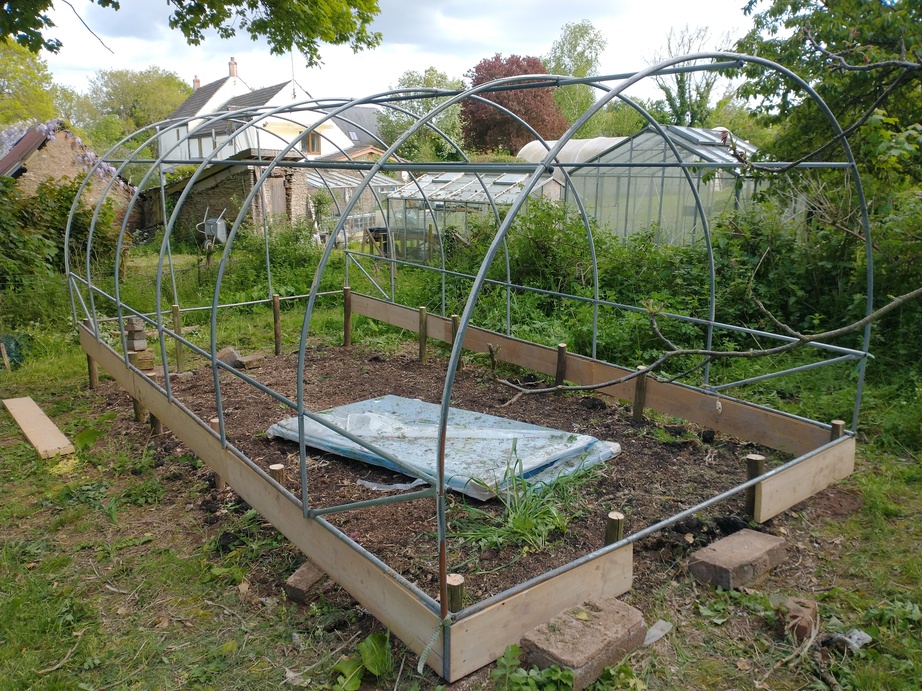
I started with some old scaffold boards and fixed them to stakes hammered into the ground to provide a level top edge that the original frame could rest on.
Then I started covering the top with sheets of 4mm twinwall polycarbonate sheeting. The original polycrub designs appear to use much thicker sheeting, but mine is smaller and I needed it to bend nicely over the curve of the tunnel. I also had to fix wooden battens to the outside of the frame so that the sheets could be screwed to them, but that did actually help to stiffen the frame slightly.
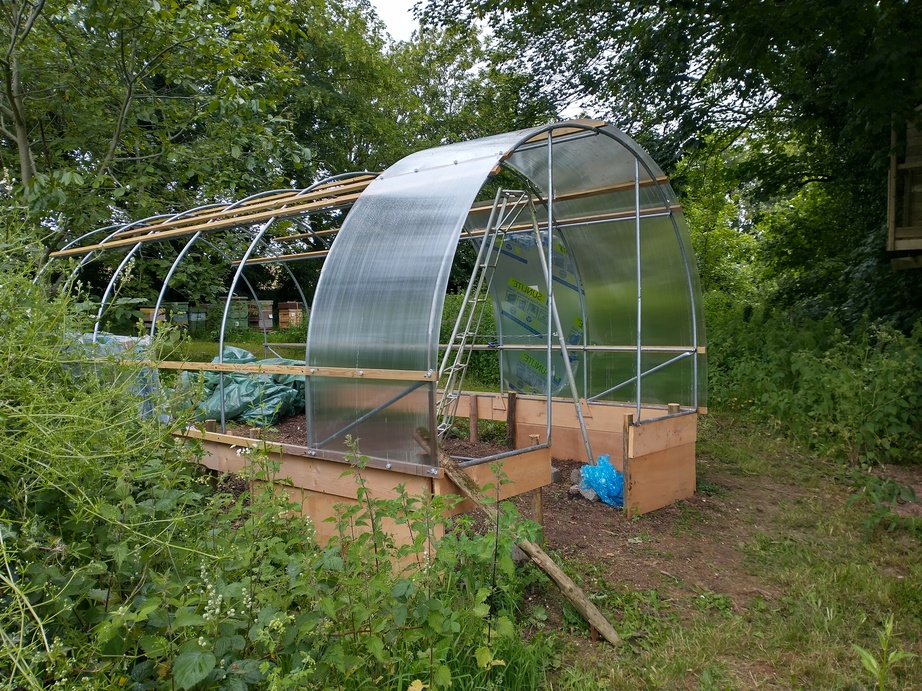

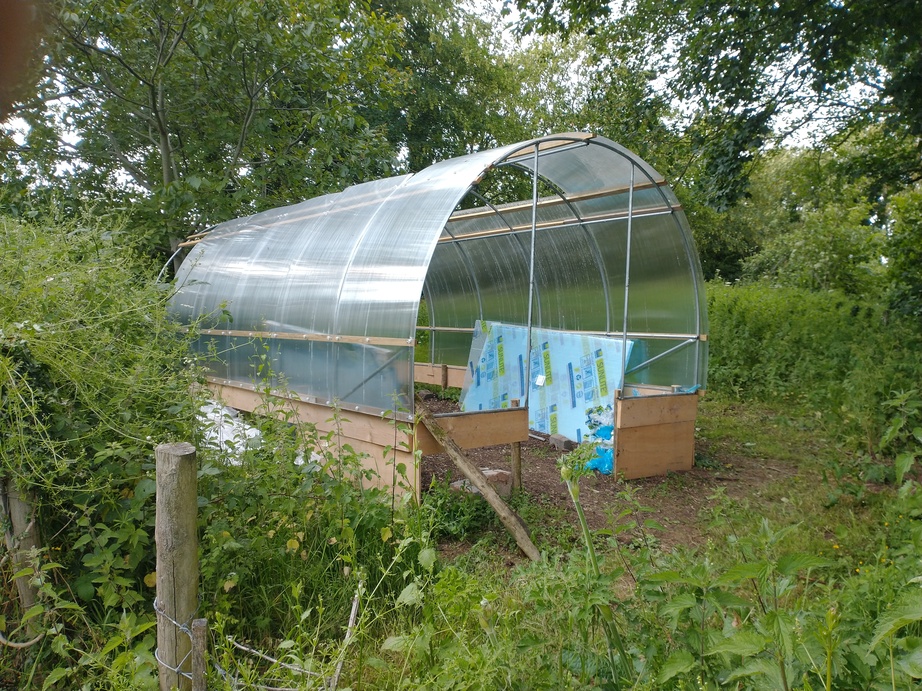

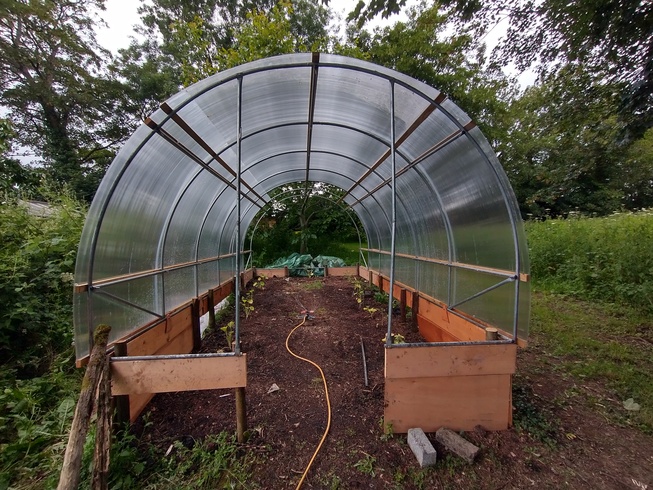
I didn’t initially have a good plan for how I was going to do the ends. I want some vents to allow air to circulate and I want a door in at least one end, so for the time being I cut the end walls off the original cover and fixed them back to the frame.
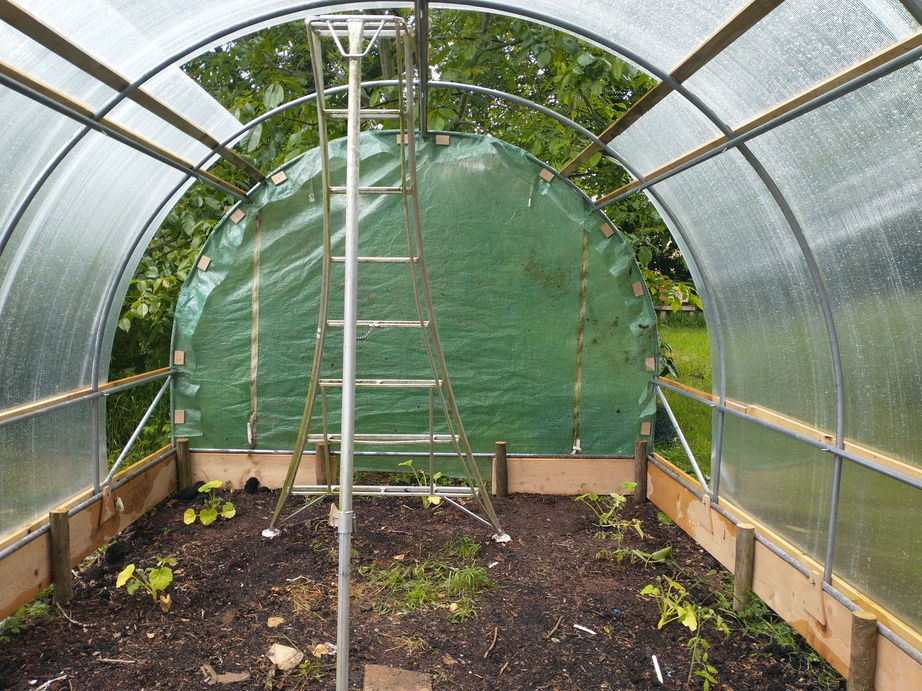
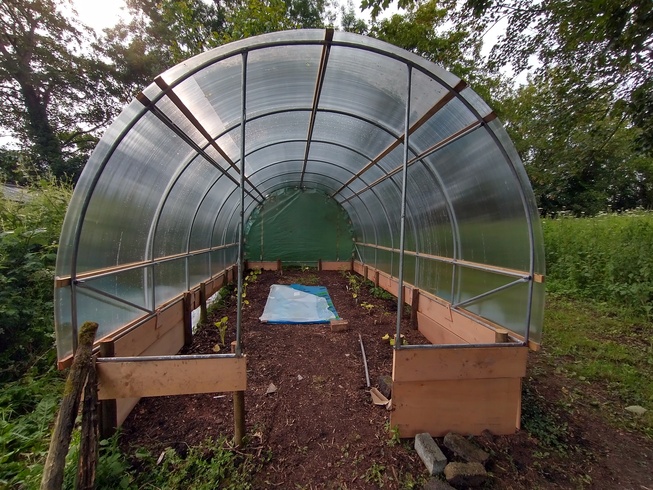
I even started planting out inside before it was even finished 😀